
Discover the best tomato varieties and hybrids for greenhouse cultivation, from early Prekos F1 to meaty Beefheart F1. Learn which types thrive in protected environments and how to choose the perfect variety for your needs.
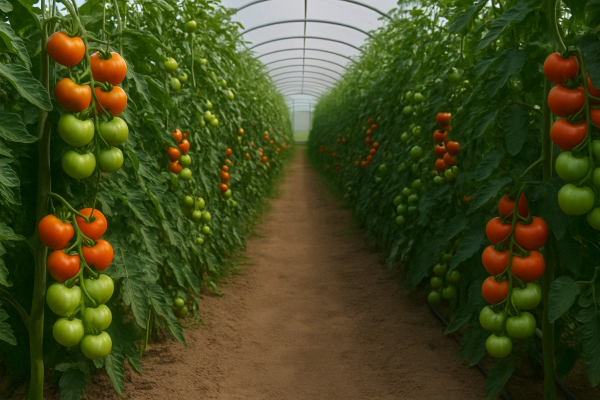
Best Tomato Varieties for Greenhouse Growing – The Gardener’s Complete Guide
Growing tomatoes in a greenhouse is one of the most efficient methods to obtain abundant, early, and healthy harvests, regardless of weather fluctuations. Yet the key to success lies not only in careful plant care, but also in choosing the most suitable varieties or hybrids adapted to greenhouse conditions.
In this article, you’ll discover which tomato varieties and hybrids are most appreciated for protected cultivation, what characteristics they have, and why you should consider them.
Why is it important to choose suitable varieties for a greenhouse?
Not all tomatoes perform well in a greenhouse. Some varieties prefer open-field cultivation, while others are specially bred to withstand higher temperatures, increased humidity, and potential diseases specific to protected environments.
Advantages of growing varieties suited for greenhouse cultivation:
- early and consistent production;
- increased disease resistance (fusarium wilt, verticillium wilt, tomato spotted wilt virus, etc.);
- uniform fruits of superior quality;
- higher yield per square meter.
Top best tomato varieties and hybrids for greenhouse growing
1. Abellus F1 Hybrid
- Type: determinate (limited growth).
- Fruits: round, 150-180 g, uniform, intense red color.
- Advantages: highly productive, resistant to greenhouse-specific diseases, ideal for early cultivation.
- Recommended for: fresh consumption and industrial processing.
2. Prekos F1 Hybrid
- Type: determinate.
- Fruits: large, up to 200 g, pleasant taste, slightly tangy.
- Advantages: early maturity, cold temperature resistance, very well adapted to protected cultivation.
- Recommended for: local market sales, home consumption.
3. Belladonna F1 Hybrid
- Type: indeterminate (continuous growth).
- Fruits: large, round, 180-220 g, intense red color.
- Advantages: good tolerance to tomato spotted wilt virus and other greenhouse diseases, high productivity, excellent commercial appearance.
- Recommended for: staked cultivation in greenhouses of medium to high height.
4. Siriana F1 Hybrid
- Type: determinate.
- Fruits: 140-160 g, firm, suitable for transport.
- Advantages: good crack and disease resistance, concentrated ripening, ideal for succession plantings.
- Recommended for: canning, tomato juice, tomato paste.
5. Beefheart F1 Hybrid
- Type: indeterminate.
- Fruits: large, heart-shaped, 300-500 g, with meaty flesh and few seeds.
- Advantages: exceptional flavor, ideal for fresh consumption, less productive than other hybrids but with superior quality fruits.
- Recommended for: passionate gardeners who want delicious tomatoes for their family.
Other appreciated hybrids for greenhouse growing:
| Variety/Hybrid Name | Growth Type | Fruit Weight | Main Advantages |
|---|---|---|---|
| HTP F1 | determinate | 160-180 g | Disease tolerant, ideal for early harvests |
| Giana F1 | indeterminate | 180-220 g | Good virus resistance, high yield |
| Minaret F1 | indeterminate | 150-170 g | Firm fruits, balanced flavor |
| Ema F1 | determinate | 140-160 g | Uniform ripening, suitable for small greenhouses |
How to correctly choose the right variety for your greenhouse?
When selecting tomatoes for your greenhouse, consider:
- greenhouse size: some varieties (indeterminate) need staking and vertical space;
- cultivation purpose: home consumption, market sales, industrial use (juice, paste);
- maturity period: early, mid-season, or late;
- disease resistance: choose certified hybrids resistant to major greenhouse diseases.
Tips for successful tomato cultivation in a greenhouse:
✅ Use quality seeds or seedlings from reputable producers.
✅ Respect planting distances (typically 40-50 cm between plants and 80-100 cm between rows for indeterminate varieties).
✅ Ensure good greenhouse ventilation to prevent fungal diseases.
✅ Water regularly, but avoid excess moisture that can promote disease.
✅ Fertilize with balanced nutrients specific to tomatoes.
✅ Properly stake plants if you’ve chosen indeterminate varieties.
Conclusion
Choosing the right tomato variety for greenhouse cultivation can bring you a abundant and healthy harvest with delicious, quality fruits. Whether you want tomatoes for daily consumption or for sale, invest in certified seeds and adapt your choice based on your space and needs.
Whether you opt for early hybrids like Prekos F1 or large, meaty beefheart-type tomatoes, the key to success is careful attention and informed decision-making.


Comments are closed.