
Maintaining proper humidity in your home is essential for comfort, health, and protecting your belongings. Learn practical methods to reduce excessive humidity and increase dry air for a perfectly balanced living environment.
How to Reduce Humidity at Home – Complete Guide to Healthy and Balanced Air
Maintaining proper humidity levels in your home is essential for daily comfort, your body’s health, and protecting your household belongings. Whether you’re dealing with mold, dry air, or constantly fogged windows, adjusting humidity can make a tremendous difference in your quality of life.
What is the ideal humidity level at home?
The ideal humidity varies depending on the season and ambient temperature. In general, the recommended values are:
- Winter: between 30% and 45%, because cold air contains less moisture.
- Spring and autumn: between 40% and 50%, for a balance between comfort and condensation prevention.
- Summer: between 45% and 55%, to avoid the sensation of stifling air or thermal discomfort.
The simplest way to measure humidity is with a hygrometer — a small, affordable, and easy-to-use device. You can find digital models that also display temperature, ideal for constant monitoring.
How can you tell if humidity is not correct?
There are clear signs that show whether the humidity level in your home is too high or too low:
Signs of excessive humidity:
- Windows fog frequently.
- Walls or ceiling corners show mold spots.
- The air feels “thick” or hard to breathe.
- Persistent damp smell, especially in the bathroom or kitchen.
- Wooden furniture begins to swell or deteriorate.
Signs of insufficient humidity:
- Skin and lips dry out easily.
- You experience itching in your nose or throat, and breathing becomes uncomfortable.
- Static electricity sparks appear when touching clothes or objects.
- Wood and parquet can crack.
- Indoor plants appear wilted even if properly watered.
The dangers of improper humidity
Excessive humidity:
- Promotes the growth of mold and bacteria, which can cause allergies, cough, and respiratory problems.
- Damages walls, plaster, furniture, and textiles.
- Can affect electronic devices, accelerating corrosion of internal components.
Insufficient humidity:
- Causes irritation of mucous membranes and skin, headaches, and a feeling of fatigue.
- Promotes respiratory infections and viruses, which spread more easily in dry air.
- Can damage wooden furniture, paintings, and musical instruments.
How to adjust humidity in your home
Adjusting humidity depends on the direction it needs to go — whether it’s too high or too low. Here are the right solutions for both situations:
🌀 How to reduce excessive humidity
1. Ventilate daily and properly
Open windows completely for 5-10 minutes in the morning and evening. Rapid but intense ventilation allows for complete air exchange without cooling the walls.
2. Use a dehumidifier
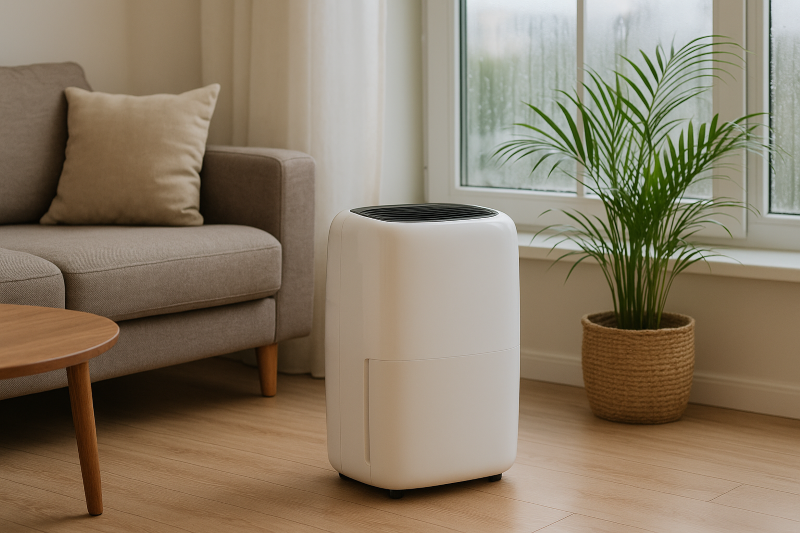
The most effective method is an electric dehumidifier, which collects excess moisture from the air. Modern models can maintain constant humidity at ideal levels and are especially useful in apartments, basements, or bathrooms without windows.
3. Turn on the range hood and fan while cooking or showering
The resulting steam significantly increases humidity, so using the range hood and bathroom ventilation is essential.
4. Check your home’s insulation
Water infiltration, windows that don’t seal properly, or lack of ventilation can lead to moisture buildup. Good insulation prevents condensation and mold formation.
5. Natural remedies to reduce humidity
- Coarse salt effectively absorbs moisture. Place bowls of salt in affected corners.
- Activated charcoal neutralizes odors and reduces humidity.
- Raw rice works in small spaces, such as closets or drawers.
- Baking soda has similar properties and can be used in bathrooms or enclosed spaces.
💧 How to increase insufficient humidity
1. Use an air humidifier
Electric humidifiers add water vapor to the air, restoring balance. You can choose ultrasonic, warm mist, or cool mist models, depending on your preferences.
2. Indoor plants
Certain plants, such as ferns, lucky bamboo, spathiphyllum (peace lily), or areca palm, release moisture through transpiration and naturally help regulate humidity.
3. Air-drying laundry indoors (occasionally)
You can let clothes dry in a well-ventilated room on very dry days — a natural method of increasing humidity.
4. Container with water near heat sources
In winter, place a bowl of water on a radiator. Slow evaporation helps balance dry air.
5. Natural décor
Aquariums, decorative fountains, and even bowls of water with stones can help maintain optimal humidity levels while providing a pleasant aesthetic effect.
How to maintain constant humidity
- Install a digital sensor that shows you humidity in real time.
- Ventilate daily, regardless of season.
- Avoid permanently air-drying laundry indoors.
- Clean the filters of air conditioning units and dehumidifiers.
- Don’t block ventilation sources in the kitchen and bathroom.
Conclusion
Proper humidity in your home is more than just a matter of comfort — it’s an investment in your health and the durability of your home. With a few simple habits and the right equipment, you can create a pleasant, clean, and healthy environment for you and your family, regardless of the season.



Comments are closed.