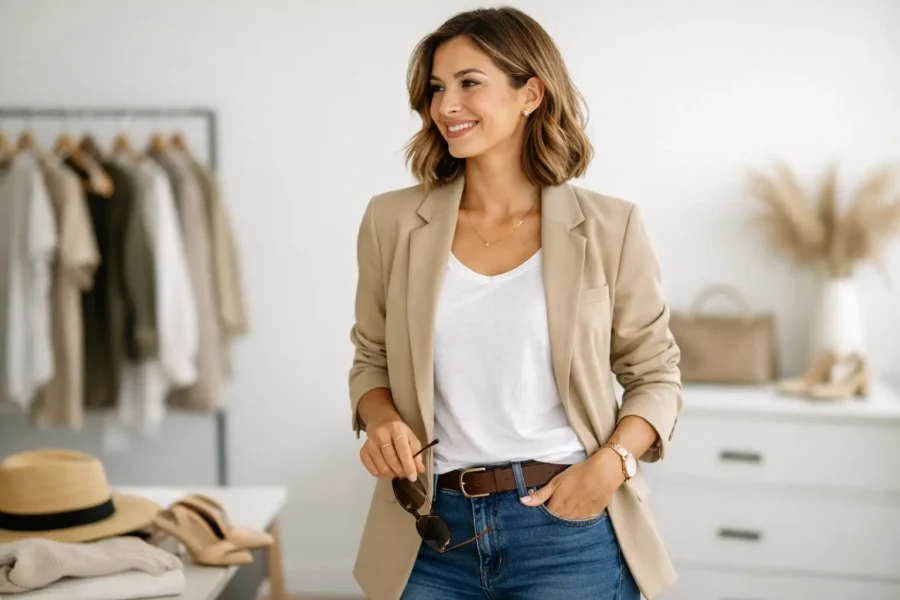
Create a weekend wardrobe built from basics with easy outfit formulas, smart layering, and versatile staples that make getting dressed simple.
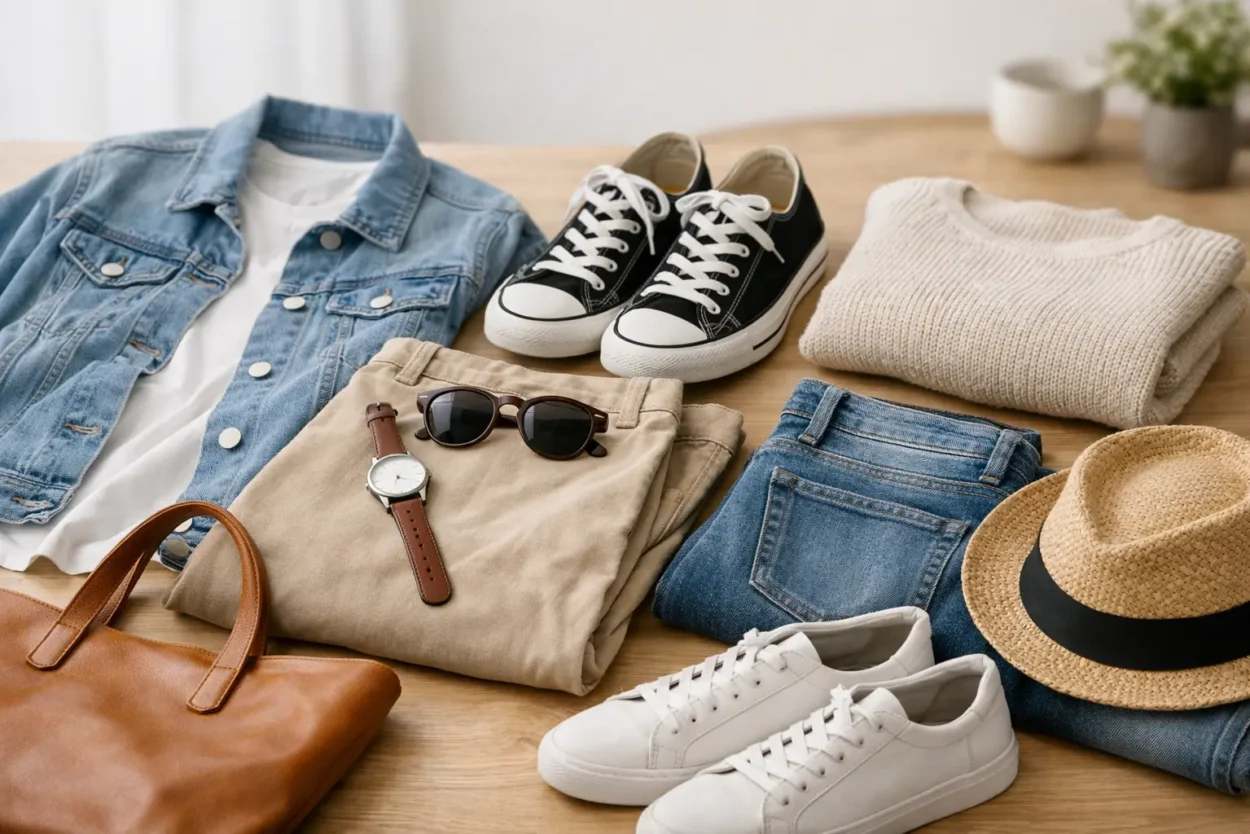
Weekend Wardrobe Built From Basics That Works
Saturday morning usually tells the truth about your closet. If you have plenty of clothes but still stand there wondering what to wear for coffee, errands, brunch, or a last-minute dinner, a weekend wardrobe built from basics is probably what’s missing. The goal is not to dress boring. It’s to make casual style feel easy, repeatable, and still put-together.
Weekends ask a lot from a wardrobe. You might need something comfortable enough for grocery shopping, polished enough for lunch, and relaxed enough for an afternoon walk. That’s why basics matter more on off-duty days than people think. When the foundation is solid, you can get dressed quickly and still look like you meant to.
Why a weekend wardrobe built from basics makes life easier
The biggest benefit of building around basics is flexibility. Trend pieces can be fun, but they usually solve one outfit problem at a time. A good white tee, straight-leg jeans, a lightweight sweater, and clean sneakers solve ten. They also make it easier to mix casual and polished elements depending on your plans.
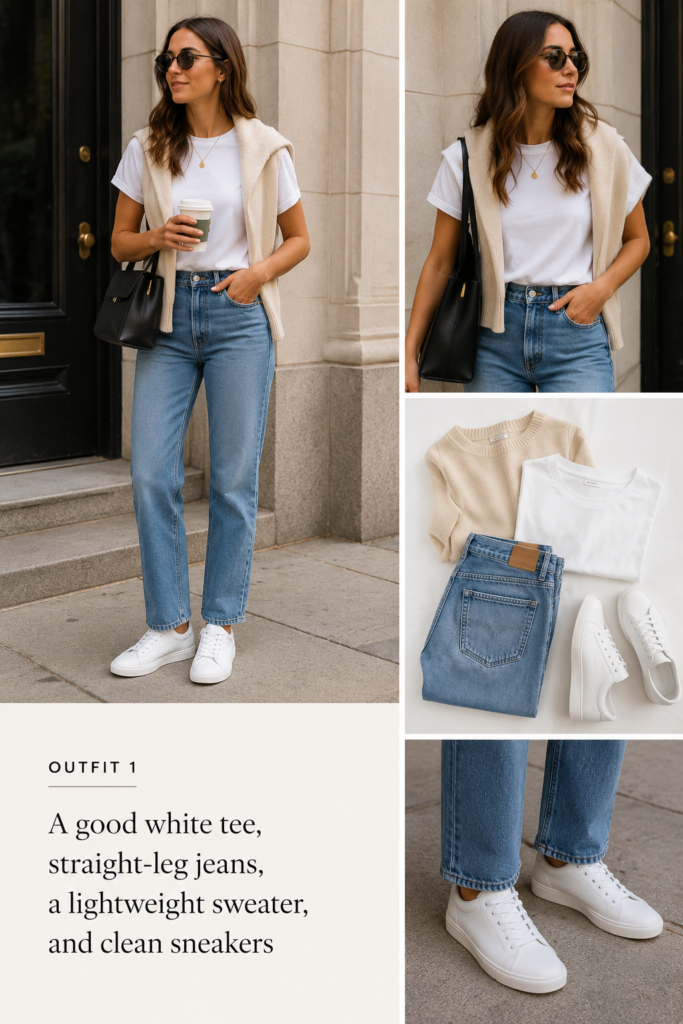
Basics also help you shop with more intention. Instead of buying random pieces that only work with one pair of pants or one specific season, you create a small group of items that can rotate across multiple outfits. That usually saves money over time, even if you spend a little more on the pieces you wear constantly.
There is a trade-off, though. If your basics are too plain or too similar, your wardrobe can start to feel flat. The fix is not buying more clothes. It’s choosing basics with just enough personality - maybe a better cut, a richer color palette, or one or two accessories that change the mood.
Start with the basics that do the most work
A practical weekend closet does not need dozens of pieces. It needs reliable ones. For most people, that starts with denim, tees, knitwear, one easy outer layer, and shoes that can handle real life.
Your denim should fit your actual weekend habits. If you spend Saturdays walking around town, rigid jeans that only look good standing still are not going to earn their place. Straight-leg, relaxed, or wide-leg denim tends to be the easiest to style because it works with sneakers, loafers, sandals, and ankle boots. If jeans are not your favorite, casual trousers or pull-on pants can play the same role.
T-shirts and tanks are the quiet heroes here. A crisp white tee is useful, but so are black, gray, navy, and soft neutrals like oatmeal or taupe. These shades mix easily and look a little more refined than loud graphics when you want your outfit to feel clean and effortless.
Knitwear gives the whole wardrobe range. A lightweight crewneck, a cardigan, or a slightly oversized sweater can be worn over tees, draped on the shoulders, or tied around the waist. On cool mornings and warm afternoons, layers matter more than heavy statement pieces.
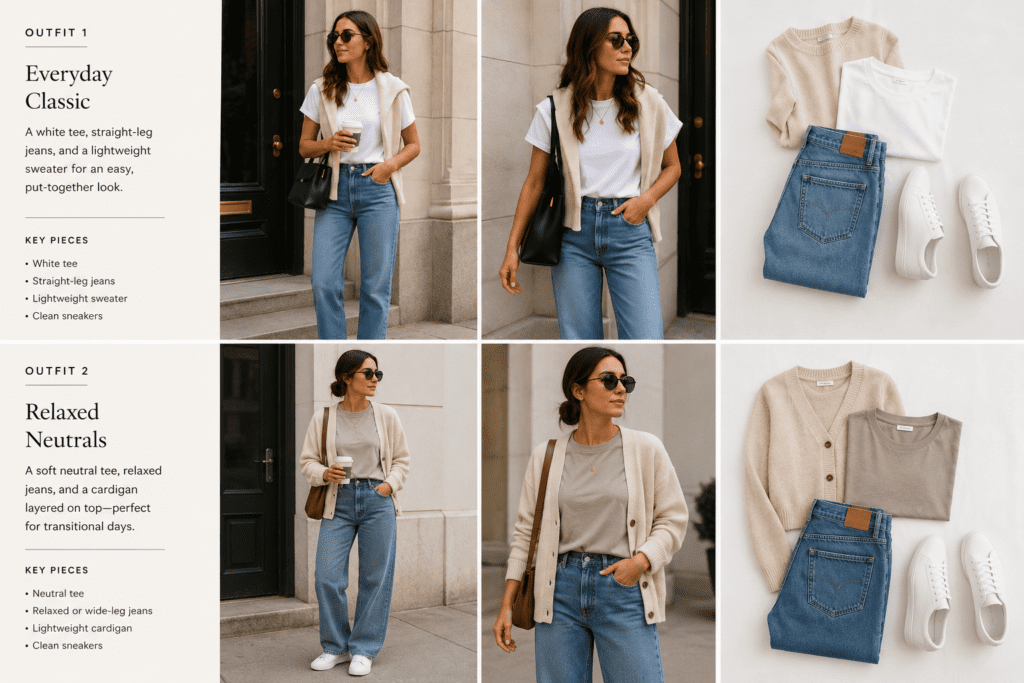
For outerwear, think in terms of one everyday topper that instantly finishes a look. A denim jacket, trench, oversized blazer, or casual utility jacket all work. The best choice depends on your climate and personal style. A blazer makes basics feel sharper. A denim jacket keeps things more relaxed.
Shoes are where practicality really shows. Clean white sneakers are hard to beat, but it helps to have one second option. That could be loafers for a polished feel, flat sandals for warm weather, or ankle boots when temperatures drop. If every outfit only works with one pair of shoes, your wardrobe is less versatile than it looks.
The easiest outfit formula for weekends
When people say someone always looks effortlessly stylish, it is often because they are repeating a formula. That’s good news. You do not need endless creativity. You need a few combinations that always work.
The simplest formula is top + bottom + layer + grounded shoe. For example, a fitted tank with relaxed jeans, a button-down worn open, and sneakers. Or a white tee with black trousers, a cardigan, and loafers. The layer is what keeps the outfit from looking unfinished, even if you take it off later.
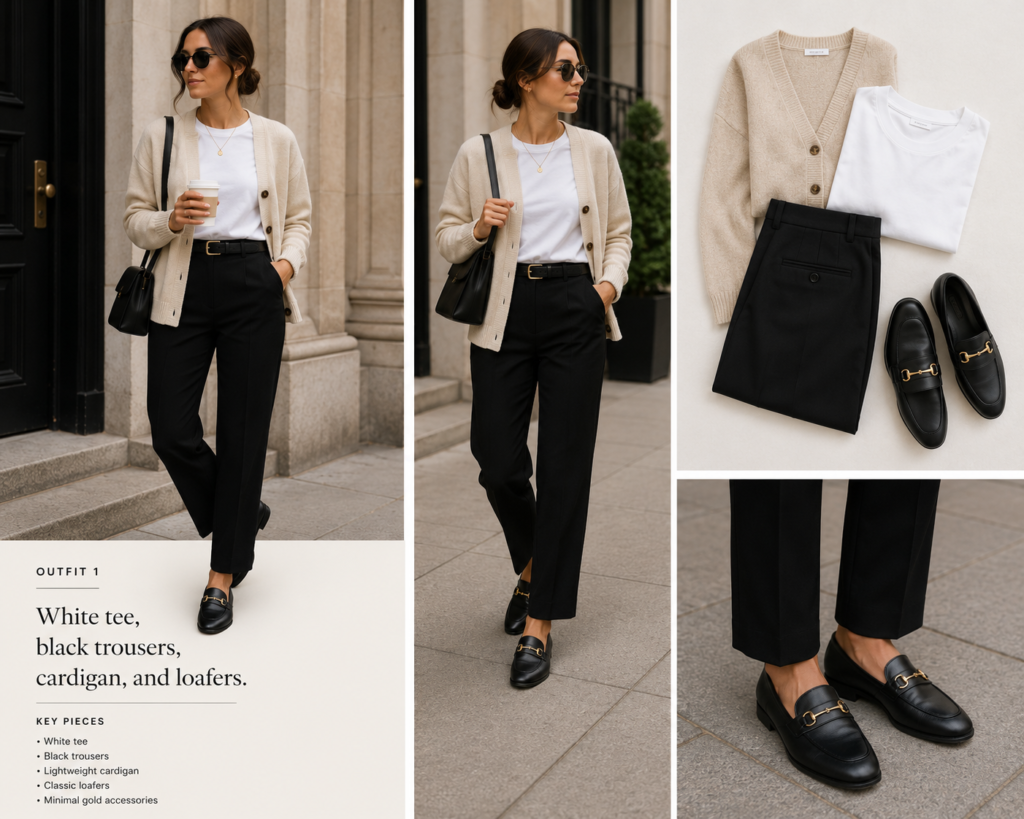
Another reliable option is one soft piece mixed with one structured piece. A slouchy sweater with straight jeans. A relaxed tee with tailored shorts. A sweatshirt with a midi skirt and sleek sneakers. This balance makes basics look intentional instead of accidental.
Monochrome or near-monochrome dressing also helps. If you wear cream, tan, and white together, or black, charcoal, and gray, the result usually looks more elevated without any extra effort. You do not need to commit to one color from head to toe. Staying in the same tonal family is enough.
How to keep basic outfits from feeling repetitive
A weekend wardrobe built from basics should feel simple, not stale. The difference usually comes down to styling.
Fit is the first thing to pay attention to. Basics only look expensive and modern when they fit well. That does not mean everything should be tight. It means each piece should have a clear shape. If your tee is oversized, maybe your pants are more streamlined. If your jeans are loose, maybe your top has a cleaner line.
Texture also matters more than people expect. Denim, cotton, linen, leather, and soft knits create interest even when the colors are neutral. A basic outfit in mixed textures often looks better than a colorful outfit in flat fabrics.
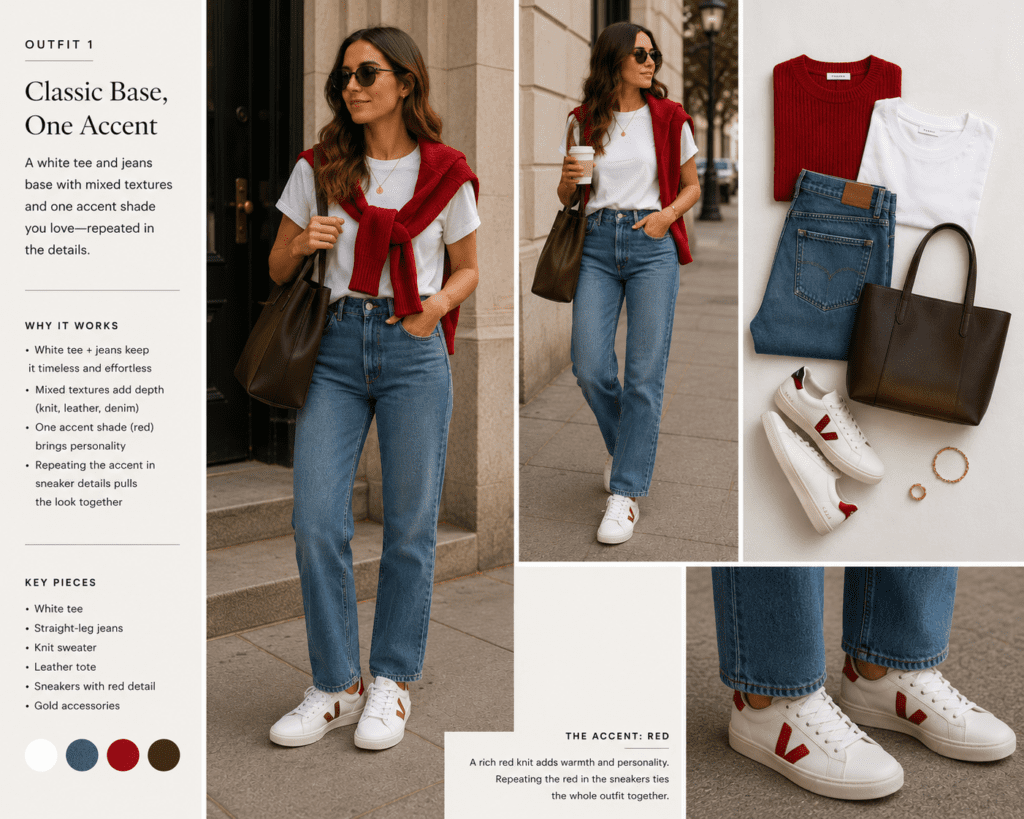
Accessories are the easiest way to shift the vibe. Gold hoops, a baseball cap, a woven tote, slim sunglasses, or a simple belt can completely change the same white-tee-and-jeans base. This is where personality shows up without making the closet harder to use.
You can also use color strategically. If your wardrobe is mostly neutral, add one accent shade you genuinely love - maybe red, olive, chocolate brown, or light blue. Repeating that color in a sneaker detail, bag, knit, or tank helps basics feel curated instead of random.
A sample weekend wardrobe built from basics
If you want a starting point, think small and wearable. One pair of blue jeans, one pair of black or beige casual pants, two or three solid tees, one tank, one button-down shirt, one sweater, one cardigan or sweatshirt, one easy jacket, one pair of sneakers, and one alternate shoe can cover a surprising number of outfits.
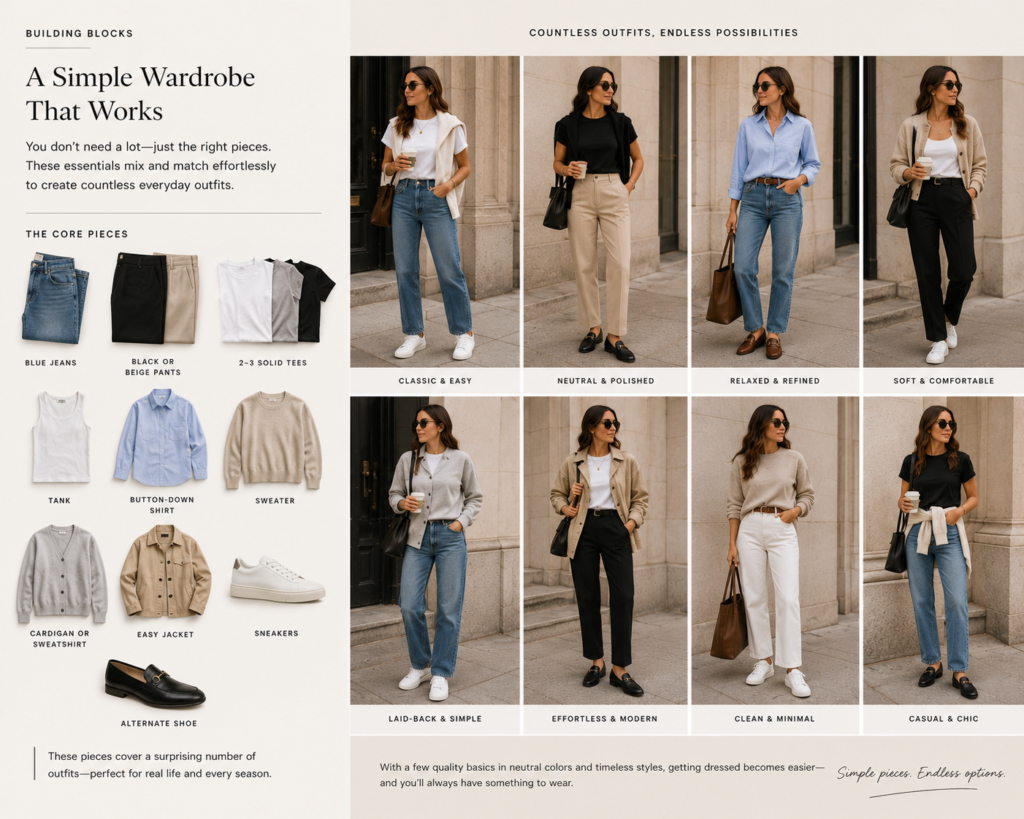
From there, add one or two optional pieces based on your lifestyle. If your weekends include brunch and casual dinners, a simple knit dress might earn its spot. If you live somewhere warm, linen shorts may be more useful than a sweater. If you travel often on weekends, wrinkle-friendly layers become more important than anything delicate.
This is where personal routine matters. A great wardrobe for city walking will not look exactly like one built for school drop-offs, farmers markets, or weekend road trips. The smartest closet is the one that reflects your real life, not someone else’s mood board.
What to skip when building your basics
The most common mistake is buying basics that are technically versatile but not enjoyable to wear. If a white tee turns sheer after one wash, or your sneakers pinch after twenty minutes, those pieces are not basics. They are clutter.
It also helps to avoid chasing every micro-trend in “elevated basics.” Some trends genuinely blend well into an everyday wardrobe. Others look fresh for a month and then feel oddly specific. If you are unsure, keep the experimental shape or color to one item and let the rest stay classic.
Another thing to watch is duplication. Five black tops might sound practical, but if they all do the same job, you are not gaining options. A better approach is variety within your basics: maybe one fitted tee, one boxy tee, one tank, and one lightweight knit.
Make your wardrobe easier to use, not bigger
A stylish weekend closet is less about having more and more about removing friction. When your basics fit well, work together, and suit your plans, getting dressed feels fast in the best way. You can still bring in trend pieces, prints, or standout accessories, but they work better when the foundation is already doing its job.
If your current outfits feel chaotic, start with one weekend reset. Pull out the pieces you actually reach for, notice what combinations repeat, and build from there. A closet does not have to be dramatic to be good. Sometimes the best style upgrade is simply making casual clothes feel as dependable as they should have been all along.