
Learn everything about tomato fertilizers: natural and chemical types, proper application timing, and how to avoid common mistakes. Discover nutrient deficiency signs and solutions for a thriving tomato harvest.
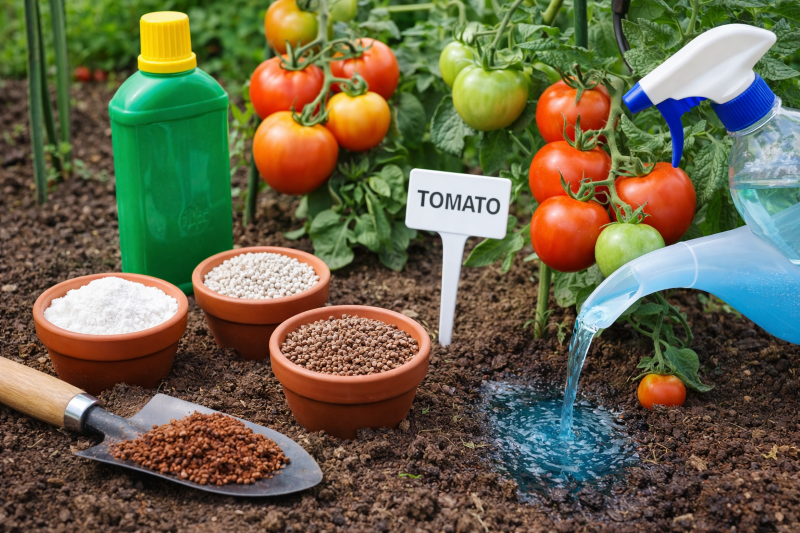
Tomato Fertilizer: Types, Proper Application & Common Mistakes to Avoid
Tomatoes are among the most beloved vegetables in Romanian gardens, and to achieve a rich and healthy harvest, proper fertilization is essential. Choosing the right type of fertilizer, applying it at key moments, and avoiding common mistakes can make the difference between poor production and delicious, meaty tomatoes without health issues.
In this article, we explain everything you need to know about tomato fertilizers, both natural and artificial, when and how to apply them, plus what mistakes to avoid for a successful crop.
Why Do Tomatoes Need Fertilizer?
Tomatoes are plants with high nutrient requirements, especially nitrogen (N), phosphorus (P), and potassium (K). Nitrogen helps with vegetative growth, phosphorus contributes to root development and flowering, and potassium is essential for fruiting and disease resistance.
Beyond these macronutrients, tomatoes also benefit from micronutrients such as: calcium, magnesium, iron, zinc, and boron.
Without proper fertilization, plants can suffer from:
- weak growth,
- flowers that don’t set fruit,
- small or deformed fruits,
- diseases such as blossom end rot (caused by calcium deficiency).
Types of Fertilizers for Tomatoes
1. Natural (Organic) Fertilizers
✔️ Compost
A basic fertilizer, easy to prepare at home from plant waste and well-fermented manure. It brings organic matter and improves soil structure.
✔️ Well-fermented manure
Rich in essential nutrients. Caution: use only when well-decomposed to avoid root burn and pathogen development.
✔️ Aged manure (completely decomposed)
Very good for planting seedlings, but also for base fertilization.
✔️ Bone meal
Rich in phosphorus and calcium, ideal for stimulating rooting and preventing calcium deficiencies.
✔️ Wood ash
An excellent source of potassium and calcium. Use in moderation to avoid raising soil pH too much.
✔️ Nettle macerate
Stimulates vegetative growth due to high nitrogen content. Used especially during the plant growth phase.
✔️ Horsetail or comfrey macerate
Helps strengthen plants and prevent fungal diseases.
2. Artificial (Chemical) Fertilizers
✔️ Classic NPK (e.g., 10-10-10 or 15-15-15)
Offers a balance between nutrients and can be used at all growth stages.
✔️ Specialized tomato fertilizers
Usually contain adapted proportions of N, P, K (e.g., 5-10-10 to stimulate fruiting).
✔️ Calcium nitrate
Used to prevent blossom end rot, applied foliar or to soil.
✔️ Foliar fertilization solutions
Allow rapid nutrient absorption, especially in case of acute deficiencies.
When to Apply Fertilizer to Tomatoes?
🔸 Base fertilization (before planting)
Apply compost, aged manure, or well-decomposed manure, optionally supplemented with bone meal or wood ash.
🔸 Plant growth phase (after planting, in the first weeks)
Apply nitrogen-rich fertilizers for vegetative mass development. You can use nettle macerate or NPK with more nitrogen (e.g., 10-5-5).
🔸 Flowering and fruiting phase
During this period, phosphorus and potassium are needed more than nitrogen. Use NPK fertilizers with greater proportions of P and K (e.g., 5-10-10) or horsetail macerate.
🔸 Fertilization during fruiting
Application weekly or every 10-14 days, depending on the type of fertilizer used and plant condition.
How to Apply Fertilizers?
✅ To soil – through incorporation into soil or by watering with nutrient solution.
✅ Foliar – spraying on leaves, ideally early morning or evening, to avoid sun burn.
✅ Through drip irrigation – in modern irrigation systems, for uniform nutrient distribution.
Mistakes to Avoid in Tomato Fertilization
❌ Using fresh manure – can burn roots and introduce diseases.
❌ Over-fertilizing with nitrogen during fruiting – favors leaves but prevents fruit formation.
❌ Neglecting calcium – causes blossom end rot (black spots on tomato tips).
❌ Fertilizing during peak heat – can cause plant burn.
❌ Improper mixing of chemical fertilizers – some combinations can block nutrient absorption.
❌ Fertilizing on overly acidic or alkaline soils – ideal pH for tomatoes is between 6.0 and 6.8.
Signs of Nutrient Deficiencies in Tomatoes – How to Recognize Problems Early
To keep tomatoes healthy and productive, it’s essential to identify nutrient deficiency signs early. Leaves, stems, and fruits send clear signals when plants aren’t getting what they need.
1. Nitrogen (N) Deficiency
🔸 Leaves at the base of the plant gradually turn yellow, starting with the oldest ones.
🔸 Growth is slow, and plants are weak, with sparse foliage.
🔸 Fruits are small and few.
✅ Solution: Apply nitrogen-rich fertilizers (e.g., nettle macerate, compost, NPK with higher nitrogen).
2. Phosphorus (P) Deficiency
🔸 Leaves take on a bluish or purple hue, especially on leaf undersides and stems.
🔸 Root development is weak, and fruiting is delayed.
✅ Solution: Use bone meal, phosphorus-containing fertilizers, or banana peel macerate.
3. Potassium (K) Deficiency
🔸 Leaf margins dry up and become necrotic (burnt appearance).
🔸 Fruits are soft, unevenly colored, with weak flavor.
🔸 Plant is more susceptible to diseases and pests.
✅ Solution: Apply wood ash, specialized tomato fertilizers with high potassium, potassium sulfate.
4. Calcium (Ca) Deficiency
🔸 The well-known blossom end rot appears (black, soft spots on tomato tips).
🔸 Young leaves may be deformed or curled.
✅ Solution: Calcium nitrate applied to soil or foliar, avoid large moisture fluctuations.
5. Magnesium (Mg) Deficiency
🔸 Yellowing between leaf veins, especially on lower leaves.
🔸 Veins remain green, while the rest of the leaf becomes yellow.
✅ Solution: Magnesium sulfate (Epsom salt), applied to soil or foliar.
6. Iron (Fe) Deficiency
🔸 Young leaves turn yellow between veins (interveinal chlorosis), but veins remain green.
🔸 Affects especially growth tips.
✅ Solution: Iron chelates applied foliar or to soil, correct soil pH if too alkaline.
7. Boron (B) Deficiency
🔸 Fruits show hard, necrotic spots, and seeds don’t develop properly.
🔸 Young leaves are deformed or torn.
✅ Solution: Foliar fertilization with boron (caution with dosage, excess boron is toxic!).
Summary Table – Common Deficiencies in Tomatoes
| Nutrient | Main Symptom | Recommended Solution |
|---|---|---|
| Nitrogen (N) | Lower leaf yellowing, weak growth | Nettle macerate, compost, NPK with nitrogen |
| Phosphorus (P) | Bluish/purple leaves, weak roots | Bone meal, phosphorus fertilizer |
| Potassium (K) | Burnt leaf margins, soft fruits | Wood ash, potassium sulfate |
| Calcium (Ca) | Blossom end rot on fruits | Calcium nitrate, maintain moisture |
| Magnesium (Mg) | Yellowing between veins, green veins | Magnesium sulfate (Epsom salt) |
| Iron (Fe) | Interveinal chlorosis on young leaves | Iron chelates, correct pH |
| Boron (B) | Hard spots on fruits, deformed leaves | Foliar boron fertilization |
How to Prevent Deficiencies in Tomatoes?
✨ Practice crop rotation and don’t plant tomatoes in the same place every year.
✨ Use balanced fertilizers adapted to growth stages.
✨ Check soil pH regularly (ideal between 6.0 and 6.8).
✨ Don’t overdo fertilization, even organic ones – excess can block nutrient absorption.
✨ Water consistently, without large moisture fluctuations.
Conclusion
For healthy tomatoes and a rich harvest, the key is balance: use the right fertilizers, apply them at the right time, and avoid excess. Natural fertilizers offer added health benefits for soil and plants, while artificial ones, applied carefully, can supplement nutrient needs where necessary.
Regardless of the method chosen, observe your plants constantly – the leaves will give you clear signals if something isn’t right!


Comments are closed.