
Learn how to make homemade soap with natural ingredients using traditional and modern methods. We share easy recipes with caustic soda, lard, and safe alternatives for beginners.
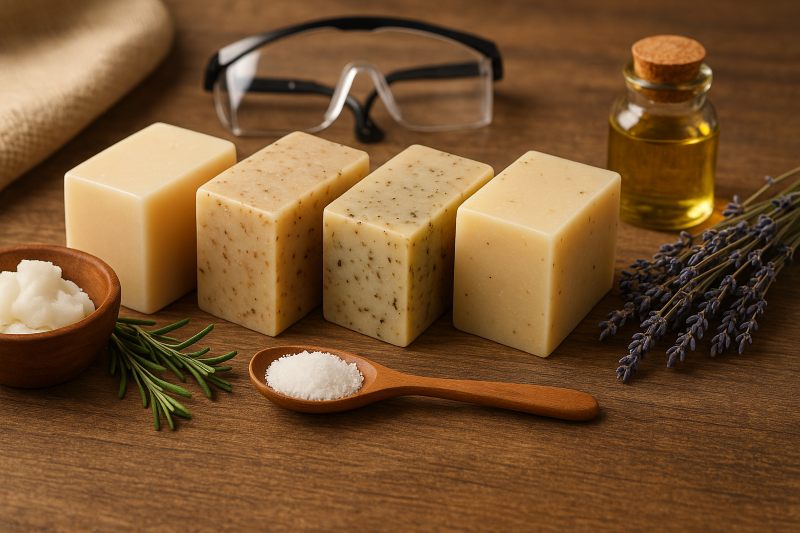
How to Make Homemade Soap: Natural Recipes With and Without Caustic Soda
Have you ever wondered what’s really in store-bought soap? If you want to use gentler products for your skin and the environment, homemade soap is an excellent alternative. In this guide, we present the most popular preparation methods, whether you want to use caustic soda, lard, or prefer recipes without harsh ingredients. Let’s discover how you can transform your kitchen into a little natural cosmetics laboratory!
Why make homemade soap?
- You control the ingredients: no parabens, preservatives, or artificial fragrances.
- It’s gentler on your skin – especially for those with sensitive skin or allergies.
- It’s economical and sustainable.
- It gives you the satisfaction of creating something useful with your own hands.
Safety First!
If you choose recipes involving caustic soda (sodium hydroxide), use:
- Protective gloves
- Safety glasses
- Good ventilation (ideally: outdoors or near an open window)
Classic Caustic Soda Soap Recipe (Hot Method)
Ingredients:
- 300 g coconut oil
- 300 g olive oil
- 400 g lard
- 128 g caustic soda (NaOH)
- 300 ml distilled water
- Essential oils (optional: lavender, mint, tea tree)
Steps:
- Dissolve caustic soda in water (never the other way around!). Add the soda slowly to water and stir with a wooden spoon until completely dissolved. Let the solution cool.
- Heat the oils and lard until liquid, without boiling.
- When the oil mixture and soda solution reach similar temperatures (35-40°C), pour the soda over the oils, stirring continuously.
- Use an immersion blender until you get a custard-like consistency.
- Add the essential oils and mix.
- Pour into molds, cover with plastic wrap and a thick towel.
- After 24-48 hours, remove from molds and let dry for at least 4 weeks before use.
Traditional Lard Soap Recipe
This recipe is inspired by rural traditional methods.
Ingredients:
- 1 kg melted lard
- 128 g caustic soda
- 300 ml water
- Grated lemon or orange zest (optional)
Method:
- Prepare the caustic soda solution in water (carefully!).
- Warm the melted lard slightly.
- When both are at the right temperature, mix them together.
- Blend until thickened.
- Pour into trays or silicone molds.
- After 48 hours, remove and let dry for 4-6 weeks.
Tip: You can add coffee grounds, oatmeal flakes, or dried plants (chamomile, lavender) for an exfoliating effect.
Caustic-Free Recipe (Melt and Pour Soap)
If you want a safe option, suitable even for children, you can use pre-made soap base (available in cosmetic ingredient shops or online).
Ingredients:
- 500 g “melt & pour” soap base (vegetable glycerin, shea butter, goat’s milk, etc.)
- Essential oils (5-10 drops)
- Natural colorants (optional)
- Dried flowers, oatmeal flakes, activated charcoal, etc.
Steps:
- Cut the base into small cubes and melt it in a double boiler (over steam).
- Once completely melted, add the essential oils and remaining ingredients.
- Pour into molds and let cool completely (2-3 hours).
- You can use the soap as soon as it’s hardened.
Advantage: Requires no curing time and is completely safe for beginners.
Cold Process Natural Soap Recipe
The cold method preserves the oil properties better, but involves a long curing period.
Ingredients:
- 500 g olive oil
- 250 g coconut oil
- 250 g palm oil (or sunflower oil)
- 128 g caustic soda
- 300 ml water
- 10 ml essential oil (of your choice)
Method:
- Dissolve caustic soda in water and let it cool.
- Heat the oils in a double boiler.
- When both reach 35-40°C, mix them together and blend until trace.
- Add the essential oil, stir, and pour into molds.
- Leave for 48 hours, then remove from molds and let dry for 6 weeks.
Helpful Tips:
- Use an immersion blender dedicated exclusively to soap-making.
- Don’t use aluminum utensils – they react with soda.
- You can add milk, honey, clay, or activated charcoal for specific benefits.
- If white “ash” appears on the surface after pouring, it’s just incorporated soda – remove it carefully.
Frequently Asked Questions (FAQ)
Can I make soap without caustic soda at all?
No, all true soaps involve a saponification process based on caustic soda. However, you can use pre-made soap bases that don’t require direct handling of soda.
How long does homemade soap last?
If properly dried and stored in a cool place, it lasts 6-12 months without problems.
Can I sell homemade soap?
Yes, but to sell it legally, you need dermatological testing and compliance with EU cosmetic standards.
Conclusion
Whether you want a gentle natural soap for your skin or are looking for a creative and relaxing activity, making homemade soap is an excellent choice. Experiment with natural ingredients, shapes, and fragrances – and your skin (and nature!) will thank you.

Comments are closed.