
Skincare ingredients for beginners guide that breaks down actives, gentle basics, and how to build a simple routine without overwhelm.
Skincare Ingredients for Beginners Guide
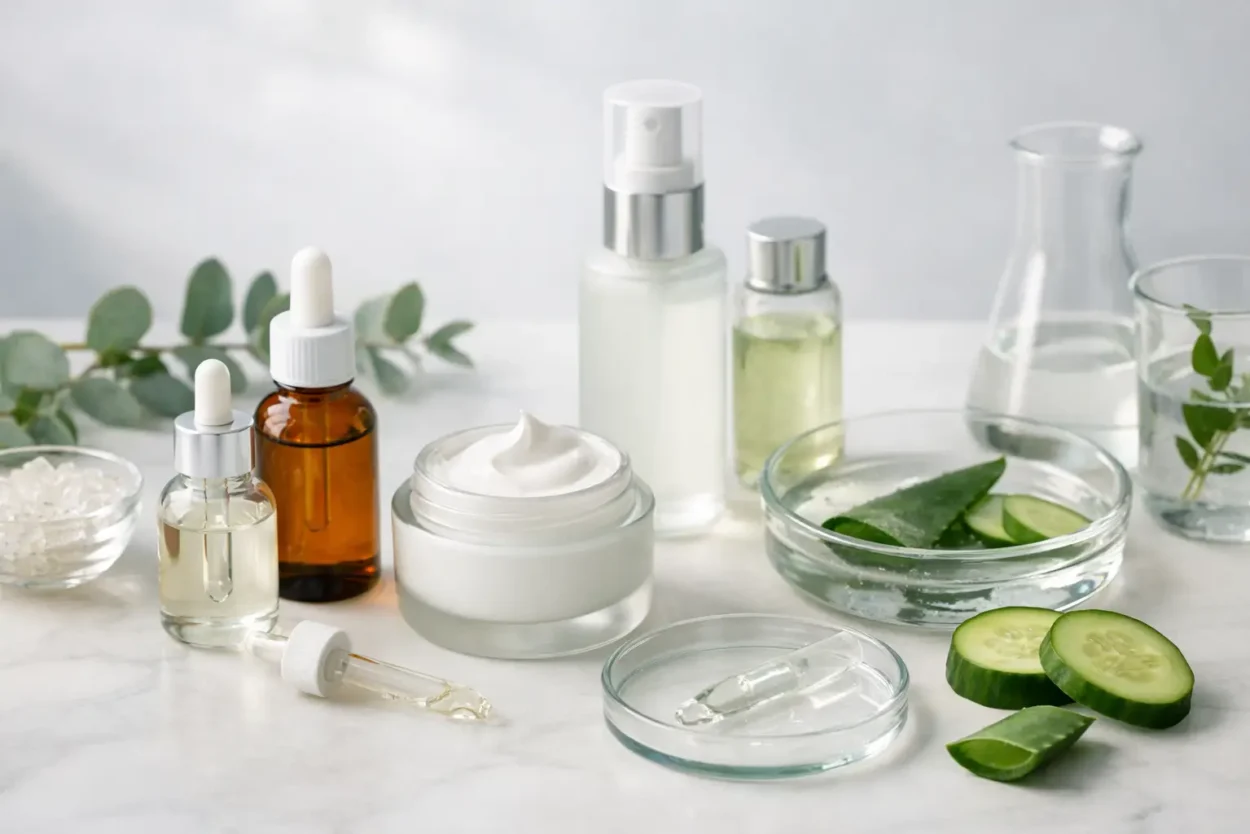
You do not need to memorize a chemistry textbook to shop for skincare. What most people actually need is a skincare ingredients for beginners guide that explains what each ingredient does, who it works for, and when it can cause more trouble than glow.
The fastest way to get overwhelmed is to buy products because they are trending, then layer them all at once and hope for the best. Good skincare usually looks much less exciting than that. For beginners, the goal is simple: learn the handful of ingredients that make the biggest difference, then build a routine your skin can actually tolerate.
How to read a skincare label without panic
Ingredient lists can look intimidating, but you do not need to understand every word. Start by figuring out whether a product is trying to cleanse, hydrate, protect, or treat a specific concern like acne, dullness, or dark spots.
The first few ingredients usually make up most of the formula, although that does not always tell you how effective it will be. Some active ingredients work well at low percentages, while others need a stronger dose. Texture matters too. A thick cream with soothing ingredients may be better for dry skin than a lightweight gel, even if both mention the same hero ingredient on the front.
A helpful beginner mindset is to stop chasing ingredients in isolation. One ingredient can be excellent in one formula and disappointing in another. Your skin type, frequency of use, and the rest of your routine all matter.
Skincare ingredients for beginners guide: the essentials first
Before you get into stronger treatments, focus on the ingredients that support healthy skin day to day. These are the ones that make routines feel easier and more effective.
Glycerin
If your skin often feels tight after washing, glycerin is worth noticing. It is a humectant, which means it helps pull water into the skin. You will find it in cleansers, toners, serums, and moisturizers because it is reliable, affordable, and generally easy for most skin types to handle.
It is not flashy, but it is one of the best beginner ingredients because it helps skin feel comfortable. When your skin is hydrated, other products tend to sit and perform better too.
Hyaluronic acid
Hyaluronic acid is another humectant, but it is often marketed like a miracle. It can absolutely help skin look plumper and feel smoother, especially if your skin is dehydrated. The catch is that it works best when paired with moisturizer, not when used alone and forgotten.
If hyaluronic acid serums have ever made your skin feel oddly dry, that does not necessarily mean the ingredient is bad. It may just mean you need to apply it to slightly damp skin and seal it in with a cream.
Ceramides
Ceramides are one of the best ingredients for beginners because they support the skin barrier. Think of them as part of the material that helps keep moisture in and irritation out. If your skin is sensitive, flaky, or reactive, ceramides deserve a spot in your routine before stronger actives do.
This is especially useful if you are starting acne treatments or exfoliants. A barrier-supporting moisturizer can make the difference between steady progress and a routine you quit after one week.
Niacinamide
Niacinamide is popular for a reason. It can help with oiliness, uneven tone, redness, and the look of pores, all while being gentler than many treatment ingredients. For beginners, that flexibility is helpful.
That said, more is not always better. Some people do well with high-strength niacinamide, but others get irritation or breakouts from formulas that are too strong. If you are new to it, a lower percentage is often the safer starting point.
The treatment ingredients worth knowing
Once your basic routine feels stable, you can look at ingredients that target specific concerns. This is where beginners often go too hard, too fast.
Salicylic acid
Salicylic acid is a solid option for oily or acne-prone skin. It is a beta hydroxy acid that helps clear oil and debris from pores, which can make it useful for blackheads, whiteheads, and breakouts.
If your skin is dry or easily irritated, start slowly. A salicylic acid cleanser can be an easier entry point than a strong leave-on serum. You still get the benefit, but with less risk of overdoing it.
Lactic acid and glycolic acid
These are alpha hydroxy acids, often used for smoothing rough texture and boosting radiance. Glycolic acid is generally stronger and can be very effective, but it may be too much for sensitive beginners. Lactic acid is often the gentler place to start.
Exfoliating acids can help dull skin look fresher, but there is a trade-off. Use too much, and your skin may get red, tight, or shiny in a not-good way. Once or twice a week is often enough at first.
Retinol
Retinol is one of the most talked-about skincare ingredients because it can help with fine lines, acne, texture, and tone over time. It is also one of the easiest to misuse.
For beginners, retinol works best when introduced slowly. Two nights a week is plenty at first. Dryness and mild flaking can happen, especially in the first few weeks, so pairing it with a simple moisturizer matters. If your skin stings or gets very irritated, that is a sign to scale back.
Vitamin C
Vitamin C is often used to brighten dull skin and help fade the look of dark spots. It can also support protection against environmental stress when used in the morning under sunscreen.
The tricky part is that vitamin C formulas vary a lot. Some are gentle and beginner-friendly. Others are unstable or irritating. If you are new to it, do not assume the strongest product is the best one. A formula you can use consistently usually wins.
Ingredients beginners should approach carefully
Not every trending ingredient needs to be in your first routine. In fact, some of the worst beginner experiences come from combining too many strong actives.
If you are using retinol, exfoliating acids, and acne treatments at the same time, your skin may not care that each one has good reviews. It may just get irritated. Benzoyl peroxide, strong glycolic acid pads, and high-percentage retinoids can all be effective, but they are not always the best starting place for someone learning how their skin reacts.
Fragrance is another ingredient category worth noticing. Some people have no problem with fragranced skincare, while others get redness or stinging from it. If your skin is sensitive and you cannot figure out why products keep bothering you, fragrance-free formulas are often worth trying.
A simple beginner routine that makes sense
A good routine does not need ten steps. It needs consistency.
In the morning, use a gentle cleanser if you want one, then a moisturizer if your skin needs it, then sunscreen. If you want a treatment step, vitamin C or niacinamide can fit here, but sunscreen matters more than either one.
At night, cleanse, apply a moisturizer, and add one treatment ingredient only if you are ready. That might be salicylic acid for breakouts or retinol for texture and aging concerns. You do not need both right away.
The most underrated beginner move is waiting. Give a new product a few weeks before deciding it failed, unless it is clearly irritating your skin. Skin usually needs time to respond.
How to choose ingredients for your skin goals
If your skin feels dry or tight, prioritize glycerin, hyaluronic acid, and ceramides. If breakouts and clogged pores are your main issue, salicylic acid may help more than a random “detox” mask ever will. If your skin looks dull or uneven, niacinamide, vitamin C, or a gentle exfoliating acid can be useful.
If your skin is sensitive, your best ingredients may not be the strongest ones. A calm, boring routine often gets better results than an ambitious one that keeps causing irritation. That is not less effective. It is just more realistic.
Common beginner mistakes to avoid
One mistake is changing everything at once. If you start a new cleanser, serum, exfoliant, and moisturizer in the same week, you will have no idea what is helping or hurting.
Another is assuming tingling means a product is working. Sometimes it does not. Sometimes it just means your skin is getting annoyed. The same goes for over-exfoliating in the name of getting smooth skin faster.
And then there is sunscreen, the least exciting product in the routine and often the most important. If you are using retinol, acids, or vitamin C and skipping sunscreen, you are making things harder on yourself.
The best way to start
The best skincare ingredients for beginners guide is not really about collecting ingredients. It is about learning what your skin needs right now and resisting the urge to do too much too soon.
Start with cleanser, moisturizer, and sunscreen. Add one treatment ingredient based on your biggest concern. Pay attention to how your skin feels, not just how a product is marketed. When skincare gets simpler, it usually gets better too.
Your routine does not need to look impressive on a shelf. It just needs to work when you wake up and do it again tomorrow.

Comments are closed.