
Discover the complete guide to flour types and their uses. Learn the differences between flour grades (000, 550, 650, 720), explore alternatives like almond and buckwheat flour, and master the art of flour substitution for perfect results every time.
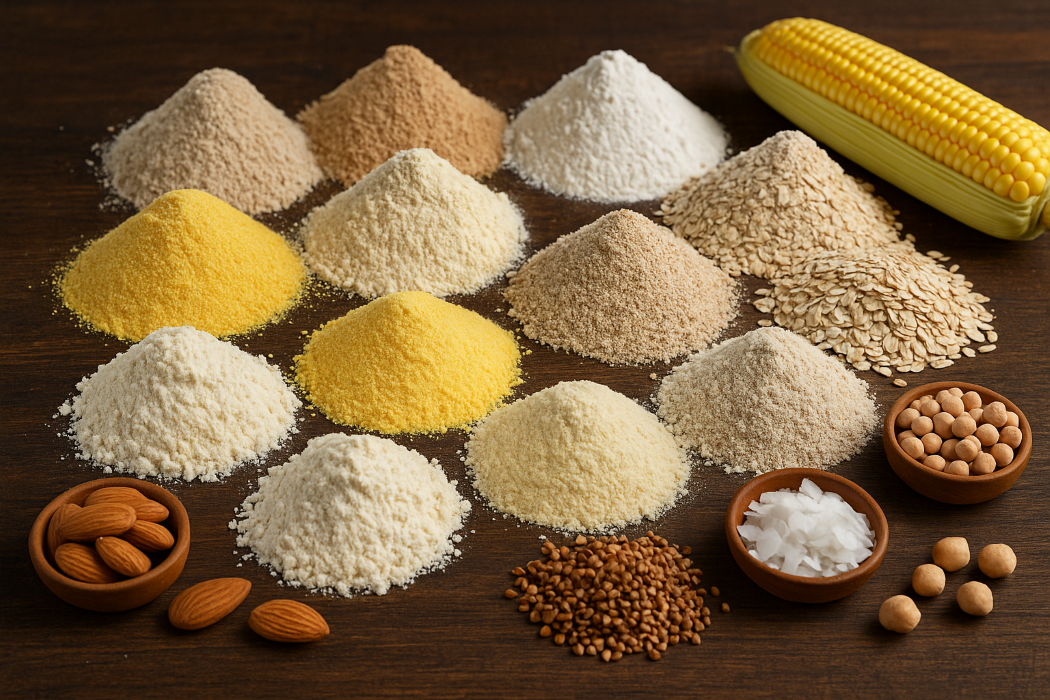
Types of Flour and Uses – Complete Guide to Choosing the Right Flour
Flour is one of the most important ingredients in the kitchen, whether we’re talking about bread, cakes, pasta, or sauces. However, not all types of flour are the same – each has different characteristics and uses that influence the texture, taste, and success of your recipes.
If you’ve ever wondered what the difference is between flour 000 and 650, what buckwheat flour is used for, or how to substitute one flour for another, this complete guide answers all your questions.
How is wheat flour classified?
White wheat flour is classified by a numeric index (000, 550, 650, 720, etc.), which indicates the extraction rate and ash content (minerals).
- The smaller the number (e.g., 000), the more refined the flour, the whiter it is, and the less gluten, fiber, and nutrients it contains.
- The larger the number (e.g., 650, 720, 1050), the less refined the flour, the darker its color, and the richer it is in fiber and nutrients.
The protein (gluten) content is the most important factor influencing dough elasticity:
- High-gluten flours (12-14%) → bread, pizza, pretzels
- Medium-gluten flours (9-11%) → cakes, pastries, brioche
- Low-gluten flours (7-9%) → biscuits, thin pastry sheets, tarts
Types of wheat flour and their uses
1. Type 000 flour
- Characteristics: very fine, white, low protein content (8-9%), silky texture
- Uses: sweet bread, cakes, pastries, biscuits, cake layers, creams, eclairs
- Remember: Doughs made with 000 turn out tender and delicate, but lack the elasticity needed for bread
2. Type 550 flour
- Characteristics: fine, with slightly higher gluten content (10-11%)
- Uses: pastries, brioche, rolls, puffed doughs
- Remember: The good balance between fine texture and elasticity makes it versatile
3. Type 650 flour
- Characteristics: higher gluten and protein content (11-12%), ideal for bread-making
- Uses: homemade bread, pizza, pretzels, focaccia, flatbreads
- Remember: One of the most commonly used flours in bakeries; creates an elastic and well-developed dough
4. Type 720 flour
- Characteristics: darker in color, less refined, more pronounced taste
- Uses: rustic bread, country-style rolls, sturdy doughs
- Remember: Gives a dense texture and a distinctive “true homemade bread” aroma
5. Type 1050 and 1350 flour
- Characteristics: semi-whole wheat, beige-gray color, rich in minerals and fiber
- Uses: specialty bread, rustic doughs
- Remember: Rarely found in supermarkets, mainly in health food stores or artisanal bakeries
6. Whole wheat flour
- Characteristics: obtained by grinding the entire wheat kernel, brown color, rich in fiber
- Uses: whole wheat bread, flatbreads, healthy biscuits, muffins
- Remember: Doughs rise more slowly and turn out denser. Tip: mix 70% type 650 + 30% whole wheat for better results
Other types of flours – grains, legumes, and seeds
7. Rye flour
- Uses: rye bread, rustic biscuits, bread-making blends
- Remember: Slightly bitter taste, dense texture; traditional in Nordic countries and Germany
8. Spelt flour
- Characteristics: ancient grain, nutty aroma, easier to digest than common wheat
- Uses: bread, biscuits, pancakes, pasta
- Remember: Contains gluten, but many with wheat sensitivity tolerate it better; available in health food stores
9. Cornmeal (polenta)
- Characteristics: yellow, gluten-free, more granular texture
- Uses: polenta, cornbread, traditional cakes, crispy biscuits
- Remember: Cannot directly replace wheat flour — texture and behavior are different
10. Oat flour
- Characteristics: aromatic, rich in fiber and beta-glucans
- Uses: biscuits, pancakes, energy bars
- Remember: Certified gluten-free oats are safe for celiac disease
11. Buckwheat flour
- Characteristics: gluten-free, nutty and earthy taste
- Uses: pancakes (blinis), gluten-free bread, Japanese noodles (soba)
- Remember: Strong taste — use maximum 30-40% in a blend
12. Rice flour
- Characteristics: white, gluten-free, neutral taste
- Uses: gluten-free cakes, rice noodles, tempura, sauce thickening
- Remember: One of the best bases for gluten-free blends
13. Chickpea flour
- Characteristics: rich in protein and fiber, distinctive taste
- Uses: falafel, pakora, gluten-free flatbreads
- Remember: 2 tablespoons chickpea flour + 3 tablespoons water = egg substitute (useful in vegan recipes)
14. Almond flour
- Characteristics: gluten-free, rich in healthy fats
- Uses: low-carb desserts, macarons, keto cakes
- Remember: Absorbs less liquid; recipes need adjustment
15. Coconut flour
- Characteristics: highly aromatic, absorbs large amounts of liquid, gluten-free
- Uses: keto desserts, pancakes, sugar-free brioche
- Remember: Replaces only 20-25% of the wheat flour amount
16. Starch (cornstarch or potato starch)
- Characteristics: white powder, gluten-free, no taste
- Uses: thickening sauces and creams, tender cakes (combined with 000)
- Remember: 1 tablespoon starch = thickens 250 ml of liquid
Quick comparison table – which flour do you choose?
| Purpose | Recommended flour |
|---|---|
| Sweet bread, cakes, biscuits | 000 or 550 |
| Homemade bread, pizza | 650 or 720 |
| Rustic, country bread | 720 or 1050 |
| Healthy bread (fiber) | Whole wheat + 650 (mix) |
| Gluten-free (neutral taste) | Rice, starch, gluten-free blend |
| Gluten-free (high protein) | Chickpea, almond, buckwheat |
| Keto / low-carb | Almond, coconut |
| Oriental recipes | Chickpea, buckwheat, rice |
Substitution guide – what replaces what?
Sometimes you don’t have the right flour. Here’s how to improvise:
- No type 000 flour → use 550 (similar result, slightly more elastic)
- No type 650 flour → mix 000 with 30% whole wheat or use 720
- Want gluten-free → blend of rice flour (60%) + cornstarch (30%) + psyllium (10%)
- No cornstarch → replace with the same amount of potato starch or double the flour
- No almond flour → replace with coconut flour (but use half the amount)
- Want healthier bread → replace maximum 30% of white flour with whole wheat, rye, or spelt
Practical tips
- Store in well-sealed containers, in a dry and cool place
- Sift always before use — aerates and removes lumps
- Check expiration date — whole wheat flour spoils faster (3-4 months)
- Weigh, don’t measure with a cup — 1 cup can vary by 20-30g; a scale is more accurate
FAQ – Frequently asked questions about flour types
What’s the difference between type 000 and 650 flour?
Type 000 flour is more refined, whiter, and has less gluten — ideal for delicate cakes. Type 650 flour has more gluten and protein, perfect for bread and pizza where elasticity and structure are needed.
What flour do I use for homemade bread?
The best choice is type 650 flour, alone or combined with a little whole wheat or rye flour. Avoid 000 for bread — it doesn’t develop enough gluten.
Can I replace white flour with whole wheat flour in any recipe?
Not directly, 1:1 ratio. Replace maximum 30-40% of the white flour amount with whole wheat and add 1-2 tablespoons of extra liquid, because whole wheat flour absorbs more.
What gluten-free flour do I use for cakes?
Best result: gluten-free flour blend — rice flour (60%) + cornstarch (30%) + almond or coconut flour (10%). There are also ready-made mixes available in stores.
What is spelt flour and where can I find it?
Spelt is an ancient grain, a relative of wheat, with a richer aroma and easier to digest. You can find it in health food stores, at the organic section of supermarkets, or online.
How many types of flour exist?
There are dozens of types: from wheat (000, 550, 650, 720, whole wheat), from other grains (rye, oat, spelt, buckwheat, corn, rice), and from legumes/seeds (chickpea, almond, coconut). Each has unique properties and specific uses.
Conclusion
Choosing the right flour makes the difference between a successful dough and a failed one. There is no “universal flour” for all recipes — each type has a well-defined role. Next time you prepare bread, pizza, or cakes, check the recommended flour type and you’ll immediately notice the difference!
Articles that might interest you:




Comments are closed.