
Discover how to choose an SPF sunscreen that truly works for oily skin without the heavy feeling or midday shine. Learn which formulas, textures, and key ingredients actually make a difference.
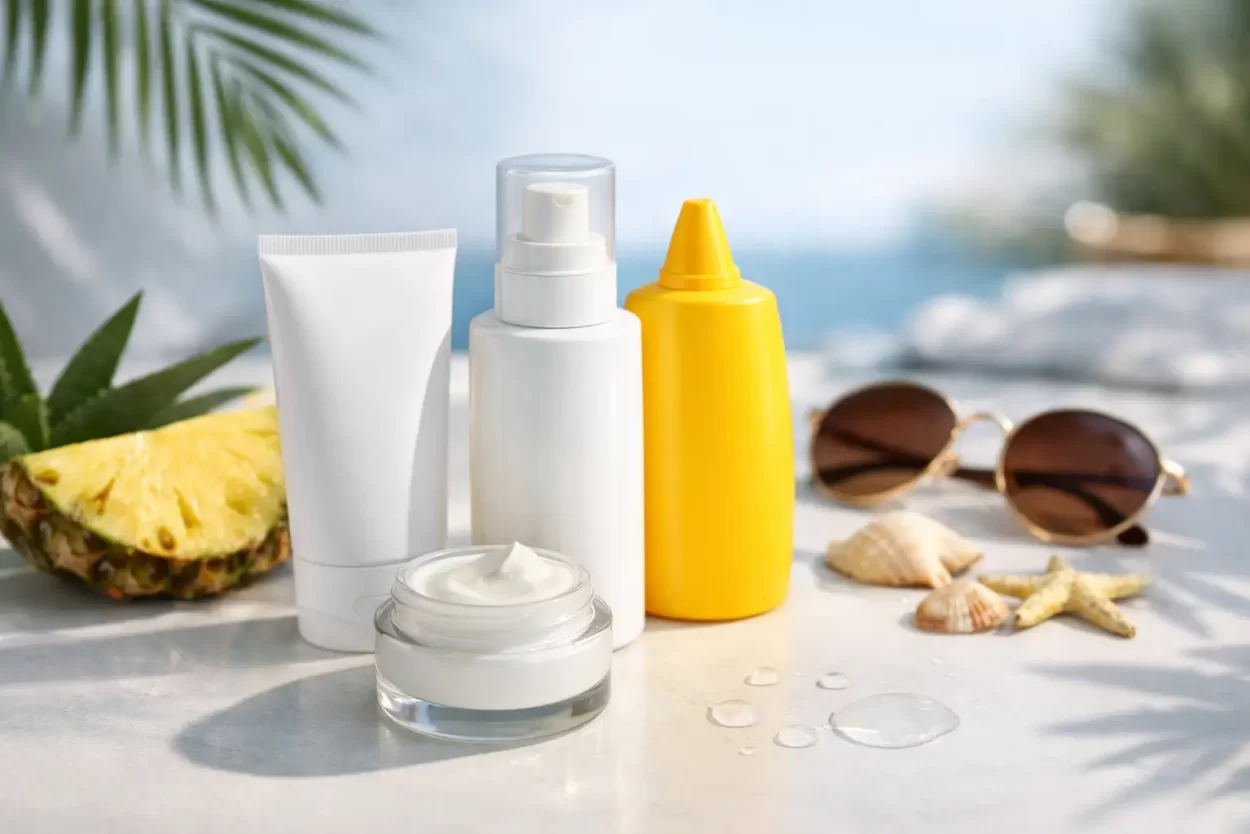
Best SPF Cream for Oily Skin: A Complete Guide to Choosing the Right Sunscreen
If you have oily skin, you know the drill all too well: you apply SPF in the morning, it looks great for 20 minutes, then the shine appears, your makeup slides off, and you feel like your pores are getting congested. This is where the confusion sets in—is the sunscreen too heavy, or is your skin reacting to the wrong formula? In practice, the issue is usually not the SPF itself, but the texture.
Sun protection remains a fundamental step, even if you struggle with acne, excess sebum, or enlarged pores. Without it, post-acne marks linger longer, your skin irritates more easily, and treatments with acids or retinoids become harder to tolerate. That’s precisely why a review of SPF cream for oily skin must start with one simple criterion: you’re not just looking for good protection, but protection you can actually wear every single day.
SPF Cream Review for Oily Skin – What Really Matters
For oily skin, the best SPF isn’t necessarily the most hyped one, but the one you can comfortably wear for hours without feeling a heavy film on your skin. The most skin-friendly formulas are typically fluids, gel-creams, or very lightweight lotions. These spread more smoothly, absorb faster, and are less likely to leave that sticky feeling that makes you want to wash your face before lunch.
Finish also matters greatly. If you see terms like matte, dry touch, oil control, or non-comedogenic on the label, that’s a good sign, but not a guarantee. Some products labeled as mattifying can actually over-dry your skin and trigger even more sebum production. Others appear matte when first applied but become shiny when combined with serums, creams, or foundations you layer underneath. This is where things get trickier: you need to think about your entire routine as one complete system.
Another frequently overlooked detail is application amount. Many people with oily skin apply too little SPF out of fear it will make them shine. The result is weaker protection and a wrong impression about the product. If the texture forces you to use less, it’s probably not the right formula for you.
How to Recognize a Formula That Works for You
When reading a product description, focus first on the texture promise, not the general marketing hype. For oily skin, the easiest to integrate are fragrance-free formulas with no oily appearance and rapid absorption. Ingredients like niacinamide, silica, or various absorbent powders can help control shine, but shouldn’t be viewed as miracle solutions.
Equally important is avoiding extremes. A very emollient cream designed for dry skin can feel heavy and emphasize shine. On the flip side, an over-alcoholized SPF may seem excellent in the first few days, then leave your skin feeling tight, flaky, or producing even more compensatory sebum. If you also have active acne or sensitivity, balance becomes even more critical.
Types of SPF That Work Best on Oily Skin
In a review of SPF cream for oily skin, it’s worth separating formulas by how they behave on the skin. Fluids are usually the favorites of those with combination or oily skin. They spread quickly, require minimal rubbing, and feel light. Gel-cream is the second solid option, especially if you want comfort without a dry feeling.
There are also mineral SPFs that work well on oily skin, particularly tinted ones or modern formulations with a fluid texture. However, much depends on the shade and how it settles on your skin. Some leave a visible film or emphasize texture. If you want a product that looks good even without makeup, testing becomes essential.
Korean SPFs and European dermatological cosmetics are often popular precisely because they excel in texture. That doesn’t mean every viral product will suit you. Very oily skin in a hot, humid city will react differently from combination skin kept mostly indoors with air conditioning.
Products Worth Your Attention
La Roche-Posay Anthelios UVMune 400 Oil Control Fluid is one of the safest choices if you want an SPF with a more matte finish and excellent protection. It feels light and, for many people, holds up well under makeup. The downside is that on some skin types it can emphasize dehydrated areas, especially if you’re also using anti-acne treatments.
Eucerin Oil Control Sun Gel-Cream SPF 50+ is another frequently recommended product for oily skin. It has a lightweight texture and performs well throughout the day without leaving an immediately greasy feeling. However, for skin sensitive to alcohol, it may cause slight stinging upon application.
Bioderma Photoderm Aquafluide SPF 50+ remains a balanced option for those who want fluidity and a less shiny appearance. It’s the type of product that works well in a simple routine, without too many layers underneath. If you apply many products beforehand, it may start to tighten slightly.
Heliocare 360 Gel Oil-Free SPF 50 is appreciated precisely because it was designed with combination and oily skin in mind. It has a pleasant finish and is usually not heavy. However, on very sensitive or reactive skin it may require a gentler moisturizer underneath.
Beauty of Joseon Relief Sun is loved for its comfort and lack of that classic sunblock feel. It can be great on combination skin. On very oily skin, especially in the summer, it can feel too emollient after a few hours, so it's not the ideal choice for everyone.
ISDIN Fusion Water SPF 50 is a popular option when you want a nearly invisible feel. It sinks into the skin quickly and doesn't weigh it down. The downside is that on some skin types, the shine comes back pretty quickly, so don't rely on it if mattifiation is your main priority.
What should you choose depending on your main problem?
If shine is your primary concern, go for oil control or dry touch formulas. If acne is your problem and you have a lot of active products in your routine, look for a milder SPF, without a strong fragrance and without a very aggressive drying effect. If you wear makeup every day, the texture must be compatible with your foundation, otherwise a product that is good on paper becomes frustrating in reality.
There is also the frequent situation where the skin is oily but dehydrated. In this case, an SPF that is too matte can look bad on the skin and accentuate fine lines of dehydration. You need a light but comfortable formula, not necessarily the most matte version on the shelf.
Mistakes that make any SPF look bad
Many complaints are not just about the product. If you apply an oily serum, a very rich cream and then a fluid SPF underneath, the result will almost certainly be too shiny. Likewise, if you don't leave a few minutes between layers, the product can migrate or collect around the nose and forehead.
Another mistake is choosing an SPF based solely on the recommendations of someone else with oily skin. Oily skin is not a single category. Some people have sensitive skin, others have inflammatory acne, others just excess sebum in the T-zone. That's why reviews are useful as a guideline, not as a final verdict.
The season also matters. A product that's great in winter can become difficult in August. If you're on a budget, the most practical solution is to have two options: one that's more comfortable for the cold months and one that's more mattifying for the heat.
How to test correctly before deciding
Don't judge an SPF in the first 30 seconds. Apply it in the right amount, on top of your regular routine, and see how it looks after 15 minutes, after 3 hours, and after a day with makeup. That's where you'll see the truth: if it's too shiny, if it stings your eyes, if it feels tight, or if it makes your skin feel suffocated.
It's worth noting three simple things: how it applies, how it looks at noon, and how it behaves when reapplying. Some formulas are great in the morning, but impossible to reapply over makeup. Others don't look perfect at first, but last surprisingly well throughout the day.
If you follow quick recommendations and practical guides, that's exactly what Muniom is all about - choosing faster and with fewer mistakes, not buying ten products until you find the right one.
Helpful Verdict: What's Worth Looking For
If you want a safe choice for oily skin, start with an SPF 50+ fluid or gel-cream with a natural to matte finish and a simple formula. La Roche-Posay Anthelios Oil Control, Eucerin Oil Control, and Heliocare 360 Gel Oil-Free are options that make sense if sebum control is your priority. If you want more comfort than mattification, ISDIN Fusion Water or Beauty of Joseon Relief Sun may be more pleasant, but it depends on how oily your skin is.
The right choice is not the most famous cream, but the one that you apply correctly, every morning, without feeling like you're making a major compromise. When you find the right texture, SPF no longer feels like an annoying step, but one that makes your routine easier.


Comments are closed.