Learn how to recycle correctly at home with our comprehensive waste sorting guide. Discover what goes in each category and common mistakes to avoid for a cleaner environment.
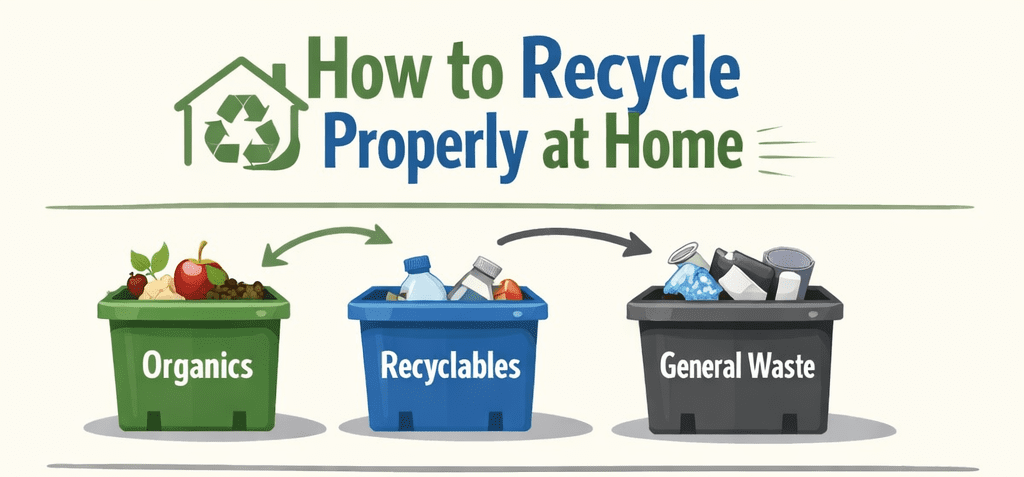
How to Recycle Correctly at Home – Complete Waste Sorting Guide
Proper waste recycling helps us protect the environment, conserve natural resources, and reduce pollution. Even though local authorities provide separate collection points, the process starts in your own home.
Every small gesture counts: sorting waste at home reduces the amount of garbage that ends up in landfills and enables the reuse of valuable materials.
What does recycling correctly mean?
Proper recycling involves:
- Separating waste by category (plastic, paper/cardboard, glass, metal, biodegradable).
- Cleaning packaging before throwing it away.
- Storing recyclable materials in appropriate containers.
- Avoiding contamination of recyclable fractions with food scraps or other unsuitable waste.
How to sort waste correctly at home
1. Plastic and metal
✅ What gets recycled:
- PET bottles (water, juice) – empty and rinsed
- Aluminum cans (beer, juice)
- Metal food cans (cleaned)
- Yogurt and sour cream containers (cleaned)
- Clean food wrap, bags, shopping bags (if accepted by your local waste management company)
❌ What does NOT get recycled – plastic/metal:
- Plastic toys
- Chip bags with metallic interior
- Dirty plastic utensils
- Packaging contaminated with food residue
2. Paper and cardboard
✅ What gets recycled:
- Newspapers, magazines, brochures
- Notebooks, paper sheets
- Cardboard boxes (flattened)
- Cardboard tubes from paper towels
- Cardboard egg cartons
❌ What does NOT get recycled – paper/cardboard:
- Waxed, laminated, or metallized paper
- Cardboard dirty with oil or grease (e.g., oily pizza boxes)
- Tissues and used toilet paper
3. Glass
✅ What gets recycled:
- Empty, cleaned jars
- Wine, beer, and juice bottles
- Clear, green, or brown glass packaging
❌ What does NOT get recycled – glass:
- Mirrors, windows, windshields
- Porcelain, ceramics, light bulbs
- Heat-resistant glass (e.g., from cookware)
4. Biodegradable (organic) waste
✅ What can be composted:
- Fruit and vegetable peels
- Coffee grounds, tea bags
- Leaves, grass, dried flowers
- Eggshells
❌ What does NOT get composted:
- Meat, fish, dairy products
- Oils or fats
- Pet waste
If you don’t have composting facilities at home, many communities offer collection for biodegradable waste.
5. Hazardous waste (DO NOT throw in regular bins!)
- Batteries, accumulators
- Energy-saving bulbs, neon lights
- Expired medications
- Paints, varnishes, sprays
- Used cooking oil
For these items, look for special collection points in your city (hypermarkets, pharmacies, recycling centers).
Common recycling mistakes (and how to avoid them)
❌ You throw unrinsed plastic in recycling – You contaminate the entire fraction.
✅ Quickly rinse containers before putting them in the bin.
❌ You mix clean paper with cardboard dirty from food – The paper can no longer be recycled.
✅ Select only dry, clean paper.
❌ You throw windows or mirrors in the glass container – They have a different chemical composition and aren’t accepted.
✅ Take them to specialized collection centers.
Tips for easier recycling at home
- Set up different boxes or bags for each type of waste (plastic/metal, paper, glass).
- Label containers to avoid confusion.
- Teach the little ones about recycling – turn the process into an educational game!
- Check regularly for local collection rules (they may vary from one community to another).
- Reduce at the source: avoid excessively packaged products and use reusable shopping bags.
Correct recycling starts with you! Even though it seems like a small step, together we can contribute to a cleaner and healthier environment for everyone. Remember: stay informed, sort responsibly, and recycle!
Read also: How to Make Compost in Your Apartment – Complete Guide for Sustainable Living