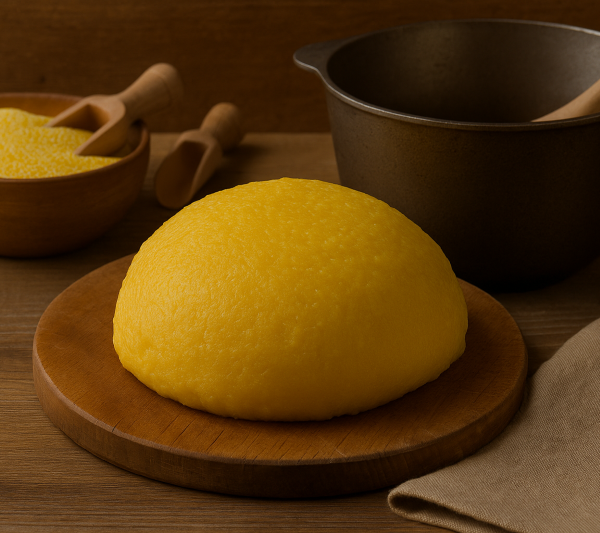
Discover the difference between 000 and 650 flour: what the types mean, how they affect dough, and which to choose for bread, pizza, braided bread, or desserts.
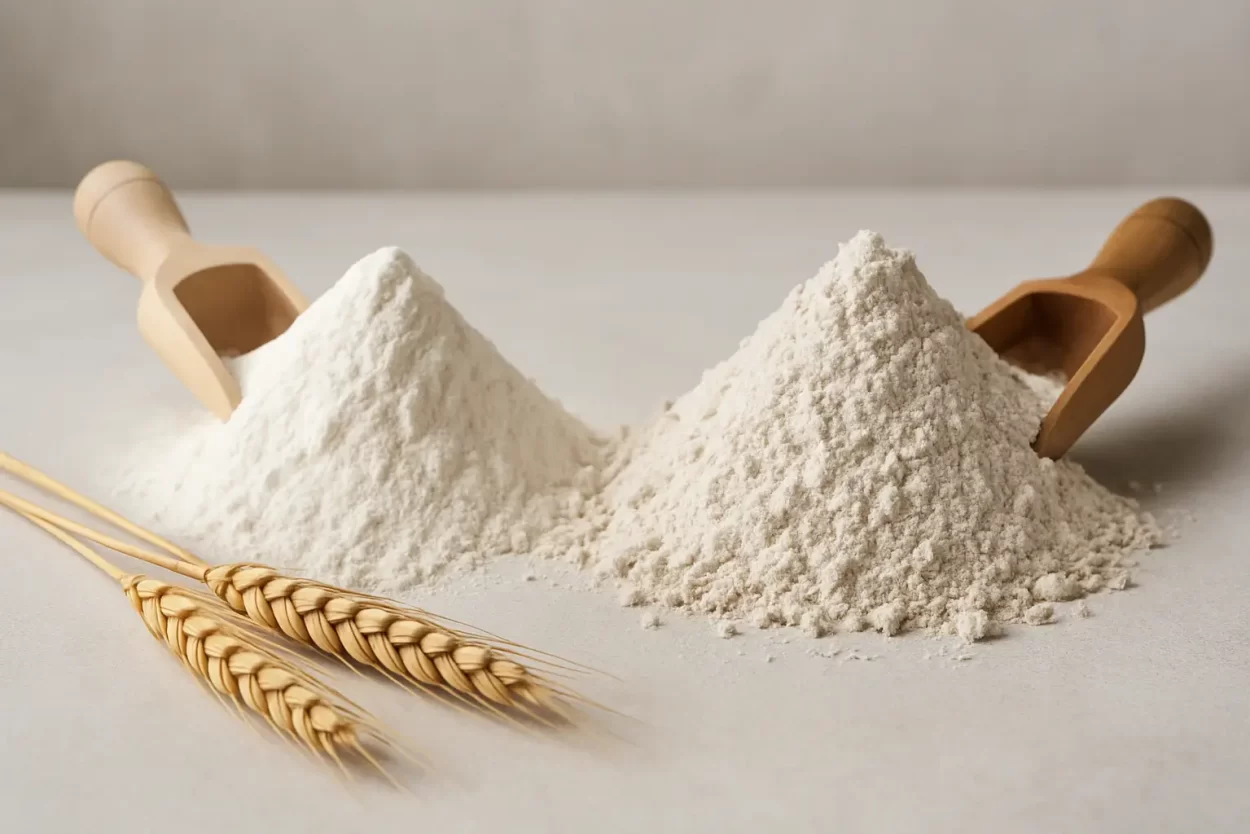
000 vs 650 Flour: Which Should You Choose and Why?
You have a simple crepe recipe or a weekend pizza, you open the cupboard and see two bags: 000 flour and 650 flour. You use one "for baking," the other "for bread," but when the choice really matters, the question arises: why do they behave differently if both are just wheat flour?
The difference isn't just marketing or family habit. The flour type influences how much water it absorbs, how elastic the dough becomes, how it rises during fermentation, and even the final taste. And when you understand the logic behind it, you'll avoid many failures: sticky dough, dense bread, crumbly cake layers, or "gluey" sponge cake.
What Do Types 000 and 650 Actually Mean?
Flour type is mainly linked to the ash content (minerals) remaining after burning a standard amount of flour. In short: the smaller the number, the whiter and more refined the flour, with fewer particles from the grain husk.
Type 000 flour is typically very white and very fine, obtained mostly from the grain's core (endosperm). Type 650 flour is also white flour, but usually somewhat more "substantial" and closer to what many call universal bread-making flour.
Here's an important nuance: the type (000, 650) is not the same as protein percentage or flour strength (W). Two 650 flours can be quite different from each other, depending on the wheat variety, milling process, and the producer's stated purpose.
The Difference Between 000 and 650 Flour, Explained Simply
The most useful difference for cooking is how they behave in dough.
Type 000 flour tends to be finer and "cleaner" in taste, with a texture that favors delicate, airy doughs when you don't want a very strong gluten network. This is why it's often found in cakes, sponge cakes, pastry sheets, and biscuits.
Type 650 flour tends to absorb liquid slightly better and to support structure in fermented doughs more effectively. In many kitchens, 650 is the base for homemade bread, rolls, pizza, or risen pastries, striking a good balance between elasticity and ease of handling.
However, "tends" is the key word. If you're making bread and notice the dough turns out soft, spreads, or doesn't hold its shape, the problem might be protein, not the type. That's why the label matters: also check the "protein/100 g."
How Gluten and Protein Affect the Result
In practice, gluten (formed from wheat proteins, especially glutenin and gliadin) is the "skeleton" of the dough. When you knead and hydrate flour, this network traps gases produced by yeast or sourdough starter, and the dough rises.
For fermented doughs (bread, pizza), you typically want flour with higher protein. For delicate cakes, you want flour with lower protein, so they don't turn out elastic.
Often:
- 000 flour is chosen for desserts precisely because, on average, it gives a finer and more delicate texture
- 650 flour is chosen for bread because, on average, it behaves better during fermentation and baking
But if you find a 000 with high protein (for example, 11-12 g), it can work excellently for pizza, and a 650 with lower protein can work fine for sponge cake.
What Recipes Is 000 Flour Best For?
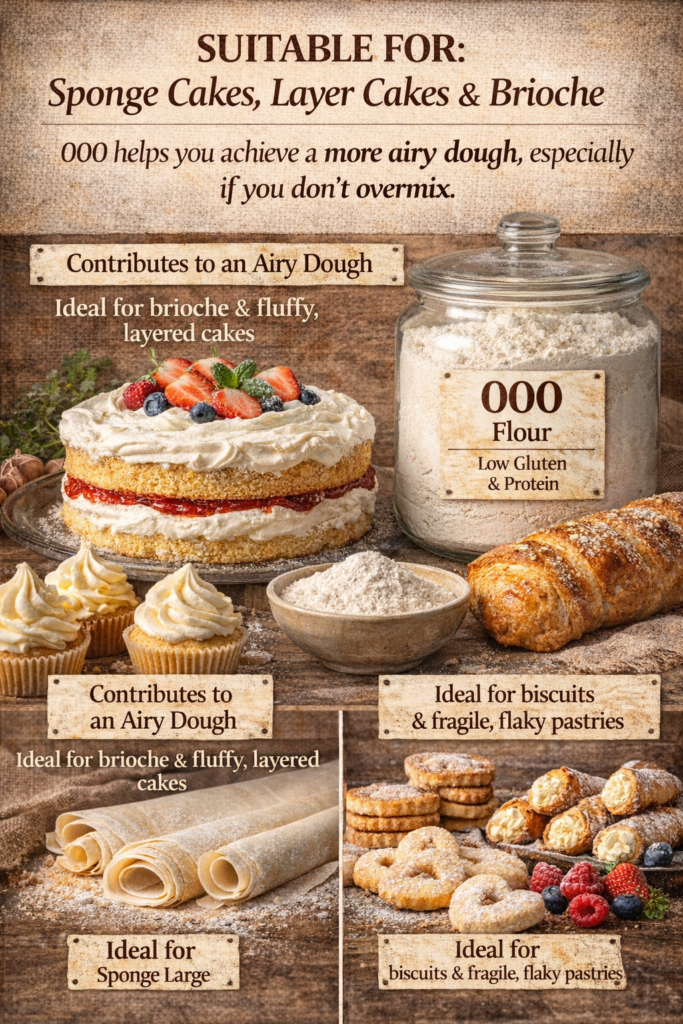
Type 000 flour shines when you want a fine crumb, delicate texture, and a "clean" taste without that "bread-like" feeling in your dessert.
For sponge cakes, layer cakes, and brioche, 000 helps you achieve a more airy dough, especially if you don't overmix. For biscuits and delicate pastry sheets, it contributes to easy crumbling and a more uniform appearance.
For crepes and waffles, 000 is a convenient choice, being easy to incorporate into the batter without lumps and offering a finer texture. If you want more substantial crepes or with a slight "bite," 650 can be an alternative, but it might need a splash more liquid.
For sweet braided bread, things depend. Many use 000 for fineness, but this bread also needs structure, especially since it's rich in eggs, milk, and fat. If your 000 has decent protein and you knead correctly, it can turn out excellent. If not, a 000 + 650 blend can be a simple solution.
What Recipes Is 650 Flour Best For?
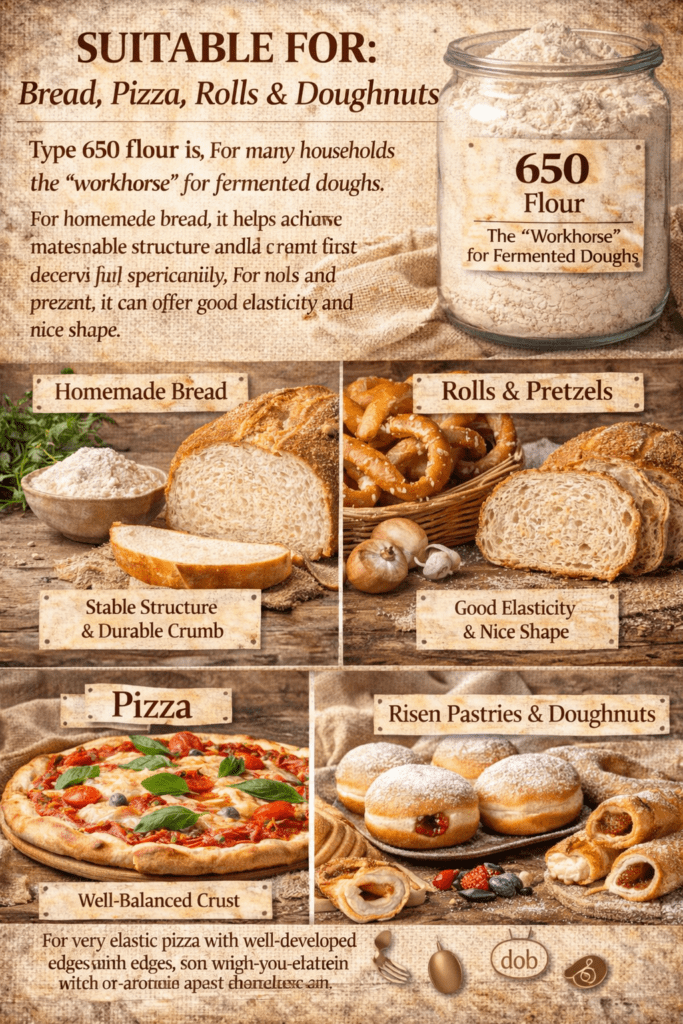
Type 650 flour is, for many households, the "workhorse" for fermented doughs. For homemade bread, it helps achieve more stable structure and a crumb that doesn't fall apart easily. For rolls and pretzels, it can offer good elasticity and nice shape.
For pizza, 650 is a practical option, especially if you don't have specialty pizza flour. You'll get a well-balanced crust: neither too soft nor too fragile. If you prefer very elastic pizza with well-developed edges, you might get even better results with a higher-protein flour, regardless of whether it's 650 or another type.
For risen pastries and doughnuts, 650 helps the dough hold the filling and not tear during shaping. However, if you want very puffy and fine doughnuts, it's worth testing 000 as well, especially combined with short kneading and adequate rest time.
Quick Rule: How to Choose in 10 Seconds at the Store
When you want quick results, use a simple rule: choose the type based on the product, then adjust based on protein.
If you're making delicate desserts or fine cake layers, start with 000. If you're making bread, pizza, rolls, start with 650.
Then check the protein: for bread and pizza, look for typically higher values (approximately 11-13 g/100 g). For baking, many recipes work better with lower values (approximately 9-11 g/100 g). It's not a rule, but it's a benchmark that saves you from random trials.
What Happens If You Switch Them (and How to Fix It)
If you use 000 instead of 650 for bread, you might end up with softer, stickier dough that stretches instead of staying "on its feet." It's not a disaster, but you need adjustments: reduce hydration slightly (less water), work with stretch and fold, and use a pan or proofing basket to support the shape.
If you use 650 instead of 000 for baking, you risk denser or slightly elastic texture, especially if you overmix. Fix it simply: mix only until incorporated, sifting becomes more useful, and sometimes it helps to add a bit more fat (butter/oil) or add a tablespoon of cornstarch if the recipe allows.
A Small Detail That Makes a Big Difference: Water Absorption
Even with the same recipe, two flours can require different amounts of liquid. Type 650 flour, being often more "hydrophilic," can absorb water better, and the dough feels more bound after 10-15 minutes of rest.
That's why when kneading fermented dough, don't rush to add more flour right away. Let it rest for 10 minutes to hydrate, then decide. For many doughs, this short pause does more than 5 extra minutes of kneading.
Is It Worth Mixing Them?
Yes, in many situations the mix is the simplest path to "exactly what you want." If you want fine braided bread that doesn't crumble, a blend can bring balance. For pizza, the mix can help you achieve both elasticity and pleasant bite texture.
The only concern is consistency: note your proportions and the liquid used so you can repeat the result. Once you've found the right combination for your oven and your kneading style, you won't depend on luck anymore.
Remember When Reading Recipes
Many traditional recipes written "by eye" only say "flour" or, at best, "000." In practice, the author may have used a 000 with high protein or a weaker 650, and you get a different result.
When a recipe doesn't turn out, don't immediately assume you made a mistake. Sometimes the flour is different. Adjust water, kneading time, and rest. And if you want quick and practical explanations for kitchen choices, this kind of clarification fits perfectly with the style on Ruki.ro.
The Question That Matters: Which Is "Better"?
There's no "better" in general, there's "better suited" for what you want to bake.
Type 000 flour helps when you want fineness and delicacy without excess elasticity. Type 650 flour helps when you want structure, beautiful fermentation, and dough that's easier to shape. When you're torn between two results (for example, very puffy yet stable braided bread), combine them or choose based on protein.
Next time you pick up a bag of flour, treat it as an active ingredient, not just a background element. It's one of the fastest changes that consistently elevates your results without buying new equipment or learning complicated techniques.