
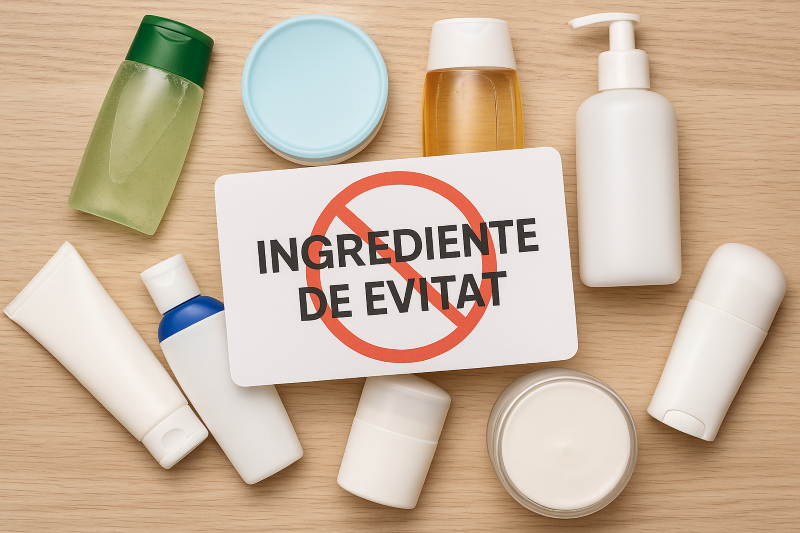
When choosing cosmetics, most of us rarely check the ingredient list carefully. Complicated terms, hard-to-pronounce scientific names, and attractive packaging can mask the presence of controversial substances potentially harmful to skin, health, or the environment.
Harmful Cosmetic Ingredients to Avoid – A Complete Guide to Safer Beauty Choices
When choosing cosmetics, most of us rarely check the ingredient list carefully. Complicated terms, hard-to-pronounce scientific names, and attractive packaging can mask the presence of controversial substances potentially harmful to skin, health, or the environment. In this article, we present the most well-known ingredients you should avoid in cosmetics, why they’re considered dangerous, and what safer alternatives exist.
1. Parabens
What they are:
Preservatives used to prevent bacterial and mold growth.
Why you should avoid them:
Parabens (e.g., methylparaben, propylparaben, butylparaben) have been associated with hormonal disruption, with a chemical structure similar to estrogen. Recent studies suggest a possible link to breast cancer development, although evidence is not yet conclusive.
Where to find them:
Face creams, shampoos, deodorants, body lotions (e.g., some Nivea, Garnier, Avon products).
Safer alternatives:
Cosmetics with natural preservatives (e.g., benzoic acid, potassium sorbate), certified organic products or “paraben-free” options (e.g., Apivita, CeraVe, Ivatherm products).
2. SLS and SLES (Sodium Lauryl Sulfate and Sodium Laureth Sulfate)
What they are:
Cleansing and foaming agents that degrease skin and hair.
Why you should avoid them:
They can cause irritation, severe dryness, and disrupt the natural skin barrier. SLES may contain traces of dioxane, a potentially carcinogenic substance.
Where to find them:
Shampoos, shower gels, toothpaste (e.g., Head & Shoulders, Palmolive, Colgate).
Safer alternatives:
Sulfate-free products with gentle cleansing agents (e.g., Lauryl Glucoside, Decyl Glucoside – see Bioderma Nodé, CeraVe Hydrating Cleanser, Urtekram shampoos).
3. Aluminum in Deodorants
What it is:
Aluminum salts block sweat glands to prevent perspiration.
Why you should avoid it:
It can be absorbed through the skin, and there has been discussion about a possible link to breast cancer or Alzheimer’s disease, though no conclusive evidence exists. What is certain is that it can irritate sensitive skin.
Where to find it:
Traditional antiperspirants (e.g., Dove Original, Nivea Black & White, Rexona).
Safer alternatives:
Natural deodorants without aluminum salts – e.g., Borotalco Natural, Biobaza, Weleda Citrus, or Alverde with alum stone.
4. Formaldehyde and Formaldehyde Releasers
What they are:
Preservatives that gradually release formaldehyde – an agent recognized as carcinogenic.
Why you should avoid them:
Formaldehyde can cause allergic reactions, irritation, respiratory issues, and is classified as a hazardous substance by the WHO.
How they appear on labels:
DMDM Hydantoin, Imidazolidinyl Urea, Diazolidinyl Urea, Quaternium-15.
Where to find them:
Nail polish, hairspray, hair and nail care products (e.g., some cheap nail lacquers, nail-strengthening treatments).
Safer alternatives:
Cosmetics with formaldehyde-free certification – e.g., Kallos Vegan, Melkior 9-Free nail lacquers, Zoya.
5. Phthalates
What they are:
Solvents and plasticizers used to fix synthetic fragrances and increase flexibility in products.
Why you should avoid them:
They are endocrine disruptors that can affect fertility, child development, and hormonal balance. They are often hidden under the term “fragrance.”
Where to find them:
Fragrances, scented lotions, nail polish, foundations (e.g., some drugstore products – Maybelline, L’Oréal).
Safer alternatives:
Products with natural fragrance or fragrance-free options, e.g., Ivatherm, CeraVe, The Ordinary.
6. Triclosan
What it is:
An antibacterial agent used in hygiene products.
Why you should avoid it:
It can affect the endocrine system, skin flora, and contribute to antibiotic-resistant bacteria.
Where to find it:
Antibacterial soaps, toothpaste, shower gels (e.g., some older Colgate Total varieties, cheap antibacterial gels).
Safer alternatives:
Antibacterial products based on essential oils (tea tree, lavender), organic disinfectant gels (e.g., Dr. Bronner’s, Sonett, Bioearth).
7. Petrolatum (Vaseline, Mineral Oil)
What it is:
A petroleum derivative used as an occlusive moisturizing agent.
Why you should avoid it:
It clogs pores, doesn’t nourish the skin, and some untreated forms may contain toxic contaminants (PAHs).
Where to find it:
Lip balms, face creams, lotions (e.g., Vaseline, cheap children’s or budget products).
Safer alternatives:
Shea butter, coconut oil, jojoba oil – see products from The Body Shop, Himalaya, Cattier.
How to Read Cosmetic Labels: Useful Tips
- Ingredients are listed in descending order of concentration.
- Names follow INCI standards – use apps like INCI Beauty, Yuka, or Think Dirty to quickly verify ingredient safety.
- Look for mentions like “paraben-free,” “fragrance-free,” “natural,” but be careful – not all labels are 100% honest. Check the complete ingredient list.
- Prefer certified products (Ecocert, COSMOS Organic, EWG Verified).
Conclusion
In a world where we’re increasingly aware of what we put on our skin, it’s essential to learn how to read labels and choose cosmetics carefully. It doesn’t mean you have to completely abandon supermarket products – just be more mindful of the formula. Alternatives exist, are affordable, and increasingly easier to find in pharmacies, health stores, or online.
Comments are closed.