
Learn how to protect your children online with practical strategies for identifying risks, setting boundaries, and fostering open communication about internet safety.
Children’s Internet Safety: A Parent’s Guide to Protecting Kids Online
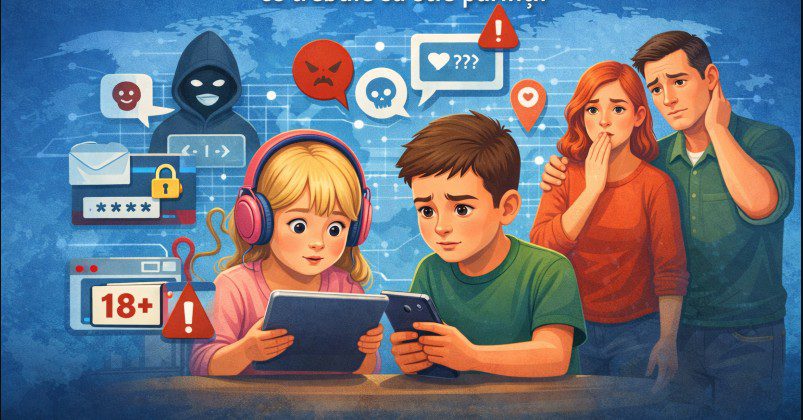
The internet is part of our children’s lives from very early ages. YouTube cartoons, online games, TikTok, WhatsApp, online school – all are their “normal.”
The problem is that the internet was not designed with children in mind, and young ones don’t yet have the maturity to recognize dangers.
This article is a practical guide for parents:
- what real risks exist;
- what mistakes children make (without realizing);
- what parents can do specifically to protect them.
Why is the internet dangerous for children?
Children:
- trust easily,
- want to be accepted,
- are curious,
- don’t anticipate consequences.
These are exactly the things exploited by ill-intentioned people.
⚠️ Important to remember:
It’s not just “neglected children” who end up in dangerous online situations. It can happen to anyone.
The most common online dangers for children
1. Contact with strangers
On online games, social networks, or chat apps, children can talk to people who pretend to be children, but aren’t.
Real example:
A “12-year-old” who:
- offers help in a game,
- gives compliments,
- asks to move the conversation to WhatsApp or Instagram.
👉 From here can begin:
- emotional manipulation,
- requests for photos,
- blackmail.
2. Age-inappropriate content
Even on seemingly “child-friendly” platforms, content can appear:
- violent videos,
- vulgar language,
- sexual content,
- dangerous challenges.
Often, an “innocent” video automatically leads to a much more problematic one.
3. Cyberbullying (online harassment)
Online harassment can take forms such as:
- offensive messages,
- humiliating jokes in group chats,
- sharing photos without consent.
⚠️ Unlike traditional bullying, online bullying:
- doesn’t stop when the child gets home,
- is visible to many,
- leaves traces (screenshots, comments).
4. Sharing personal information
Children can share, without realizing the danger:
- full name,
- school,
- address,
- daily schedule,
- photos from home.
❌ Even a mundane photo can contain:
- an address on an envelope,
- the school’s logo,
- location activated automatically.
5. Online games with active chat
Many popular games have:
- voice or text chat,
- the ability to receive private messages,
- interactions with adults.
Children can be exposed to:
- aggressive language,
- manipulation,
- scam attempts.
What parents can do – simple and effective measures
✔ Talk openly with your child (without scaring them)
The most important thing:
👉 your child needs to know they can come to you without fear.
Tell them clearly:
- it’s not their fault if someone bothers them,
- they won’t be punished if they tell the truth,
- any situation can be resolved together.
✔ Set clear internet rules
Examples of simple rules:
- no talking to strangers
- no sending personal photos
- no revealing where they live
- no giving passwords to anyone
It’s important that the rules are:
- explained,
- consistent,
- age-appropriate.
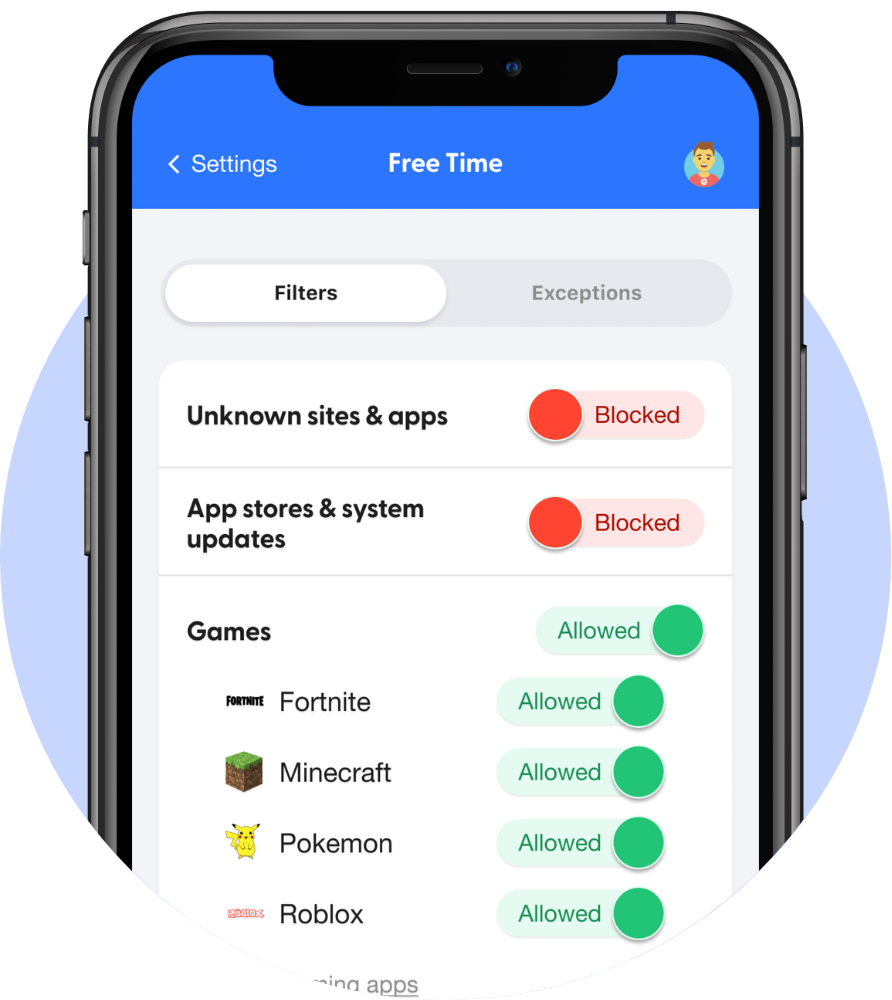
✔ Use parental controls
Parental control does NOT mean spying – it means protection.
You can:
- limit time spent online,
- block inappropriate websites,
- see what apps are installed.
✔ Pay attention to behavioral changes
Warning signs:
- the child becomes withdrawn,
- avoids the phone or hides it,
- is anxious or sad,
- sleeps poorly.
These can indicate online problems.
✔ Be a role model
Children learn more from what they see than from what they’re told.
If you:
- are always on your phone,
- post excessively,
- ignore the rules,
they will too.
What to do if you suspect your child is in online danger?
- Stay calm
- Listen without judgment
- Save evidence (messages, screenshots)
- Block the people involved
- Report the situation on the platform
- If it’s serious, seek specialized help
⚠️ Don’t minimize the situation – for your child, the emotional impact can be significant.
Conclusion
The internet is not “bad,” but it’s not automatically safe either. Children need guidance, not total bans.
An informed, listened-to, and supported child is much better protected than one who is excessively controlled.
Online safety starts at home, with dialogue, trust, and clear rules.


Comments are closed.