
Children’s skin is significantly more sensitive than adults’. Discover which materials to avoid in your child’s clothes and find safe, comfortable alternatives tailored to each age group.
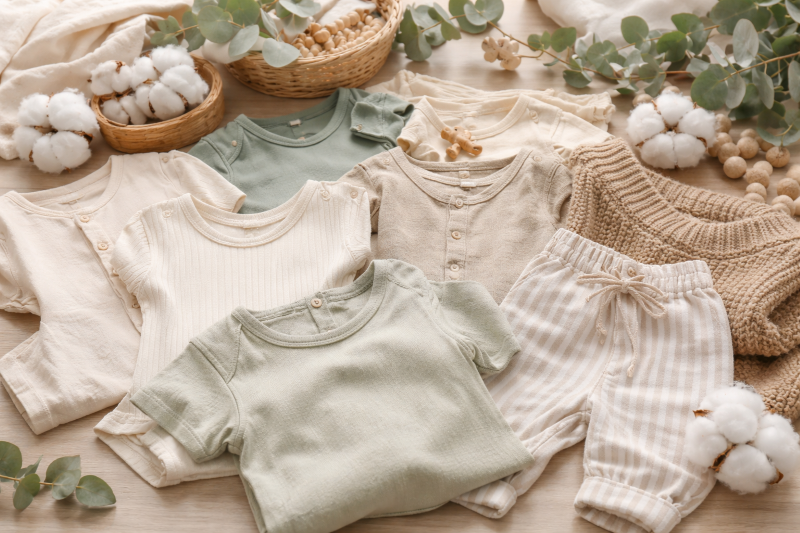
Materials to Avoid in Children’s Clothes – Complete Age-by-Age Guide
Choosing clothes for children goes beyond color or design. The material they’re made from plays an essential role in skin health, daily comfort, and even the quality of your little one’s sleep. Children’s skin is much more sensitive than adults’, and certain textiles can cause irritation, allergies, or overheating.
In this detailed guide, you’ll discover which materials should be avoided in children’s clothes, why they’re problematic, and what safe alternatives exist, clearly structured according to your child’s age.
Why Does Material Matter in Children’s Clothes?
Children’s skin:
- is thinner;
- absorbs chemical substances more easily;
- doesn’t regulate temperature efficiently;
- is prone to dermatitis and irritation.
Inappropriate material can lead to:
- redness and itching;
- excessive sweating;
- eczema or atopic dermatitis;
- constant discomfort (which translates to crying, restlessness, poor sleep).
Materials to Avoid in General for Children’s Clothes
Regardless of age, there are several textiles that should be limited or avoided completely.
❌ 100% Polyester
- Doesn’t allow skin to breathe
- Traps heat and moisture
- Promotes irritation and unpleasant odors
👉 Acceptable only in small amounts (max. 20–30%), combined with natural fibers.
❌ Nylon (Polyamide)
- Hard, artificial textile
- Can cause contact allergies
- Not suitable for prolonged wear
❌ Acrylic
- Mimics wool, but without natural properties
- Easily builds up static electricity
- Can irritate sensitive skin
❌ Intense Textile Dyes
- Brightly colored dyes may contain heavy metals
- Increase allergy risk
- Especially dangerous for clothes in direct contact with skin
Recommended and Materials to Avoid by Age
👶 0–3 Months – Newborns
What matters at this stage:
- skin is extremely sensitive;
- immune system is immature;
- baby can’t regulate body temperature.
❌ To Avoid:
- polyester, nylon, acrylic;
- wool directly on skin;
- clothes with hard labels or thick seams;
- chemically treated materials (wrinkle-resistant, stain-resistant).
✅ Recommended:
- 100% cotton or organic cotton;
- muslin;
- bamboo (high-quality bamboo viscose).
👶 3–9 Months – Active but Still Sensitive Babies
Characteristics:
- more frequent sweating;
- increased movement;
- prolonged contact with clothing.
❌ To Avoid:
- synthetic blends over 50%;
- rigid denim;
- waterproof materials worn directly on skin.
✅ Recommended:
- soft, certified cotton;
- bamboo;
- natural jersey;
- small amounts of elastane (max. 5%) for comfort.
👶 9–24 Months – Walking and Exploration Period
What matters now:
- freedom of movement;
- durability of clothes;
- temperature regulation.
❌ To Avoid:
- plastic-coated materials;
- 100% synthetic pants;
- very tight clothes made from artificial fibers.
✅ Recommended:
- cotton with a little elastane;
- thin linen (summer);
- french terry cotton.
🧒 2–5 Years – Active Kids, Intense Play
Main needs:
- durability;
- thermal comfort;
- ease of washing.
❌ To Avoid:
- cheap polyester tracksuits;
- synthetic fleece worn daily;
- clothes with stiff prints.
✅ Recommended:
- thick cotton;
- cotton + merino wool blend (outer layer);
- OEKO-TEX certified materials.
🧒 6–12 Years – School, Sports, Daily Activities
Characteristics:
- intense physical activity;
- perspiration;
- prolonged wear.
❌ To avoid:
- 100% synthetic sports clothes worn daily;
- materials that do not absorb perspiration.
✅ Recommended:
- breathable cotton;
- merino wool for cold season;
- natural combinations + modern technologies for sports only.
Comparative table – textile materials for children’s clothes
| Textile material | Skin risk level | Why it can be problematic | Recommended age |
|---|---|---|---|
| Organic cotton | 🟢 Very low | No chemical treatments, breathable, soft | 0+ months |
| 100% cotton | 🟢 Low | Allows skin to breathe, absorbs moisture | 0+ months |
| Muslin | 🟢 Very low | Extremely delicate, ideal for sensitive skin | 0–12 months |
| Bamboo (viscose) | 🟢 Low | Naturally antibacterial, very soft | 0+ months |
| Linen | 🟡 Medium | Can be stiff if not properly finished | 6+ months |
| Merino wool | 🟡 Medium | Good thermal properties, but not directly on sensitive skin | 2+ years (outer layer) |
| Cotton + elastane (≤5%) | 🟡 Medium | Comfortable, but contains synthetic fiber | 6+ months |
| Polyester | 🔴 High | Does not breathe, promotes perspiration and irritation | Avoided under 3 years |
| Nylon (polyamide) | 🔴 High | Hard texture, risk of contact allergies | Avoided under 5 years |
| Acrylic | 🔴 High | Imitates wool, but irritates skin, becomes electrified | Avoided at any age |
| Synthetic fleece | 🔴 High | Retains heat, does not absorb perspiration | Occasionally only, 3+ years |
| Plastic-coated materials | 🔴 Very high | May contain toxic substances | Not recommended |
| Rigid denim | 🔴 High | Friction, stiffness, discomfort | 2–3+ years, occasionally |
How to quickly check if a material is safe?
- ✅ Read the label (the first materials listed are the predominant ones)
- ✅ Choose certified clothes (OEKO-TEX, GOTS)
- ✅ Avoid strong chemical smell
- ✅ Wash new clothes before first wear
Conclusion
Not all “cute” clothes are also healthy. Choosing the right materials for children, especially in the first years of life, can prevent irritations, allergies, and daily discomfort. The golden rule remains simple: less synthetic, more natural, adapted to age and activity level.