
Discover exact cooking times for white, basmati, jasmine, brown rice and more. Master water proportions and simple tricks for fluffy, perfectly cooked grains every time.
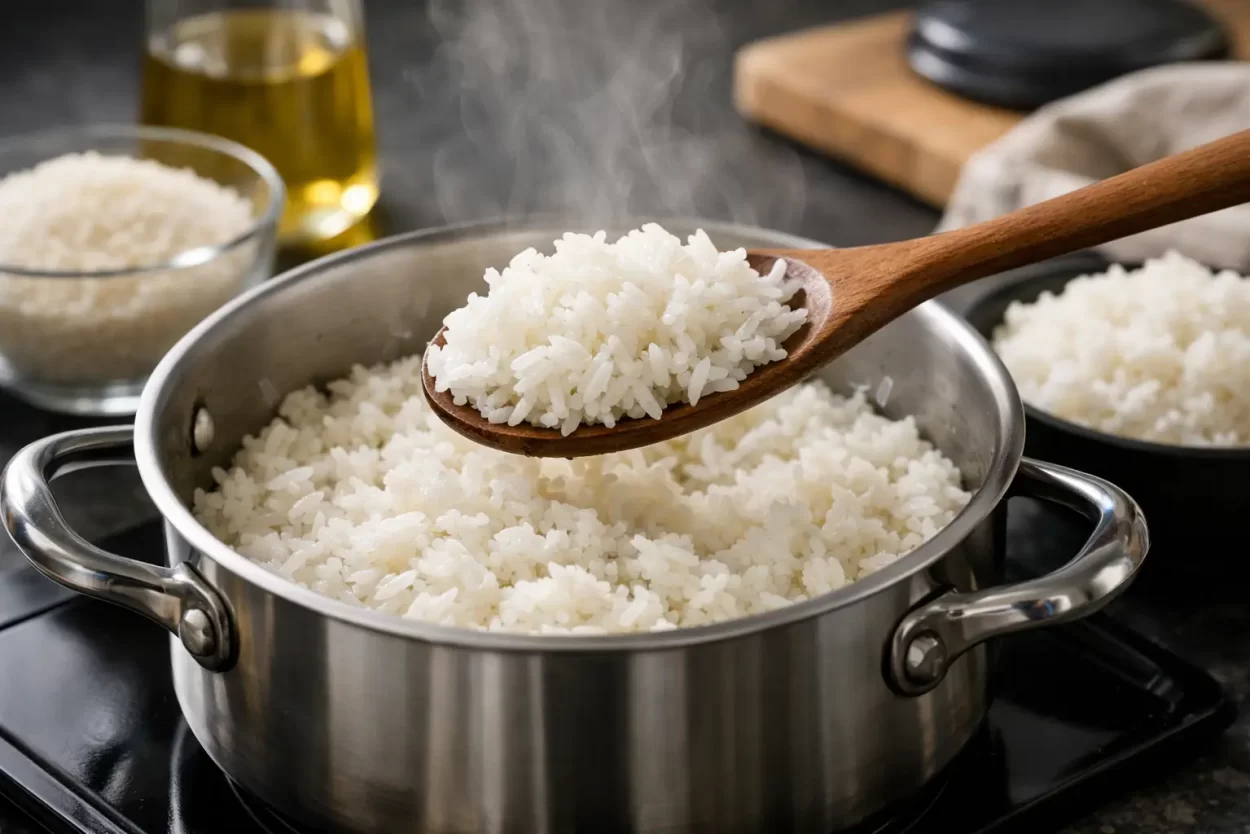
How Long to Cook Rice Perfectly: Complete Guide by Type and Method
You’ve put the rice on to boil and aren’t sure when to turn off the heat?
This is where most mistakes happen: rice seems like a simple ingredient, but it often turns out too soft, sticky, or with hard grains in the middle. If you want a quick answer to “how long does rice take to cook,” the time varies depending on the rice type and cooking method. In most cases, white rice cooks in 12 to 18 minutes, while brown rice takes 30 to 40 minutes.
But getting the timing right isn’t everything. The amount of water you use, whether you rinse it beforehand, and letting it rest after cooking all matter too. With a few simple rules, you’ll get perfect rice on the first try, without hovering over the pot.
How long to cook rice, depending on type
Not all varieties behave the same way. Long-grain white rice, basmati, jasmine, short-grain, and brown rice all absorb water differently and have completely different textures after cooking.
Long-grain white rice
This is the most common choice for side dishes. Usually, it cooks in 12-15 minutes on low heat with a lid. The grains stay more separate if you stick to the correct water ratio and don’t stir too often.
Basmati rice
Basmati has long, thin grains and, when cooked properly, comes out fluffy and light. The average cooking time is 10-12 minutes. Often, after turning off the heat, it needs another 5 minutes of rest under the lid to finish absorbing the steam.
Jasmine rice
It’s slightly softer and more aromatic than basmati. Usually, it cooks in 12-15 minutes. If you add too much water, it becomes sticky faster than other types.
Short-grain rice
This type works well for pilaf, creamy desserts with milk, or other creamy dishes. It generally cooks in 15-18 minutes. Because it releases more starch, the texture will naturally be creamier.
Brown rice
Cooking time clearly increases here. Brown rice cooks between 30 and 40 minutes, sometimes even 45, depending on the brand and how old it is. It needs more water and more patience, but it’s a good choice if you want a firmer texture and a slightly nutty flavor.
Parboiled rice
This type is harder to get wrong. Usually, it cooks in 15-20 minutes and holds the grain shape well. It’s perfect for salads, side dishes, and meals where you want a reliable result.
Water ratio matters just as much as cooking time
If you nail the timing but get the liquid amount wrong, the result still won’t be good. For most white rice varieties, the standard ratio is 1 cup of rice to 2 cups of water. However, this isn’t a hard-and-fast rule.
Basmati often turns out better at 1 cup of rice to 1.5 cups of water. Jasmine usually needs 1.5 to 1.75 cups of water. Brown rice frequently goes up to 2.5 cups of water per 1 cup of rice.
If you want separate grains, less water is often the right choice. If you’re after a creamy result for pilaf or risotto, the liquid is managed differently and added gradually.
How to cook rice properly in a pot
For everyday use, the classic pot method is the most practical. Start by rinsing the rice in 2-3 changes of water until the water runs clearer. This step helps a lot if you want to reduce excess starch and prevent the grains from sticking together.
Then put the rice in a heavy-bottomed pot, add your measured water and a pinch of salt. If you like, you can add a teaspoon of oil or a small knob of butter, especially for side dishes. Bring the water to a boil, then reduce the heat to the lowest setting and cover with a lid.
Once it’s simmering gently, start timing. Don’t lift the lid often and don’t stir. Rice cooks better from steam than from repeated interference.
When the time is up, turn off the heat and let the rice sit covered for 5-10 minutes. This is one of the most useful tricks. The grains settle, absorb the last of the steam, and stay fluffier.
How long to cook rice for pilaf
With pilaf, things change a bit. The rice is usually toasted briefly first, along with onions and sometimes carrots, then water or broth is added. Cooking time stays roughly between 15 and 18 minutes for white rice, but the final texture also depends on the vegetables, the amount of liquid, and the heat level.
If you add lots of wet ingredients, like mushrooms or zucchini, reduce the water slightly. If you use chicken or vegetable broth, the flavor will be richer, but watch the salt.
Good pilaf should be neither watery nor dry. When you take it off the heat, it should seem slightly moist, because it will firm up a bit while it sits covered.
The most common mistakes
Rice is forgiving, but not under all conditions. The most common mistake is too much water. The second is heat that’s too high, which evaporates the liquid from the surface quickly while the grains underneath stick or cook unevenly.
Another problem happens when you stir the rice too often. For some recipes, like risotto, this helps. For plain rice as a side dish, however, stirring breaks the grains and activates starch, making the result sticky.
And timing can be misleading. If you’ve grabbed a different variety than the one you usually use, check the package. There can be differences of several minutes between brands that matter.
How to tell when rice is done
Don’t rely on the clock alone. Well-cooked rice is tender but not mushy. If you take a grain between your fingers or taste it, it should be completely cooked through with no hard center.
In the pot, the liquid should be almost completely absorbed. If you still see a lot of water after the normal cooking time, it means either the heat was too low or you added too much liquid. In that case, leave it another 2-3 minutes uncovered, but keep an eye on it.
If the rice seems almost done but still slightly firm, don’t rush to add lots more water. Just add 2-3 tablespoons, cover it, and let it sit a few more minutes. This way you avoid turning it into a mushy paste.
What to do if it’s too sticky or too firm
If the rice came out too sticky, the cause is usually too much water or stirring too frequently. You can partially rescue it by spreading it on a wide tray or in a wide dish and letting it sit for a few minutes to release the steam. Gently separate the grains with a fork.
If it came out too firm, don’t throw it out. Add 2-4 tablespoons of hot water, cover it, and let it sit on very low heat for another 3-5 minutes. Sometimes just the resting period after turning off the heat solves the problem.
If it’s slightly stuck to the bottom, immediately transfer the good part to another pot and don’t scrape the bottom. The burnt smell transfers quickly.
Boil-in-bag rice, steamed rice, or in a multicooker
For boil-in-bag rice, the rule is simple: usually 10-15 minutes in boiling water, but it depends on the variety. It’s the convenient option if you don’t want to measure water and need a quick result.
With steaming, the time often reaches 20-25 minutes for white rice, sometimes more. The advantage is that the grains stay well-defined, but the method takes a bit more time.
In a multicooker or rice cooker, the result is consistent and convenient. The machine handles much of the process automatically, but the water ratio remains essential even here. For those who cook rice often, it’s one of the simplest solutions.
A handy quick reference for every day
If you want to remember just the essentials, use this rule: white rice cooks, on average, 12-18 minutes, basmati around 10-12 minutes, and brown rice 30-40 minutes. Rinse it first, measure the water correctly, and let it sit 5 minutes covered after you turn off the heat.
The rest depends on the rice type and what you want on your plate. Sometimes you need separate grains, other times a creamier texture. Once you understand the difference, you won’t cook “by chance” anymore, but exactly how you like it.


Comments are closed.