
Need easy meals for one person? These quick, affordable ideas help you cook less, waste less, and eat well without relying on takeout daily.
12 Easy Meals for One Person That Actually Work
Cooking for one sounds simple until you’re staring at a bag of spinach, half a loaf of bread, and a fridge full of leftovers you no longer want. The good news is that easy meals for one person do not have to be boring, expensive, or weirdly oversized. With a few smart meal ideas, you can eat well, keep waste low, and make solo cooking feel a lot less like a chore.
The trick is choosing meals that use flexible ingredients, cook fast, and leave you with either no leftovers or leftovers you actually want. That usually means one-pan dinners, grain bowls, eggs, wraps, pasta, and anything that can be built from pantry basics plus one or two fresh items. If you live alone, work late, or just do not feel like cooking a full production every night, these meals make real life easier.
What makes easy meals for one person actually easy?
A meal for one stops feeling easy the second it creates three extra containers, requires ten ingredients you will not use again, or takes longer to cook than it does to eat. The best solo meals hit a few simple marks. They use ingredients with overlap, scale down naturally, and do not depend on perfect planning.
This is also where convenience matters more than purity. Prewashed greens, frozen vegetables, rotisserie chicken, microwave rice, canned beans, and jarred sauces can save dinner on a busy night. If you enjoy cooking from scratch, great. If not, easy still counts.
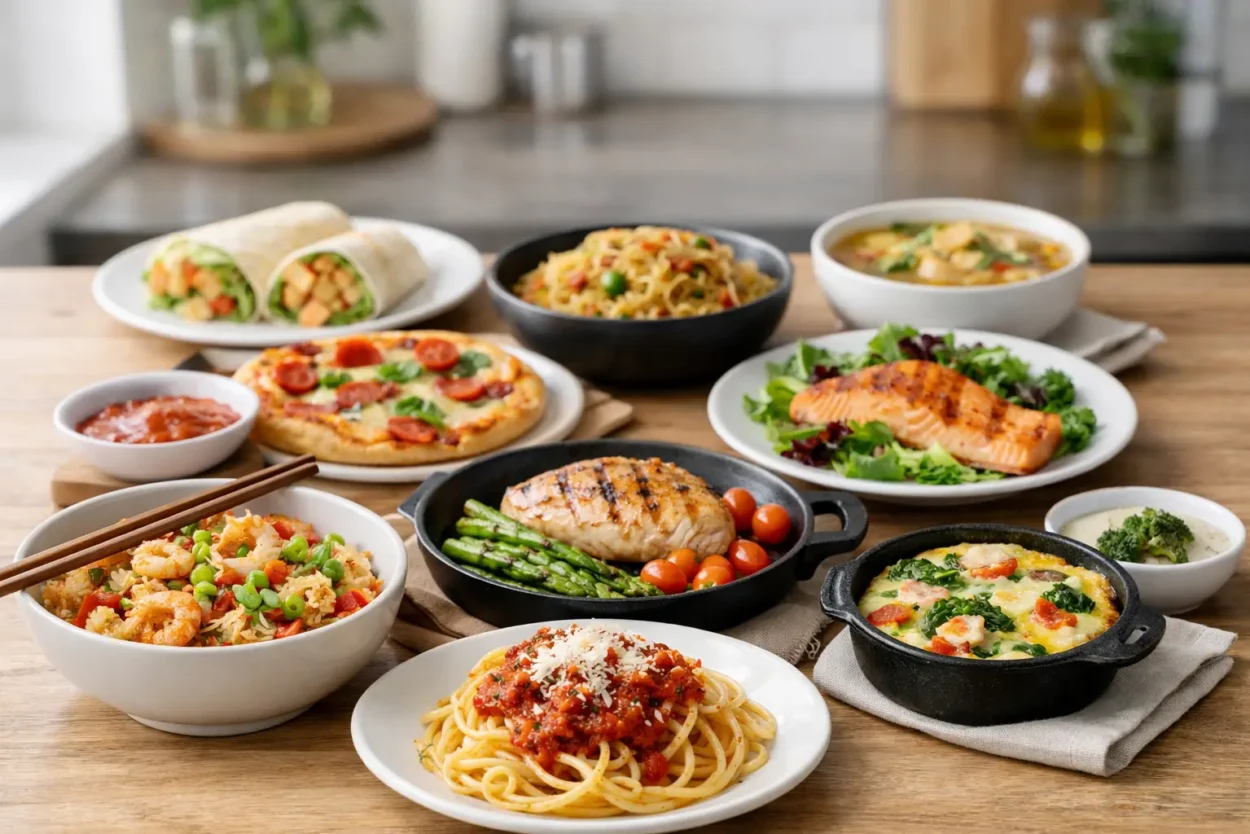
12 easy meals for one person
1. Avocado toast with eggs
This works for breakfast, lunch, or a light dinner. Toast two slices of bread, mash half an avocado with salt and lemon juice, and top with a fried or soft-boiled egg. If you want more flavor, add chili flakes, everything seasoning, or a few tomato slices.
It is filling without being heavy, and it uses ingredients that can show up elsewhere in your week. Bread can become grilled cheese or sandwiches, and eggs are always useful.
2. Chicken rice bowl
A rice bowl is one of the easiest ways to make dinner feel balanced with almost no effort. Start with cooked rice, add chopped cooked chicken, and top with whatever vegetables you have. Cucumbers, carrots, edamame, spinach, or roasted broccoli all work.
Use a sauce to pull it together. Soy sauce and sriracha are quick, but even a spoonful of salad dressing can work in a pinch. This is especially good if you need something fast that still feels like a real meal.
3. Pasta with garlic, spinach, and parmesan
You do not need a full box of pasta for a satisfying dinner. Cook a single serving, then toss it with olive oil or butter, minced garlic, a few handfuls of spinach, and grated parmesan. The spinach wilts quickly, and the whole thing comes together in the time it takes to boil water.
If you want more protein, stir in white beans or shredded chicken. If you want more comfort, add a spoonful of cream cheese or a splash of heavy cream.
4. Sheet pan salmon and vegetables
For a dinner that feels a little more put together, roast one salmon fillet with a tray of vegetables. Broccoli, zucchini, asparagus, and baby potatoes all cook well this way, though potatoes may need a head start.
Season everything with olive oil, salt, pepper, and lemon. It looks impressive, but it is mostly hands-off. The trade-off is that salmon can be pricier than other proteins, so this one is better when you want something a little nicer without going out.
5. Quesadilla with beans and cheese
A quesadilla is one of the best low-effort dinners around. Layer shredded cheese and canned black beans between two tortillas, then cook in a skillet until crisp. Cut it into wedges and serve with salsa, sour cream, or sliced avocado.
You can also throw in leftover chicken, spinach, or sautéed onions. It is fast, cheap, and great for using up small amounts of ingredients.
6. Loaded baked potato
A baked potato can absolutely be dinner when you treat it like a base, not a side. Microwave or bake one russet potato, split it open, and load it with toppings like shredded cheese, Greek yogurt or sour cream, steamed broccoli, beans, or chopped cooked bacon.
This is one of the most budget-friendly options on the list. It is also ideal for nights when your fridge looks empty but you still want something warm and satisfying.
7. Stir-fry with frozen vegetables
Frozen stir-fry vegetables are built for solo cooking because they let you use exactly what you need. Sauté a portion in a skillet with oil, garlic, and any protein you like, then add soy sauce or teriyaki sauce. Serve over rice or noodles.
The beauty of this meal is that it changes based on what is in your kitchen. Tofu, shrimp, chicken, or just vegetables all work. If you are trying to cook more often without overthinking it, keep a bag of frozen vegetables on hand.
8. Tomato soup and grilled cheese
Some meals stay popular because they really do work. A grilled cheese sandwich with tomato soup is cozy, inexpensive, and easy to make for one. Use a can of soup or heat up a boxed version, then make a sandwich with buttered bread and your favorite cheese.
If you want to make it feel a little fresher, add sliced tomato or spinach to the sandwich. It is a good rainy-day meal and one of the easiest comfort dinners to pull together.
9. Breakfast-for-dinner scramble
Eggs are one of the best ingredients for solo meals because they cook quickly and do not create a lot of cleanup. Scramble two or three eggs with spinach, mushrooms, peppers, or whatever needs to be used up. Add cheese if you want it a little heartier.
Serve with toast, fruit, or roasted potatoes if you have them. This is also a good option when you need dinner in under ten minutes and do not want to order takeout again.
10. Tuna melt or chickpea salad sandwich
For a pantry-friendly lunch or no-fuss dinner, make a tuna salad with mayo, mustard, celery, and pickle, then turn it into a sandwich or melt. If tuna is not your thing, mashed chickpeas give you a similar texture and work well with the same flavors.
This is one of those meals that feels more complete than the effort suggests. It is especially practical for work-from-home lunches or quick weeknight meals.
11. Ramen upgraded with real toppings
Plain instant ramen can be a backup plan, but with a few upgrades it becomes a solid meal. Cook the noodles, then add an egg, spinach, frozen corn, sliced mushrooms, or leftover chicken. A little sesame oil or chili crisp makes it taste much better with almost no extra work.
This is not the lowest-sodium option, so it may not be your everyday go-to. Still, it is quick, comforting, and much better than eating the packet exactly as is.
12. Mini taco bowl
If tacos feel like too much assembly for one person, turn the same ingredients into a bowl. Use rice or lettuce as the base, then add seasoned ground turkey or beef, black beans, salsa, cheese, and avocado.
The nice part is that you can cook a small batch of taco meat once and use it in different ways over a couple of days. Bowl one night, quesadilla the next. That kind of overlap makes solo cooking easier to keep up with.
How to shop for meals for one without wasting food
The biggest challenge with cooking for one is not the cooking. It is buying ingredients in realistic amounts. A lot of recipes assume you are feeding a family, and grocery packaging often does the same.
Start by picking two proteins, two vegetables, and one carb for the week, then build a few meals around them. For example, eggs, chicken, spinach, broccoli, rice, and tortillas can turn into bowls, scrambles, quesadillas, and wraps. That gives you variety without buying a different ingredient for every meal.
Frozen produce helps a lot here. So do ingredients with a longer fridge life, like cabbage, carrots, shredded cheese, and Greek yogurt. Bagged salad can be convenient, but it spoils fast, so it is best if you know you will use it within a few days.
Simple staples that make solo meals easier
You do not need a perfectly stocked kitchen, but a few basics go a long way. Eggs, pasta, rice, canned beans, tortillas, bread, frozen vegetables, shredded cheese, and one or two sauces can cover a surprising number of meals.
It also helps to keep one easy protein on standby. Rotisserie chicken, canned tuna, cooked sausage, tofu, or frozen shrimp can save a lot of time. The goal is not to cook elaborate meals every night. It is to make your default options better and easier.
When meal prep helps and when it does not
Meal prep can be useful for one person, but only if you actually like eating the same thing more than once. For some people, cooking a pot of soup or batch of rice on Sunday makes the whole week smoother. For others, it just leads to food boredom by Tuesday.
A lighter version often works better. Prep ingredients, not full meals. Wash greens, cook one grain, roast a tray of vegetables, or portion out protein. Then mix and match during the week. That gives you convenience without locking you into identical lunches.
Solo cooking gets easier when you stop aiming for perfect and start aiming for practical. A simple bowl, sandwich, skillet meal, or upgraded pantry dinner is often all you need. If a meal is fast, satisfying, and something you will genuinely want to make again, it is doing its job.


Comments are closed.