
Wondering how often should you water succulents? Learn the right schedule, signs of overwatering, and easy tips for healthier plants.
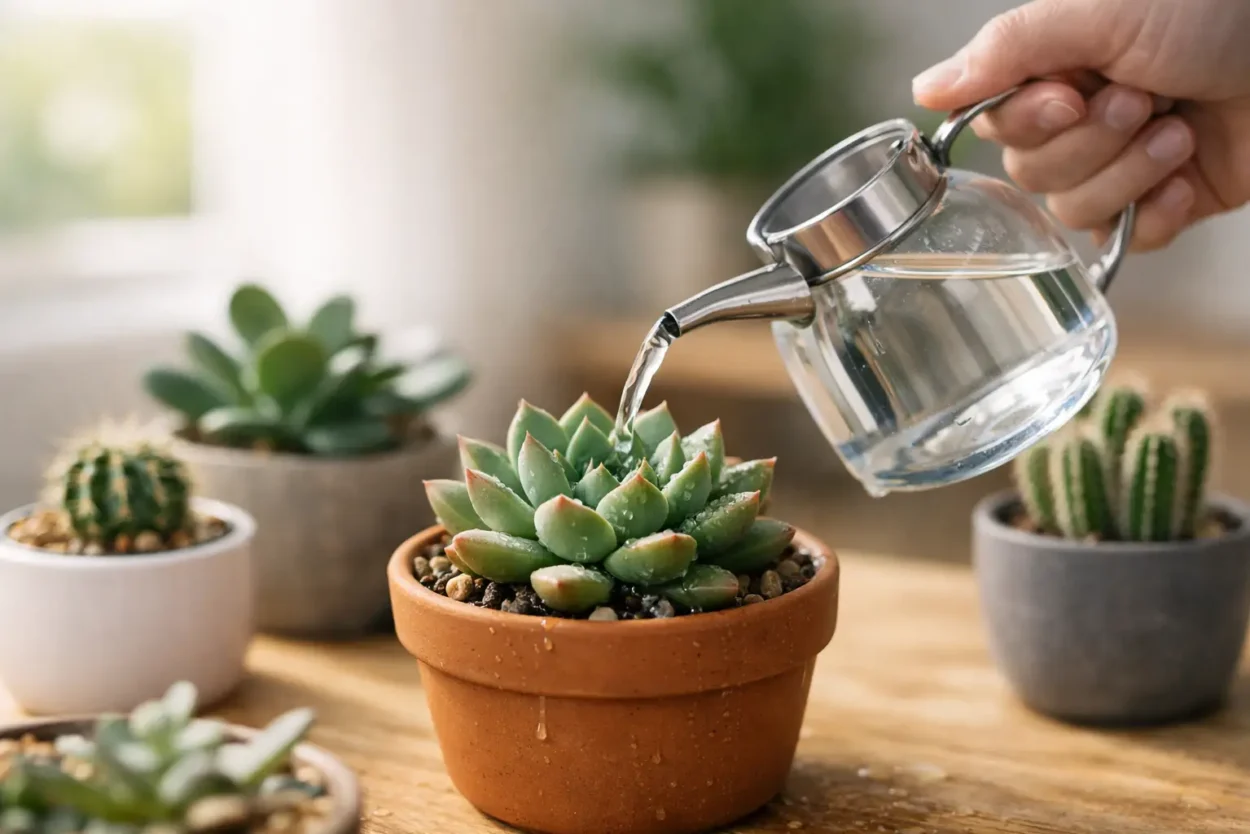
How Often Should You Water Succulents?
That tiny succulent on your windowsill probably doesn’t need water nearly as often as you think. If you’ve been asking how often should you water succulents, the short answer is: less often than most houseplants, but not on a rigid calendar. Succulents like a soak-and-dry routine, and the real schedule depends on light, season, pot type, and where your plant lives.
How often should you water succulents indoors?
For most indoor succulents, watering every 2 to 3 weeks is a good starting point. But that’s only a starting point, not a rule. A succulent in bright direct light during summer may dry out much faster than one sitting in a cooler room in winter.
The better method is to check the soil before watering. If the soil feels completely dry from top to bottom, it’s usually time to water. If there’s still moisture in the pot, wait a few more days and check again.
This is why two people can own the same plant and need very different watering schedules. A jade plant in a sunny kitchen and an echeveria in a low-light bedroom are not going to use water at the same speed.
The best way to water a succulent
Succulents do best when they’re watered deeply and then allowed to dry out fully. Think less “little sip every few days” and more “good soak, then a break.” When you water, moisten the soil thoroughly until excess water drains out of the bottom of the pot.
That drainage part matters. If your plant sits in water or lives in a pot without drainage holes, the roots can stay wet too long and start to rot. That’s one of the fastest ways to lose a succulent.
A light sprinkle on the surface usually isn’t enough. It encourages shallow roots and leaves the lower soil dry, which is not ideal for a plant built to store water and handle dry periods.
What “soak and dry” actually means
“Soak and dry” is the phrase succulent owners hear all the time, and it’s useful because it keeps you focused on the soil instead of the calendar. You water thoroughly, let all the excess drain away, and then do nothing until the soil dries out again.
It sounds simple, but it saves a lot of guesswork. If you only remember one thing, make it this: dry soil first, water second.
What changes how often you should water succulents
If your last succulent got mushy even though you only watered once a week, the issue probably wasn’t bad luck. Several conditions change how quickly a succulent uses moisture.
Light exposure
More light usually means faster drying soil. Succulents in a bright south-facing window will generally need water more often than those in medium or low light. If a plant isn’t getting enough sun, watering too frequently becomes even riskier because the soil stays wet longer.
Season
Spring and summer are usually active growing seasons, so many succulents need more frequent watering then. In fall and winter, growth often slows down, which means the plant uses less water. That same succulent you watered every two weeks in July may only need water every three to four weeks in January.
Pot size and material
Small pots dry faster than large ones. Terracotta pots also dry out faster than plastic or glazed ceramic because the material is porous and lets moisture escape. If you tend to overwater, terracotta can be a helpful choice.
Soil type
Succulents need fast-draining soil. If you’re using a dense potting mix that holds moisture for too long, even a careful watering schedule can cause problems. A cactus or succulent mix is usually a better fit because it dries more quickly and keeps roots from staying soggy.
Indoor temperature and humidity
Warm, dry rooms pull moisture from soil faster. Cooler or more humid rooms slow that process down. This is why your watering routine may shift if you move a plant from a bright living room to a bathroom or shaded office.
Signs your succulent needs water
A thirsty succulent often looks a little less plump than usual. The leaves may seem softer, thinner, or slightly wrinkled. Some varieties develop a duller appearance when they’re ready for a drink.
Dry soil is still the best sign, but the leaves can offer backup clues. If the plant looks a bit deflated yet not mushy, underwatering may be the issue.
One thing to keep in mind: dropping leaves doesn’t always mean the plant is thirsty. It can also happen with overwatering, which is why checking the soil is more reliable than reacting to appearance alone.
Signs you’re watering too often
Overwatering is far more common than underwatering with succulents. The warning signs are usually pretty clear once you know what to look for.
Leaves that feel mushy, translucent, yellow, or blackened often point to too much water. You might also notice leaves dropping off with barely any touch. If the stem or base starts looking soft, that can mean rot is setting in.
A succulent with overwatering damage can be tricky because the soil may still look normal on top while staying wet deeper down. That’s why surface dryness alone isn’t enough. Stick your finger into the soil, use a wooden skewer, or lift the pot to judge whether it still feels heavy with moisture.
How often should you water succulents outside?
Outdoor succulents usually need water more often than indoor ones, especially during hot weather. In summer, some may need watering every 7 to 10 days, while others can still go longer. If they’re planted in the ground, established succulents may need less help than potted ones because the soil environment is more stable.
Rain also changes everything. If your outdoor succulents are exposed to frequent rainfall and the soil drains poorly, they may not need extra water at all for stretches of time. On the other hand, potted succulents on a sunny patio can dry out surprisingly fast.
The same rule applies outside: check for fully dry soil before watering again.
A simple succulent watering routine for beginners
If you want an easy routine without overthinking it, start by checking your succulent once a week. Not watering it once a week – checking it once a week. That small shift makes a big difference.
Feel the soil. Look at the leaves. Notice how heavy or light the pot feels. If the soil is bone dry, water deeply. If not, leave it alone and check again in a few days.
This approach works better than setting recurring reminders to water on the same day every week. Succulents don’t care what day it is. They care whether their roots are dry.
Common mistakes that make watering harder
A lot of succulent problems start with good intentions. People water on a schedule, use decorative pots without drainage, or assume all succulents want the exact same care.
Another common mistake is giving tiny amounts of water too often. That keeps the upper soil damp and creates the kind of environment succulents hate. It’s much better to water thoroughly and wait longer between sessions.
Low light is another hidden issue. If your succulent isn’t getting enough sun, it won’t use water efficiently, and even a moderate routine can turn into overwatering. When a plant starts stretching or leaning, it may be telling you the light is too weak, not that it needs more water.
Quick answers for popular succulent types
While there’s no perfect one-size-fits-all schedule, common indoor succulents like echeveria, haworthia, jade plant, aloe, and zebra plant often fall into the same general range: every 2 to 3 weeks indoors, with adjustments for season and light.
Aloe can sometimes handle slightly more frequent watering during active growth, while compact rosette types may need a little less in cooler months. String of pearls often wants the same dry-down approach but can be more sensitive to staying wet too long.
So yes, species matters, but your conditions matter just as much.
The easiest rule to remember
If you forget everything else, remember this: water succulents when the soil is fully dry, not when you feel like it’s been a while. That one habit will get you farther than any fixed schedule.
Succulents are popular for a reason. They’re low-maintenance, stylish, and forgiving once you understand their rhythm. Give them bright light, fast-draining soil, and patience between waterings, and they’ll usually meet you halfway. When in doubt, wait one more day and let the plant tell you what it needs.