
Get rid of blackheads at home with a simple 3-step routine: gentle cleansing, targeted chemical exfoliation with BHA, and lightweight hydration. See visible results in 2-4 weeks.
How to Get Rid of Blackheads at Home: Simple Steps That Really Work
Blackheads don’t appear just because you “ate poorly” or “forgot to remove your makeup.” They often show up when you feel like you’re doing everything right: cleansing, hydrating, maybe even using a mask occasionally, yet your pores still look clogged. The good news is that in most cases, you can see visible results in 2-4 weeks with a simple routine, without aggressive squeezing and without irritating experiments.
What Are Blackheads (And Why They Look Black)
Blackheads are open comedones: a plug made of sebum (oil), dead skin cells and impurities sitting inside a pore. They look black because they oxidize when exposed to air, not because the pore is “dirty.” This changes your approach: the goal isn’t vigorous scrubbing, but dissolving the plug and preventing it from forming again.
An important detail: sometimes what we call “blackheads” are actually sebaceous filaments. These are normal, they look like small gray-yellowish dots, they reappear quickly after cleansing, and they’re more noticeable on the nose. You can reduce their appearance, but you can’t “eliminate them permanently.”
How to Get Rid of Blackheads at Home: Basic 3-Step Routine
If you want stable results, think of your routine as a trio: gentle cleansing, the right chemical exfoliation, and hydration that doesn’t clog. Everything else (masks, strips, devices) is optional.
1) Proper Cleansing, Not Aggressive
In the morning, if you have normal to dry skin, a light cleanse or just warm water might be enough. In the evening, cleansing is non-negotiable, especially if you wear SPF or makeup.
Choose a gentle gel or foam that doesn’t leave your skin “squeaky clean.” That tight feeling is often a sign you’ve compromised your skin barrier, and irritated skin can actually produce more sebum as a reaction.
If you wear resistant makeup or SPF, double cleansing helps a lot: an oil or balm-based product to dissolve products, then a gentle gel. It’s not mandatory daily for everyone, but it makes a real difference for a congested T-zone.
2) Chemical Exfoliation Targeted: BHA Is the “Right Ingredient” for Pores
For blackheads, the most useful ingredient is salicylic acid (BHA). It has the advantage of being lipid-soluble, meaning it penetrates sebum and helps “unclog” pores from the inside.
How to use it, realistically and safely:
Apply a BHA product 2-3 times a week to start, in the evening, on clean, dry skin. If your skin tolerates it well, you can gradually increase to every other day. It’s not a race – consistency beats frequency.
If you have sensitive skin or it stings easily, apply BHA only to your T-zone (nose, forehead, chin), not on your cheeks. If you have very dry skin, keep it as a spot treatment, not all over your face.
In the first few weeks, you might see a “breakout” of small blemishes or more visible texture. Sometimes it’s simply the process of pores clearing; other times it means you’re using it too often or the product is too strong. Adjust: use it less frequently, apply fewer layers, add more hydration.
3) Light Hydration That Supports Your Barrier
Yes, even oily skin needs hydration. When your skin barrier is compromised, sebum production can increase, and pores appear more prominent.
Look for a moisturizer or hydrating gel with a lightweight texture. Ingredients that work well in an anti-blackhead routine are niacinamide (helps regulate sebum and pore appearance) and ceramides (support the barrier). If a product makes your skin feel greasy or you notice more blackheads within a few weeks, switch the texture, not necessarily the brand.
SPF: the step that makes a difference in the long run
If you use acids (BHA, AHA) or retinoids, sun protection in the morning becomes part of the “treatment”. Not just to prevent spots, but also to avoid sensitization that makes you quit your routine.
Choose an SPF with a texture suitable for your skin type (fluid, gel-cream). If it “burdens” your skin, you’re more likely to skip it – and then your entire routine becomes harder to maintain.
What works quickly for the nose (but with limitations)
The nose area is stubborn because it has many sebaceous glands. If you want a visible effect faster, you have a few options, with trade-offs.
Clay masks can reduce shine and can temporarily “draw out” some sebum. They are useful once a week, especially on the T-zone. If you use them too frequently or leave them until they dry completely and crack, you can irritate your skin and, paradoxically, stimulate sebum production.
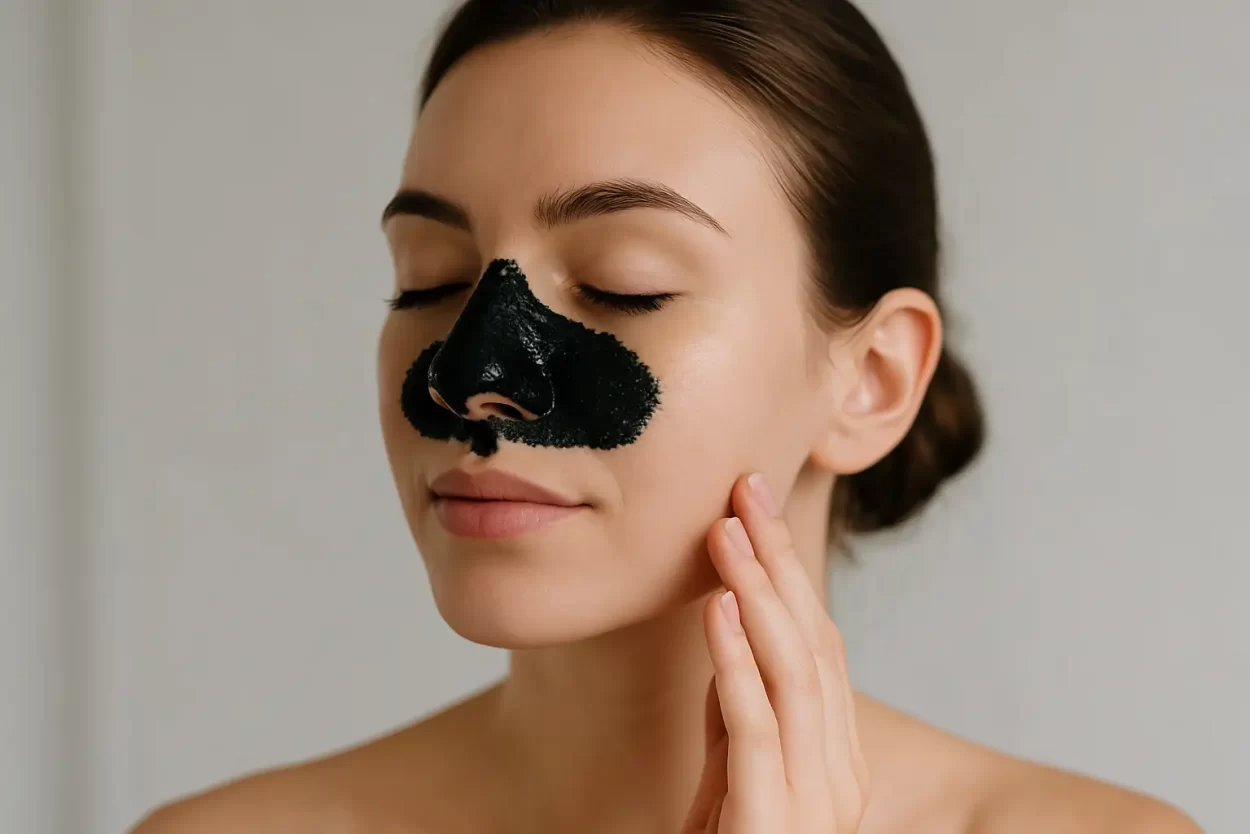
Blackhead strips give immediate satisfaction, but they pull out more sebaceous filaments and fluff, they don’t solve the cause. If you use them, do it rarely (occasionally), then return to BHA and hydration, otherwise pores will “fill up” again.
Retinoids: the “slow but solid” option
If you have persistent blackheads and uneven texture, a retinoid (like retinol or retinal) can help a lot. Retinoids support cell turnover and can prevent comedones from forming.
Rule of thumb: don’t start a BHA and a retinoid at the same time, especially if you’re a beginner. Choose one, see how you tolerate it for 3-4 weeks, then introduce the other alternately, on different nights. Irritated skin doesn’t look better, even if you “have the best ingredients.”
If you’re pregnant or breastfeeding, talk to your doctor before using retinoids. During these times, it’s safer to stick with a gentle routine, niacinamide, and possibly BHA only with medical approval.
Mistakes That Keep Blackheads Alive (Even If You Have Good Products)
The most common mistake is squeezing. Yes, sometimes something comes out and it seems like you've solved it. But the pressure can push the contents deeper, inflame the follicle and leave marks or fine broken vessels.
The second mistake is using an abrasive scrub too often. The granules can cause micro-irritations, and the skin becomes red, sensitive and more reactive. If you like the feeling of exfoliation, keep the scrub infrequent and gentle, but for blackheads, the real work is done by chemical exfoliation.
The third mistake is "too many actives at once": salicylic acid, AHA, retinol, clay mask, plus a strong cleanser. When the barrier fails, peeling, stinging and a more aggressive shine appear. Simplify for 10-14 days and rebuild.
A Realistic 4-Week Plan (Without Complicating Your Life)
In the early days, the goal is tolerance, not pore perfection. At night, gently cleanse and moisturize. On 2 nights a week, add BHA to the T-zone. In the morning, keep things simple: light cleansing, moisturizing, SPF.
In weeks 2-3, if you don't have irritation, you can increase the BHA to 3 nights a week. If you want a retinoid, introduce it once a week in place of a BHA night, not more.
By week 4, you should notice either fewer visible spots, or "cleaner" pores after washing and a smoother texture. If nothing changes, the problem may be that you have sebaceous filaments (and then the goal is appearance, not elimination) or that you need a dermatological evaluation for closed comedones/acne.
When to see a dermatologist or a professional cleaning
If your blackheads are accompanied by painful inflamed lesions, if you have nodules under your skin, or if you have spots after each episode, a dermatologist consultation will save you time and money. Likewise, if you have consistently tried BHA/retinoid for 8-12 weeks and see no improvement.
Professional cleaning can be helpful, but ideally it should be followed by a maintenance routine. Otherwise, you will return to the same spot in a few weeks.
Small detail that matters: consistency is the "trick"
If you're still looking for methods on how to get rid of blackheads at home, take this as a simple criterion: any solution that promises instant results, without a routine, is almost always temporary. A BHA used consistently, plus hydration and SPF, looks less spectacular the first evening, but looks much better in the mirror after a month.
For more practical beauty guides, you can also browse the articles on Ruki.ro, in the same style: clear steps, without dramatization.
Finally, keep a simple rule: if a product makes you feel like it "burns you to work", it is most likely pushing you towards irritation, not towards clearer skin. Skin that is constantly improving feels, first and foremost, comfortable.


Comments are closed.