
Can you freeze cooked rice? Yes – and it’s one of the easiest meal-prep tricks. Learn how to freeze, thaw, and reheat it safely.
Can You Freeze Cooked Rice? Yes – Here’s How
A container of leftover rice can feel like a win on Monday and a mystery by Wednesday. If you’ve ever made too much for stir-fry, burrito bowls, or quick lunches, the good news is simple: can you freeze cooked rice? Yes, you absolutely can – and when you do it the right way, it stays convenient, tasty, and ready for future meals.
Freezing cooked rice is one of those low-effort kitchen habits that pays off fast. It helps cut food waste, saves cooking time on busy nights, and gives you a head start on everything from fried rice to soup. The key is less about whether it freezes well and more about how quickly you cool it, how you pack it, and how you reheat it.
Can you freeze cooked rice safely?
Yes, cooked rice freezes very well, and it can be safe to eat later if you handle it properly. The biggest issue with rice is not the freezer itself. It’s what happens before the rice gets there.
Cooked rice can grow bacteria if it sits at room temperature too long. That means your best move is to cool it promptly and freeze it as soon as it’s no longer steaming hot. If rice has been sitting out for hours on the counter, freezing won’t make it safer.
For most home cooks, the rule of thumb is easy: once the rice has cooled enough to package, move it to the fridge or freezer quickly. Freshly cooked rice that is handled well tends to freeze better and taste better later.
What kind of cooked rice freezes best?
White rice is usually the easiest to freeze because it reheats with a soft, fluffy texture. Jasmine, basmati, and standard long-grain rice all hold up nicely. Brown rice also freezes well, although it can be a little firmer after reheating.
Short-grain and sticky rice can still be frozen, but the texture may change more noticeably. That doesn’t make it bad – it just means it may be better in meals where texture matters less, like rice bowls or soups, rather than as a neat side dish.
Rice dishes with sauces, vegetables, or protein can also be frozen, but they are a little less predictable. A plain batch of rice gives you the most flexibility later.
How to freeze cooked rice the right way
The best method is simple and quick. Start by spreading the cooked rice on a plate, tray, or shallow container so the steam can escape. You do not need to let it get fully cold on the counter for a long time. You just want it to stop trapping excess heat and moisture.
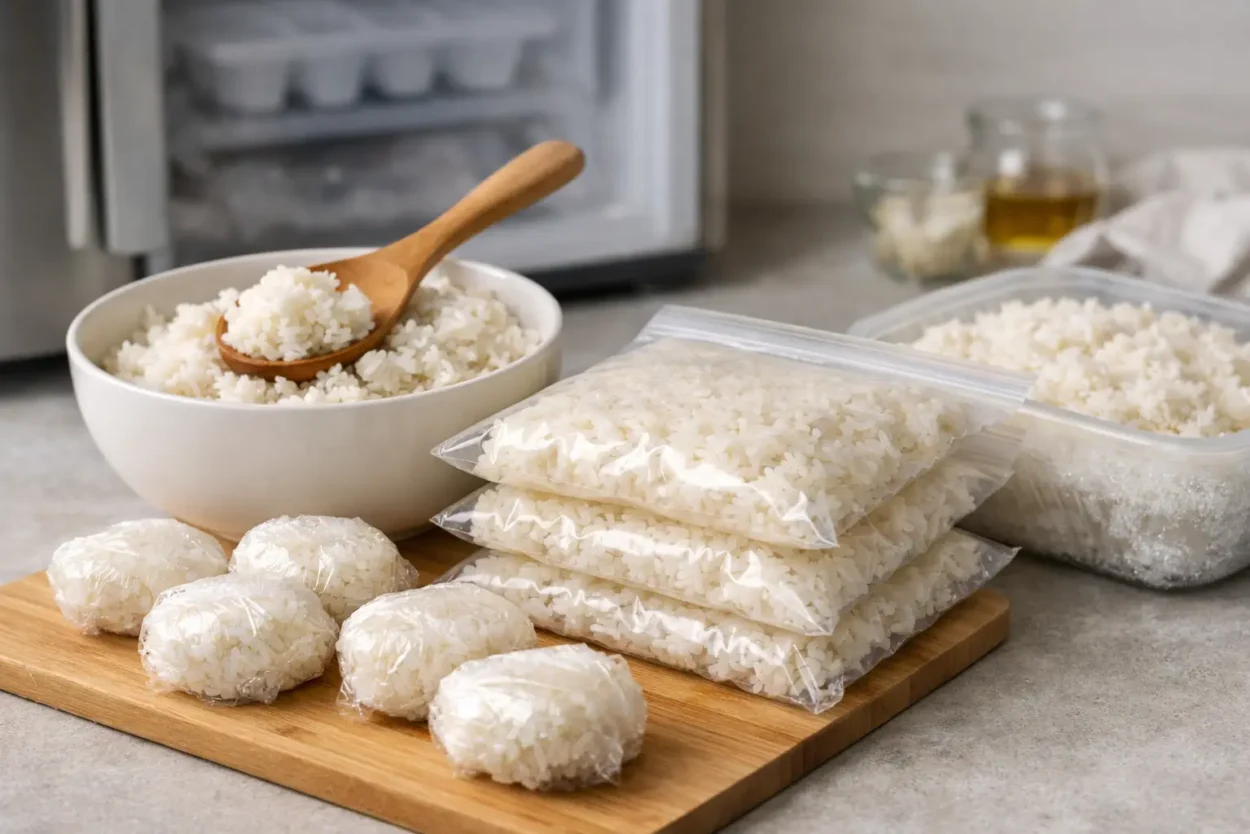
Once it has cooled, portion it into the amount you actually use. Single servings are great for lunches, while two-cup portions work well for family meals. Scoop the rice into freezer bags or airtight containers and press out as much air as possible if you’re using bags.
Flattening freezer bags is especially helpful because the rice freezes faster and stacks neatly. Label each bag with the date so you’re not guessing later.
How long can you freeze cooked rice?
Cooked rice is usually best within 1 to 2 months for the best texture, although it may stay safe longer if your freezer stays consistently cold. Over time, rice can dry out or pick up freezer odors, especially if it is not sealed tightly.
If you want the easiest, best-tasting results, think of frozen rice as a short-term meal prep tool rather than a long-forgotten freezer project. Use it while it still looks and smells fresh.
The best way to thaw frozen rice
You do not always need to thaw frozen rice before reheating it. In fact, many people get better texture when they reheat it straight from frozen. This works especially well in the microwave or when adding rice directly to a skillet dish.
If you do want to thaw it first, move it to the fridge overnight. That’s the gentlest option. You can also break apart a frozen flat bag of rice with your hands before reheating so it warms more evenly.
Avoid thawing rice for long periods on the counter. It’s less convenient and not the safest choice.
How to reheat frozen cooked rice
The microwave is the easiest method for most kitchens. Place the frozen rice in a microwave-safe bowl, sprinkle in a tablespoon or two of water, and cover it loosely. Heat in short intervals, stirring or fluffing in between, until the rice is hot all the way through.
That little bit of added water matters. Frozen rice often needs moisture to come back to life, and steam helps restore a softer texture.
On the stovetop, add the rice to a pan with a splash of water and cover it over low heat. Stir occasionally until heated through. This is a good option if you’re reheating a larger portion.
If you’re making fried rice, you can often use the frozen rice directly in the pan. Let it loosen as it heats, then stir it into the rest of your ingredients.
Common mistakes to avoid
The biggest mistake is letting cooked rice sit out too long before freezing. If you cooked it at dinner and forgot about it until bedtime, it’s better not to save it.
Another common problem is packing rice while it’s still very hot in a deep container. That traps steam, creates excess moisture, and can lead to clumpy, unevenly cooled rice. A quick cool-down in a shallow layer works better.
Using oversized containers can also be annoying later. If you freeze one giant block, you may have to thaw more than you need. Portioning first makes frozen rice far more useful.
Finally, don’t reheat rice over and over. Reheat the amount you plan to eat, and keep the rest frozen until you need it.
Can you freeze cooked rice with other ingredients?
Yes, but the results depend on what else is in the dish. Plain rice is the safest bet if you want consistent texture. Mixed rice dishes can still work well, especially casseroles, seasoned rice, and some meal-prep bowls.
Vegetables with high water content may soften after freezing. Creamy sauces can separate. Seafood and delicate herbs may lose quality faster than the rice itself. If the meal is heavily sauced, frozen leftovers can still be good, but they may not look exactly the same after reheating.
That’s why many people freeze the rice on its own and add toppings or proteins fresh later.
When frozen rice tastes best
Frozen rice shines in practical meals. It’s perfect for lunch bowls, quick burritos, soups, skillet meals, and easy weeknight sides. If you’re trying to plate a more polished dinner where texture is everything, freshly cooked rice will usually win.
Still, for everyday cooking, frozen rice is surprisingly reliable. It is one of the easiest shortcuts for busy schedules, especially if you like assembling meals quickly instead of cooking every part from scratch.
A quick answer to the most common rice question
If you’re still wondering, can you freeze cooked rice and expect it to be worth eating later? Yes – as long as you cool it quickly, seal it well, and reheat it with a little moisture. It’s not a magic trick that makes old leftovers better, but it is a smart way to keep fresh rice ready for another day.
A small freezer habit like this can make weeknight cooking feel much easier. The next time you cook too much rice, you do not need to force leftovers into tomorrow’s dinner plan – just freeze it and give yourself a shortcut for later.