
Not all foods are suitable for freezing. Learn which ones to keep out of the freezer, why they don’t freeze well, and discover smart storage alternatives to reduce food waste.

What to NEVER Freeze: Foods You Should Keep Out of the Freezer
Freezing is one of the most popular methods of food preservation, but not all food products are suitable for the freezer. Some completely change their texture, taste or composition, and others can even become dangerous to consume after thawing.
In this guide you will find:
- what foods should never be frozen
- why they are not suitable for freezing
- storage alternatives
- answers to frequently asked questions about freezing
❌ Why is it NOT a good idea to freeze certain foods?
The main reason is high water or fat content, which changes with the freezing and thawing process. The result? Watery textures, crumbly foods, curdled milk or altered tastes.
List of foods that DO NOT freeze well
1. Lettuce, raw spinach, arugula and other tender leaves
- what's going on: Leaves wilt, become soft and sticky when thawed.
- Alternative: Use them fresh or blanch the spinach to freeze properly.
2. Raw potatoes
- what's going on: They become sweet, soft and unsightly when cooked later.
- Alternative: Partially boil or fry them before freezing.
3. Eggs in shell
- what's going on: The liquid inside expands and cracks the shell, risking contamination.
- Alternative: Crack the eggs, beat them lightly and freeze them in airtight containers.
4. Dairy – milk, yogurt, cream (unprocessed)
- what's going on: It separates into whey and fat, acquires a rough texture.
- Exceptions: Butter and hard cheeses (cheddar, parmesan) freeze well.
5. Soft cheeses (fresh mozzarella, brie, feta)
- what's going on: They become crumbly and lose their flavor.
- Alternative: Freeze them only if you are going to use them in cooking (e.g., pizza).
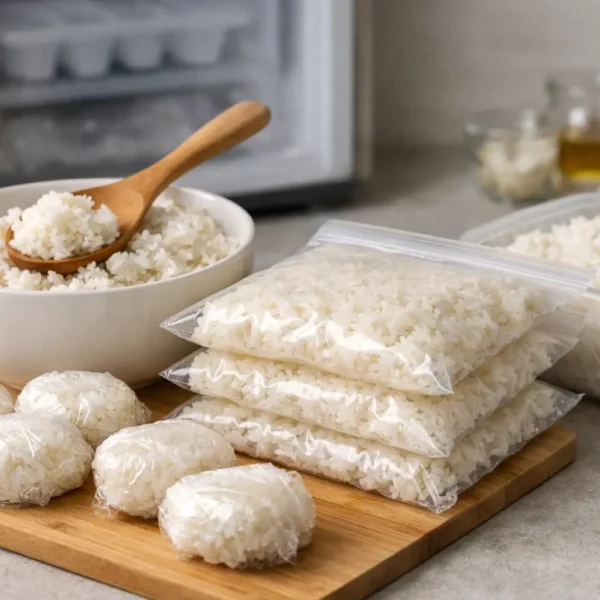
6. Fully cooked pasta or rice
- what's going on: It becomes gummy and tasteless.
- Alternative: Partially cook them if you want to freeze them, then reheat them properly.
7. Mayonnaise, sauces based on raw egg
- what's going on: They are cut and become impossible to reuse.
- Alternative: Prepare mayonnaise fresh, in smaller quantities.
8. Very watery fruits (watermelon, oranges, cucumbers)
- what's going on: It turns into a watery mass after thawing.
- Exceptions: They can only be frozen if used in smoothies.
9. Crispy fried foods (fries, schnitzels)
- what's going on: The skin becomes soft and the oil takes on a rancid taste.
- Alternative: Reheating in the oven helps a little, but not completely.
10. Desserts with natural whipped cream or fine creams
- what's going on: The texture of the whipped cream changes and can become grainy.
- Exception: Desserts based on butter, flour and eggs (cakes, cookies) freeze well.
Bonus: Foods that CAN be frozen, but with conditions
| FOOD | Condition for successful freezing |
|---|---|
| Tomatoes | For cooking only, not raw in salad |
| BANANAS | Sliced, skinless |
| Eggs | Skinless, lightly beaten |
| Cheese | Hard and semi-hard, cut or grated |
| Bread | Separate slices, in zip-lock bags |
✅ How do you avoid waste if you have "non-freezable" food?
- Plan meals weekly
- Store correctly (modern fridges have vegetable/dairy areas)
- Use alternative preservation techniques: drying, marinating, fermentation
- Freeze cooked food in small portions (not large whole meals)
❓ Frequently asked questions
Can I freeze milk if I have no other solution?
Yes, but it must be shaken very well after defrosting. The taste will not be the same, but it is safe for cooking (pancakes, sauces).
Is it dangerous to freeze raw eggs in their shells?
Yes. It risks cracking and contamination. It's best to break them up and freeze them in cubes or small containers.
Can I refreeze something I thawed?
No, if the product has been at room temperature. It is only safe if it has been thawed in the fridge and has not been cooked/altered.
How can I know if a food is suitable for freezing?
General guideline: Foods with a high water content or raw eggs do not perform well. Experiment with small amounts.
Conclusion
Freezing is an excellent solution for reducing food waste, but it is not suitable for all products. Knowing these exceptions will help you avoid waste, preserve the taste and texture of food, and have a more efficient and organized kitchen.



Comments are closed.