
Find the best vegetables for containers, from tomatoes and peppers to salad greens, with easy tips for choosing pots, sun, soil, and watering at home this season.
12 Best Vegetables for Containers to Grow
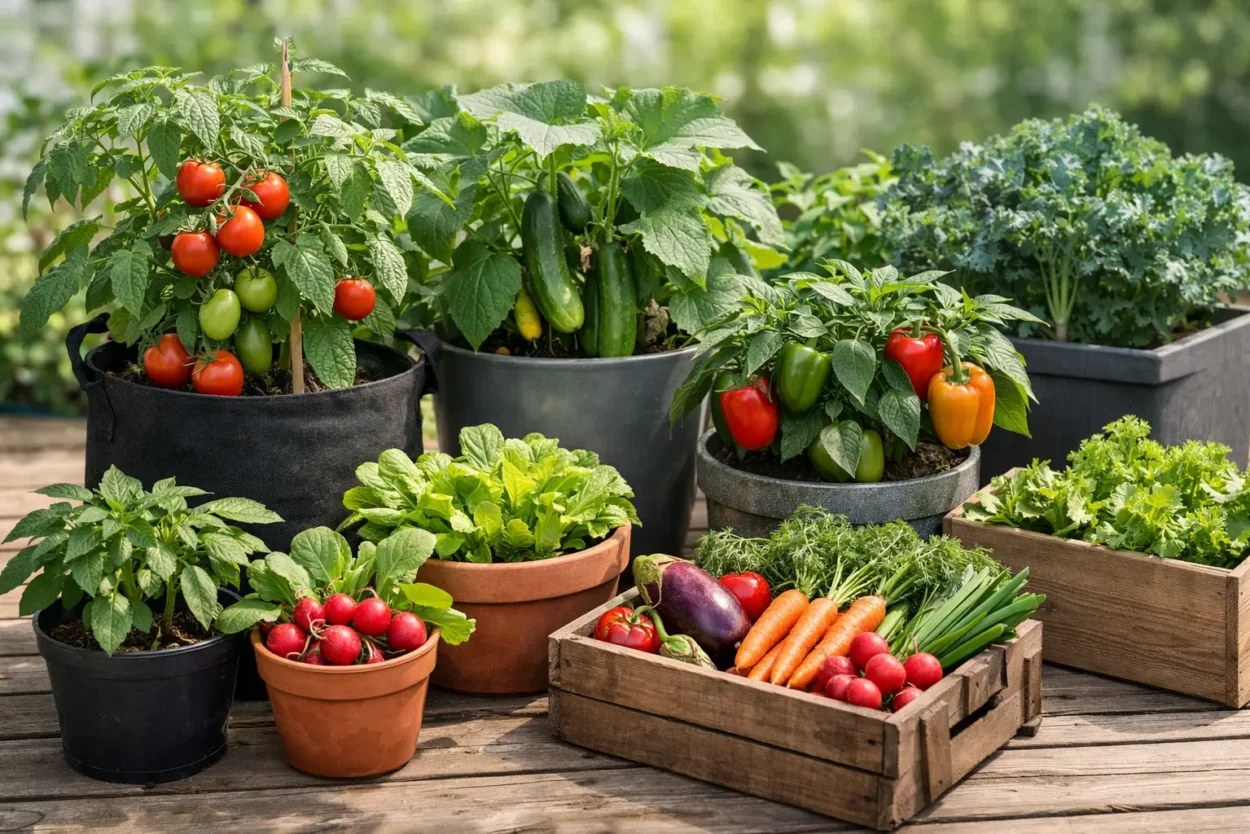
A sunny patio, balcony, front step, or even a bright apartment windowsill can become a productive little vegetable garden. The best vegetables for containers are the ones that stay reasonably compact, grow quickly, and give you plenty to harvest without demanding a huge backyard plot.
Container gardening is also wonderfully flexible. You can move pots to follow the sun, keep herbs near the kitchen, and start with just a few plants rather than committing to a full garden. The key is matching each vegetable to a container that gives its roots enough room.
12 Best Vegetables for Containers
1. Cherry tomatoes
Cherry tomatoes are a container-garden favorite for good reason: one healthy plant can keep producing sweet, snackable fruit for weeks. Look for compact varieties labeled patio, bush, dwarf, or determinate. Indeterminate cherry tomatoes can work too, but they need a large pot and a sturdy cage or trellis.
Use a container that holds at least 5 gallons, although 10 gallons gives plants more breathing room in hot weather. Tomatoes need six to eight hours of direct sun, regular watering, and a pot with drainage holes. Uneven watering can lead to split fruit, so check the soil often during summer.
2. Peppers
Bell peppers, jalapeños, banana peppers, and compact sweet peppers all perform well in containers. They like warmth and sunshine, and their tidy growth habit makes them easier to fit into a small outdoor space than sprawling plants such as squash.
Plant one pepper per 3- to 5-gallon pot. A larger container usually means less frequent watering and a stronger plant. If your summer is short or cool, choose smaller-fruited varieties, which often ripen faster.
3. Lettuce
Lettuce is one of the easiest vegetables to grow in a container, especially in spring and fall. It does not need a deep pot, grows quickly, and lets you harvest a few leaves at a time rather than waiting for one big crop.
A wide, shallow planter that is 6 to 8 inches deep is enough for loose-leaf lettuce. In warmer regions, give it morning sun and afternoon shade to slow bolting, which happens when the plant sends up a flower stalk and turns bitter. Sow a new small pot every couple of weeks for a steady salad supply.
4. Radishes
If you want a fast gardening win, grow radishes. Many varieties are ready in about three to four weeks, making them ideal for beginners and kids who want to see results quickly.
Choose a pot at least 6 inches deep for round radishes and 10 inches deep for longer varieties. Keep the soil evenly moist and thin seedlings so each root has room to form. Crowded radishes often produce plenty of leaves but disappointing roots.
5. Green beans
Green beans are generous producers, and the right type can fit neatly into a pot. Bush beans stay compact and do not need a support system. Pole beans grow upward and are a smart choice when floor space is limited but you have a trellis, railing, or tall tomato cage.
Use a container at least 12 inches deep and wide. Beans prefer full sun and warm soil, so wait until nights are reliably mild before planting outside. Harvest pods often to encourage the plant to keep flowering.
6. Cucumbers
Cucumbers can be surprisingly successful in containers if you give them space to climb. Bush or patio varieties are easiest, but vining cucumbers will also work in a large pot with a trellis.
Plan on a 5-gallon container per plant, and choose a support that will not topple when the vines get heavy. Cucumbers are thirsty in summer, and dry soil can make their fruit bitter. Water at the base of the plant and pick cucumbers while they are still young and crisp.
7. Kale
Kale earns its place among the best vegetables for containers because it is attractive, hardy, and productive across a long season. You can pick baby leaves for salads or let plants mature for sautés, soups, and smoothies.
A 10- to 12-inch-deep container works well for one or two plants. Kale tolerates cool temperatures and can handle a light frost, which makes it especially useful once heat-loving summer plants are finished. In hot weather, it may need afternoon shade.
8. Swiss chard
Swiss chard brings both color and practicality to a container garden. Its bright stems look beautiful on a patio, while the tender leaves can be harvested again and again. It handles heat better than lettuce and stays productive well into fall in many climates.
Give each plant a pot at least 10 inches deep. Pick outer leaves first and leave the center intact, so the plant keeps growing. Chard is also forgiving if you miss a harvest by a few days, unlike zucchini or cucumbers that can become oversized quickly.
9. Carrots
Carrots are possible in containers, but the container choice matters more than it does for lettuce or radishes. Their roots need loose soil and enough depth to grow straight. Short, round, or Nantes-type carrots are often better choices than long varieties.
Use a pot at least 12 inches deep, or deeper for longer carrots. Avoid soil with rocks or clumps, which can cause forked roots. Carrot seeds are tiny, so sow lightly, keep the surface moist until seedlings appear, and thin them patiently.
10. Scallions
Scallions are a small-space essential. They take up very little room, grow quickly, and add fresh flavor to eggs, stir-fries, baked potatoes, and salads. You can grow them from seed or plant young starts close together.
A container 6 inches deep is usually enough. Scallions appreciate sun but can tolerate partial shade, making them a useful option for balconies that do not get all-day light. Harvest individual plants as needed, or trim a few green tops at a time.
11. Eggplant
Eggplant has a reputation for being a warm-weather garden plant, but compact varieties can thrive in containers. Look for patio eggplants, Japanese eggplants, or smaller-fruited types, which are generally more manageable than large globe varieties.
Use at least a 5-gallon pot and place it in the warmest, sunniest spot you have. A stake or small cage can help support branches once fruit develops. Eggplant needs consistent moisture, but soggy soil can damage roots, so drainage is nonnegotiable.
12. Bush zucchini
Traditional zucchini plants are huge, but bush and container varieties are bred for smaller spaces. They still need room, sun, and regular watering, so this is a better choice for a roomy patio than a narrow windowsill.
Choose a 10-gallon container and plan for one plant per pot. Watch for fruit daily once flowering begins. Zucchini can go from perfect to oversized in what feels like a weekend, and frequent picking encourages more production.
How to Choose Containers That Help Vegetables Thrive
A beautiful pot is nice, but size and drainage matter more. Small containers dry out quickly and restrict roots, which can leave plants stunted even when you are watering faithfully. When you are deciding between two sizes, choose the larger one if your space allows.
Every vegetable container needs drainage holes. Set pots on pot feet, bricks, or a plant stand if water tends to pool beneath them. Use fresh potting mix rather than dense soil dug from the yard, since potting mix is lighter and helps roots get the air they need.
For a simple setup, use one large pot for tomatoes or cucumbers, a medium pot for peppers or kale, and a shallow planter for lettuce, scallions, or radishes. This mix gives you a practical harvest without turning your outdoor space into a crowded jungle.
Sun, Water, and Feeding: The Container Garden Basics
Most fruiting vegetables, including tomatoes, peppers, cucumbers, eggplant, and beans, need at least six hours of direct sun. Leafy vegetables such as lettuce, kale, chard, and scallions are more flexible and can still grow with less intense light.
Container plants dry out faster than plants in the ground. During a heat wave, large vegetables may need watering every day, while smaller pots can need attention twice a day. Press a finger about an inch into the soil: if it feels dry, water slowly until it runs out of the drainage holes.
Because water carries nutrients out of containers over time, feed plants with a vegetable-friendly fertilizer according to its label. Too much fertilizer can produce lots of leaves and fewer tomatoes or peppers, so more is not always better.
Start with vegetables you actually enjoy eating, then let your container garden grow with your confidence. A pot of cherry tomatoes by the door or a bowl of lettuce outside the kitchen can make homegrown food feel like an easy part of everyday life.


Comments are closed.