
Try these container garden ideas for small spaces to grow herbs, flowers, and veggies on balconies, patios, windowsills, and tiny yards.
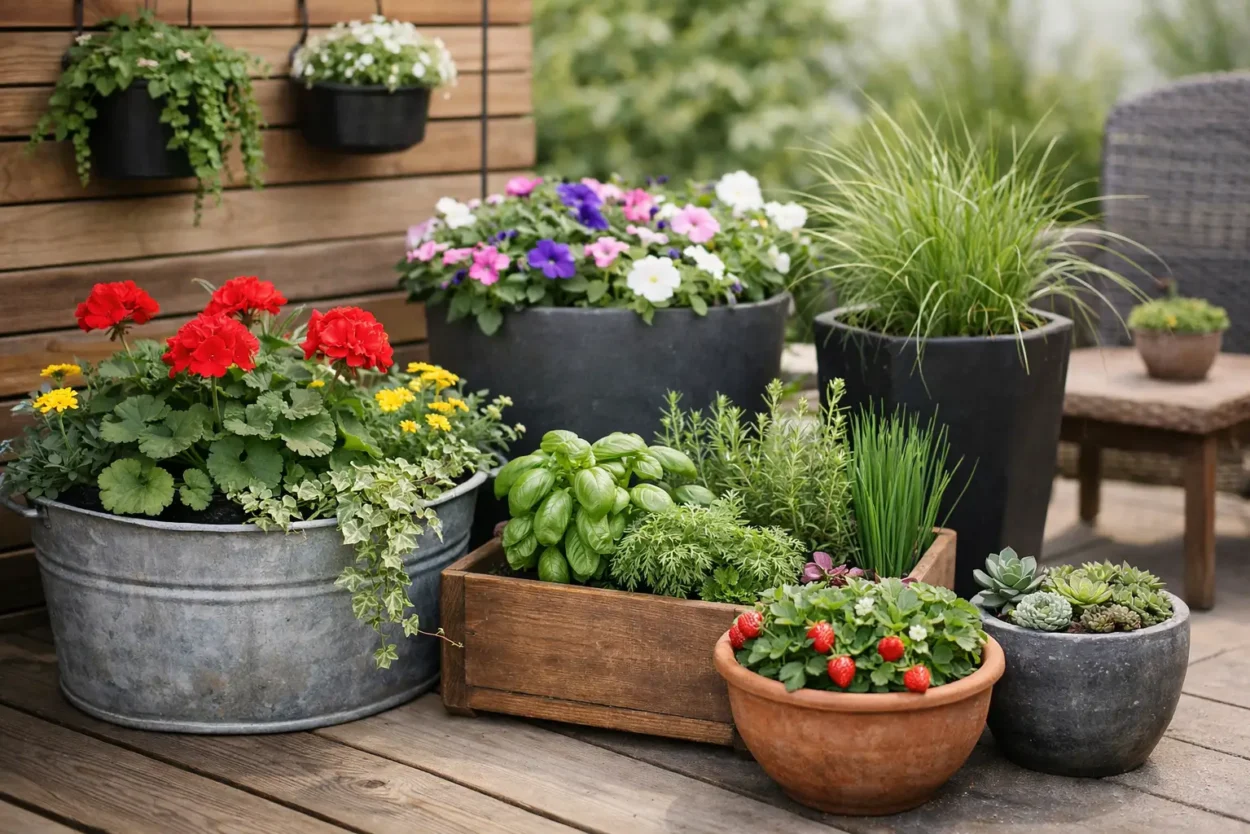
12 Container Garden Ideas for Small Spaces
A bare balcony, a narrow porch, or one sunny windowsill is more than enough to start growing something useful and pretty. The best container garden ideas for small spaces are the ones that work with your real life – your light, your schedule, and the square footage you actually have.
If you have been putting off gardening because you do not have a yard, this is where container gardening shines. Pots let you control soil, move plants around, and turn overlooked corners into something greener. The trick is not cramming in more plants. It is choosing setups that make a small area feel intentional instead of crowded.
Why container gardens work so well in small homes
Small-space gardening is less about size and more about strategy. Containers let you grow upward, use railings and walls, and keep high-maintenance plants close enough to notice when they need water. That matters on hot patios and breezy apartment balconies where pots can dry out fast.
There is also more flexibility. If one corner gets harsh afternoon sun, you can move a pot. If your rental does not allow digging, containers solve that. And if you are still figuring out what you enjoy growing, pots make it easier to experiment without committing a whole bed to one idea.
The trade-off is that containers need a little more attention than in-ground gardens. Soil dries faster, roots have less room, and the wrong pot size can stunt a plant quickly. But for beginners and busy households, the convenience usually outweighs the extra upkeep.
Container garden ideas for small spaces that actually fit real homes
1. Build a kitchen herb corner
A compact herb setup is one of the easiest wins for beginners. Basil, parsley, mint, chives, cilantro, and thyme all do well in containers, and most are genuinely useful if you cook at home. You can line them up on a windowsill, place them in matching pots on a patio ledge, or group them on a small plant stand near the door.
If you want less fuss, give each herb its own pot. Mint especially tends to take over shared containers. Herbs also make a small space feel more polished because they are functional and decorative at the same time.
2. Use railing planters on balconies
When floor space is limited, railing planters do a lot of work without taking up walking room. They are great for trailing flowers, strawberries, compact lettuce, or mixed herbs. This setup can make a plain balcony feel lush without adding clutter underfoot.
Just pay attention to weight, drainage, and how much wind your balcony gets. Lightweight plastic or resin containers are often easier to manage than heavy ceramic ones, especially in upper-floor apartments.
3. Try a vertical container garden
Vertical gardening is one of the smartest container garden ideas for small spaces because it uses height instead of square footage. A ladder shelf, tiered stand, wall-mounted pockets, or stacked planters can hold a surprising number of plants in one compact footprint.
This approach works well for herbs, leafy greens, trailing ivy, pothos, and compact flowers. The one thing to watch is watering. Top containers may dry out faster, while lower levels can stay damp longer, so plants with similar needs should be grouped together.
4. Grow salad greens in shallow containers
If you want something edible without waiting all season, salad greens are a solid choice. Leaf lettuce, arugula, spinach, and baby kale can grow in relatively shallow containers and do not need the deep root room that tomatoes or peppers need.
They are also ideal for partial sun spaces. In many climates, greens actually appreciate some afternoon shade, especially once summer heat picks up. A low, wide planter box on a table or bench can turn into a small salad station that is both practical and attractive.
5. Mix flowers and edibles in one pot
Not every container has to be all vegetables or all decorative plants. A mixed pot with marigolds, basil, compact peppers, and trailing nasturtiums can look full and colorful while still giving you something to harvest.
This is a good option if you want your outdoor area to feel styled, not purely functional. The balance matters, though. Tall or thirsty plants can dominate a container quickly, so combine plants with similar light and watering needs.
6. Use hanging baskets to free up the floor
Hanging baskets are an easy fix for tiny patios and crowded porches. They add greenery at eye level and make a space feel layered without stealing room from chairs, bikes, or storage bins. Trailing petunias, string of pearls, ivy, cherry tomatoes, and even certain strawberries can work well here.
The catch is watering frequency. Hanging baskets tend to dry out faster than floor pots, particularly in full sun. If you are not home much during the day, choose plants that can handle a little inconsistency or place baskets where they get bright but gentler light.
How to choose the right plants for a tiny container garden
A pretty setup is only helpful if the plants can handle the conditions you have. Before buying anything, check how many hours of sun your space actually gets. Many people think they have full sun when they really have bright light for a few hours in the morning.
For sunny spots, herbs like rosemary and thyme, plus tomatoes, peppers, geraniums, and petunias, often perform well. For part sun, look at lettuce, parsley, spinach, begonias, coleus, and some ferns. If your space is mostly indoors, houseplants or low-light herbs may be more realistic than trying to force fruiting vegetables to work.
It also helps to think about your habits. If you want low effort, choose fewer plants in slightly larger containers so they stay moist longer. If you enjoy daily tending, smaller pots and mixed arrangements can be more fun.
Small-space container ideas by area
Windowsills
Windowsills are ideal for compact herbs, small succulents, and propagation jars. Keep the look simple. Two or three healthy plants usually look better than a crowded row of struggling ones. If the sill gets hot afternoon sun, terracotta can dry quickly, while glazed pots may hold moisture a little longer.
Patios and porches
A patio gives you more flexibility with pot sizes, which matters for larger plants like tomatoes, dwarf citrus, or hydrangeas. One strong focal planter paired with a few smaller pots often feels cleaner than a dozen scattered containers. Grouping also makes watering faster.
Apartment balconies
Balconies benefit from vertical layers. Think railing planters, one corner shelf, and maybe a single floor pot with height, like a dwarf olive tree or ornamental grass. Keep pathways open so the space still feels usable.
Tiny front steps
Even front steps can support a mini container garden. A pair of narrow tall planters, a hanging basket, and one compact herb pot can make the area feel welcoming without becoming a tripping hazard. This is a smart place to focus on plants that stay tidy.
The pot and soil choices that make life easier
The most common small-space gardening mistake is choosing pots that are too small because they look cute. A slightly larger container usually means healthier roots and less frantic watering. For herbs and annual flowers, medium pots often work well. For tomatoes, peppers, and larger edible plants, go bigger than you think.
Drainage matters just as much as size. If a pot does not have drainage holes, it is usually more trouble than it is worth. Use a quality potting mix rather than garden soil, which can compact badly in containers. If your budget is tight, prioritize better soil over fancy planters. Plants care more about root conditions than style.
Easy styling tricks that keep a small garden from looking messy
A container garden can feel chaotic fast, especially in small spaces where every object is visible. Repeating a color palette helps. That might mean sticking to black, white, or terracotta pots, or repeating one flower color across several containers.
You can also vary height instead of adding more plants. A plant stand, stool, or tiered shelf gives dimension without overcrowding the floor. And if your space is very small, choose one idea and do it well. A focused herb garden or one beautiful mixed planter often looks better than trying to grow everything at once.
A few smart expectations before you start
Not every plant trend is ideal for every small home. Tomatoes can be productive in containers, but they need sun, support, and regular watering. Lavender looks beautiful, but it can struggle in humid climates or overwatered pots. Strawberries are fun, though they may produce less than people expect in their first season.
That does not mean you should skip them. It just means the best container garden ideas for small spaces are usually the ones that match your conditions, not the ones that look best in photos. Start with a setup you can maintain easily, then expand once you know what thrives in your home.
A small garden does not have to prove anything. If it gives you fresh basil for pasta, a prettier balcony, or ten minutes of calm in the morning, it is already doing its job.

Comments are closed.