
Creator economy trends 2026 point to smaller fandoms, smarter income streams, and AI-assisted content that rewards trust over reach.
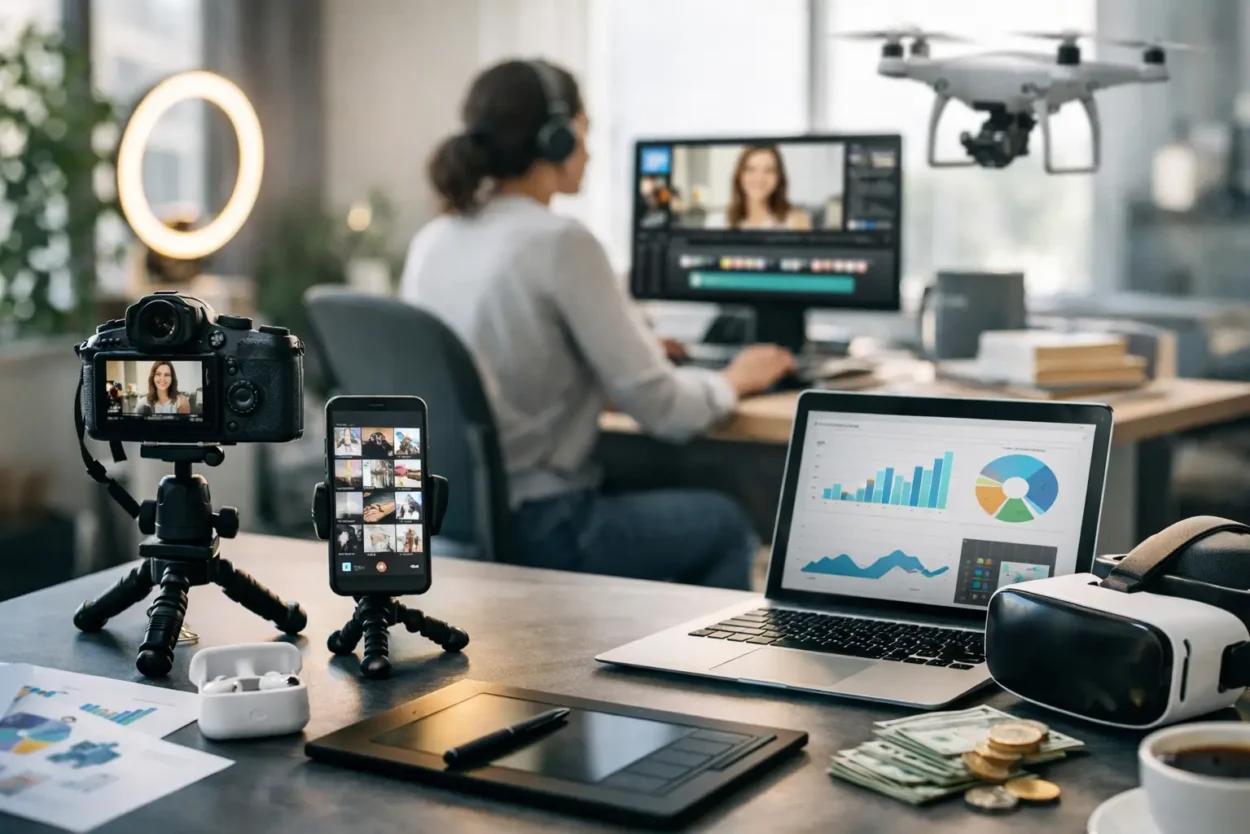
7 Creator Economy Trends 2026 Will Shift
The old playbook for making money online is getting crowded fast. Bigger followings still help, but the creator economy trends 2026 readers should watch are less about going viral and more about building something stable, specific, and hard to copy.
For creators, brands, and even casual side hustlers, that shift matters. It changes what kind of content gets attention, how money comes in, and which platforms are worth the effort. If you are thinking about starting a channel, growing a personal brand, or turning an audience into income, 2026 looks less like a fame race and more like a strategy test.
Why creator economy trends 2026 feel different
A few years ago, growth often came down to reach. Post more, chase trends, and hope one clip broke through. That still happens, but the market is more mature now. Audiences are savvier, platforms are crowded, and creators are learning that attention without a business model can burn a lot of time.
What changes in 2026 is the balance between visibility and value. A creator with 20,000 loyal followers may be in a stronger position than someone with 500,000 passive viewers. That is especially true in lifestyle categories like beauty, food, home, travel, and fashion, where trust drives clicks, saves, repeat views, and purchases.
1. Niche creators will keep beating generalists
Broad lifestyle content is not going away, but highly specific creators are becoming easier to monetize. A beauty creator focused only on fragrance layering, a home creator centered on small apartment organization, or a travel creator covering weekend trips for working moms can attract the kind of audience brands actually want.
That does not mean everyone should go ultra narrow forever. The trade-off is real. Going niche can make it easier to stand out, but it can also cap your growth if the topic is too small or too seasonal. The smarter move is usually clear positioning first, then expansion later.
In practice, creators who win in 2026 will likely answer a simple question quickly: who is this for? If the audience knows exactly why they should follow you, growth gets easier and content decisions get faster.
2. Short-form content will stay powerful, but it will not be enough on its own
Short videos are still one of the fastest ways to get discovered. They fit how people browse, and platforms continue to reward them. But discovery and loyalty are not the same thing.
That is why one of the biggest creator economy trends 2026 will bring is the move from short-form reach to deeper content ecosystems. Creators are using short clips as the top of the funnel, then pushing audiences toward newsletters, longer videos, podcasts, private communities, or paid products.
This matters because short-form content is volatile. A great month can be followed by silence if the algorithm shifts or audience habits change. Longer formats and owned channels usually grow slower, but they are better for trust and more reliable for income.
For newer creators, the takeaway is simple. Use short-form to get seen, but give people somewhere else to go if they want more from you.
3. Audience ownership will become a bigger priority
For years, creators built entire businesses on rented platforms. That is still common, but more creators now understand the risk. If a platform changes payouts, reduces reach, or pushes different content styles, creators can lose momentum overnight.
In 2026, expect more focus on assets creators control. Email lists, membership groups, digital products, direct brand relationships, and personal websites are all part of that shift. They do not replace social platforms, but they reduce dependence on them.
There is a practical reason this trend keeps growing. Owned audiences are easier to re-engage. If someone joins your list because they love your recipes, your style advice, or your budget travel tips, you do not have to fight the algorithm every time you want to reach them.
This is one area where small creators may actually move faster than large ones. It is often easier to build direct habits early than to retrain a huge audience later.
4. AI will speed up content production, but personality will matter more
AI is already changing how creators brainstorm, edit, research, caption, and repurpose content. By 2026, those tools will feel even more normal. The creators who benefit most will not be the ones who let AI do everything. They will be the ones who use it to save time while keeping a recognizable voice.
That distinction is important because audiences can feel generic content. If every caption, script, image, or idea starts sounding interchangeable, creators lose the very thing that makes people stay.
The best use of AI is usually operational. It can help outline posts, test angles, organize content calendars, clean up transcripts, or turn one piece of content into five versions. It is less effective as a replacement for lived experience, humor, taste, or point of view.
For lifestyle creators especially, taste is the product. A skincare routine, outfit pick, movie recommendation, or room makeover lands differently when it reflects a real person with consistent preferences. That is harder to automate, and that is exactly why it will stay valuable.
5. Brand deals will get more selective and more performance-driven
Sponsored content is not disappearing, but brands are becoming more careful about where they spend. In 2026, expect fewer one-off partnerships based only on follower count and more deals based on audience fit, conversion potential, and content quality.
This could be good news for micro and mid-sized creators. Brands often get stronger results from creators with tighter communities and clearer niches than from massive accounts with broad but less engaged audiences.
At the same time, the pressure is rising. Creators may be asked for stronger data, clearer examples of past performance, and more polished media kits. There is also a growing expectation that branded content should still feel native to the creator’s style.
That creates a balancing act. If sponsored content feels too scripted, audiences tune out. If it feels too casual, brands may worry the message is not landing. The creators who handle that tension well will likely win more repeat partnerships.
6. Multiple income streams will become less optional
Relying on one revenue source is getting riskier. Ad revenue can fluctuate, brand deals can slow down, and platform incentives can disappear. One of the clearest creator economy trends 2026 points to is diversification.
That does not mean every creator needs five businesses at once. In fact, trying to do too much too early can make growth messier. A better approach is to stack income streams that fit the audience naturally.
For one creator, that might mean brand deals plus affiliate-style recommendations and a small digital product. For another, it could be ad revenue, paid subscriptions, and consulting. The exact mix depends on content type, audience trust, and how involved the creator wants to be.
The bigger idea is resilience. If one stream dips, the whole business does not fall apart. That kind of flexibility is becoming a major advantage.
7. Community will matter more than follower counts
Follower counts still influence perception, but they are becoming a less complete measure of success. A creator with a highly engaged community can often generate more value than one with much bigger numbers and weaker connection.
In 2026, community may show up in different ways. It could be repeat commenters who know your story, subscribers who open every email, buyers who trust your recommendations, or members who participate in a private group. The format matters less than the pattern. People are not just watching. They are returning.
This shift changes how creators should think about content. Not every post needs to maximize reach. Some content should strengthen loyalty, answer questions, reflect audience identity, or make followers feel included.
That is especially relevant for approachable lifestyle publishing, where readers often want practical help mixed with inspiration. A creator who consistently helps people solve small daily problems can build a stronger long-term business than one who chases every trend without a clear relationship to the audience.
What creators should do now
If these creator economy trends 2026 are heading in the direction many expect, the smartest next move is not to copy every new tactic. It is to build a setup that can adapt.
That usually means getting clearer about your niche, creating at least one direct audience channel, using AI to save time instead of replacing your voice, and thinking beyond one revenue stream. It also means being honest about your strengths. Some creators are better at video than writing. Some are excellent on camera but not interested in community management. Some want a side income, while others want a full business. Those differences matter.
There is no single perfect blueprint anymore, and that is actually the opportunity. The creator economy is growing up. It is getting more competitive, yes, but also more flexible for people who know what they offer and who they want to reach.
If you are building in 2026, the goal is not to be everywhere. It is to be memorable, useful, and trusted in the places that count.