Can you freeze soup without losing flavor? Learn which soups freeze best, how to cool and pack them safely, and when to use them for easy meals later.
Can You Freeze Soup? How to Store It Safely
A big pot of soup is one of the easiest ways to make future weeknights feel less hectic. But can you freeze soup and expect it to taste just as comforting after a few weeks in the freezer? In most cases, absolutely. The trick is knowing which ingredients hold up well, cooling the soup safely, and leaving enough room in the container for expansion.
Freezing soup is a practical way to stretch a recipe, reduce food waste, and keep a homemade meal within reach when takeout sounds tempting. From tomato basil to chicken noodle, many favorites freeze beautifully with a little planning.
Can You Freeze Soup Successfully?
Yes, you can freeze soup successfully for about two to three months while keeping the best flavor and texture. It will generally remain safe for longer if stored continuously frozen, but its quality can fade over time. Labels matter more than you might think: write the soup name and freeze date directly on each container so that mystery leftovers do not take over your freezer.
Brothy soups, bean soups, vegetable soups, chili, lentil soup, and pureed soups are usually excellent freezer candidates. They reheat easily and often taste even better after the flavors have had time to settle.
The main exceptions are soups that contain ingredients prone to splitting, becoming grainy, or turning mushy. That does not mean they are impossible to freeze. It simply means a small adjustment before freezing can make a noticeable difference later.
Soups That Freeze Best
Clear-broth soups are some of the most freezer-friendly options. Think chicken vegetable, turkey rice, minestrone, beef barley, and classic vegetable soup. Hearty recipes with beans, lentils, ground meat, or firm vegetables also tend to retain their character after thawing.
Pureed vegetable soups are another great choice. Butternut squash, tomato, carrot ginger, cauliflower, and sweet potato soups usually freeze well because their blended texture is naturally smooth. A quick stir or blend after reheating can bring back a silky consistency.
Chili is especially convenient to freeze in single portions. It is filling, affordable, and easy to turn into a fast dinner with cornbread, rice, baked potatoes, or tortilla chips.
Which Soup Ingredients Need Extra Care?
Some ingredients do not love the freezer, but you can usually work around them. Dairy-based soups, including creamy potato soup, chowder, and broccoli cheese soup, may separate after thawing. The soup is still often safe to eat, but it can look curdled or feel slightly grainy.
For the best result, make the recipe up to the point where you would add cream, milk, sour cream, or cheese. Freeze the soup base, then stir in the dairy as it reheats. If the soup has already been made with dairy, thaw it slowly and reheat gently over low heat, stirring often. Avoid a hard boil, which can make separation worse.
Pasta, rice, and potatoes can also change texture. Noodles may become soft, rice can absorb too much broth, and potatoes can turn crumbly or grainy. If you are cooking specifically for the freezer, leave these ingredients out or slightly undercook them. Add fresh pasta, cooked rice, or diced potatoes when you reheat the soup.
Fresh herbs are best added near serving time. Parsley, cilantro, basil, and dill can lose their bright flavor in the freezer, while sturdier herbs such as thyme, rosemary, and oregano tend to perform better in cooked soups.
How to Freeze Soup the Right Way
The most important step happens before the soup goes into the freezer: cool it promptly. Leaving a large, steaming pot on the counter for hours is not a good food-safety plan. Instead, divide the soup into smaller, shallow containers so heat can escape faster.
You can also place the pot in an ice bath in a clean sink, stirring occasionally to speed up cooling. Once the soup is no longer hot, transfer it to the refrigerator until fully chilled, then freeze it. The goal is to get leftovers chilled within two hours of cooking, or within one hour if the room is especially hot.
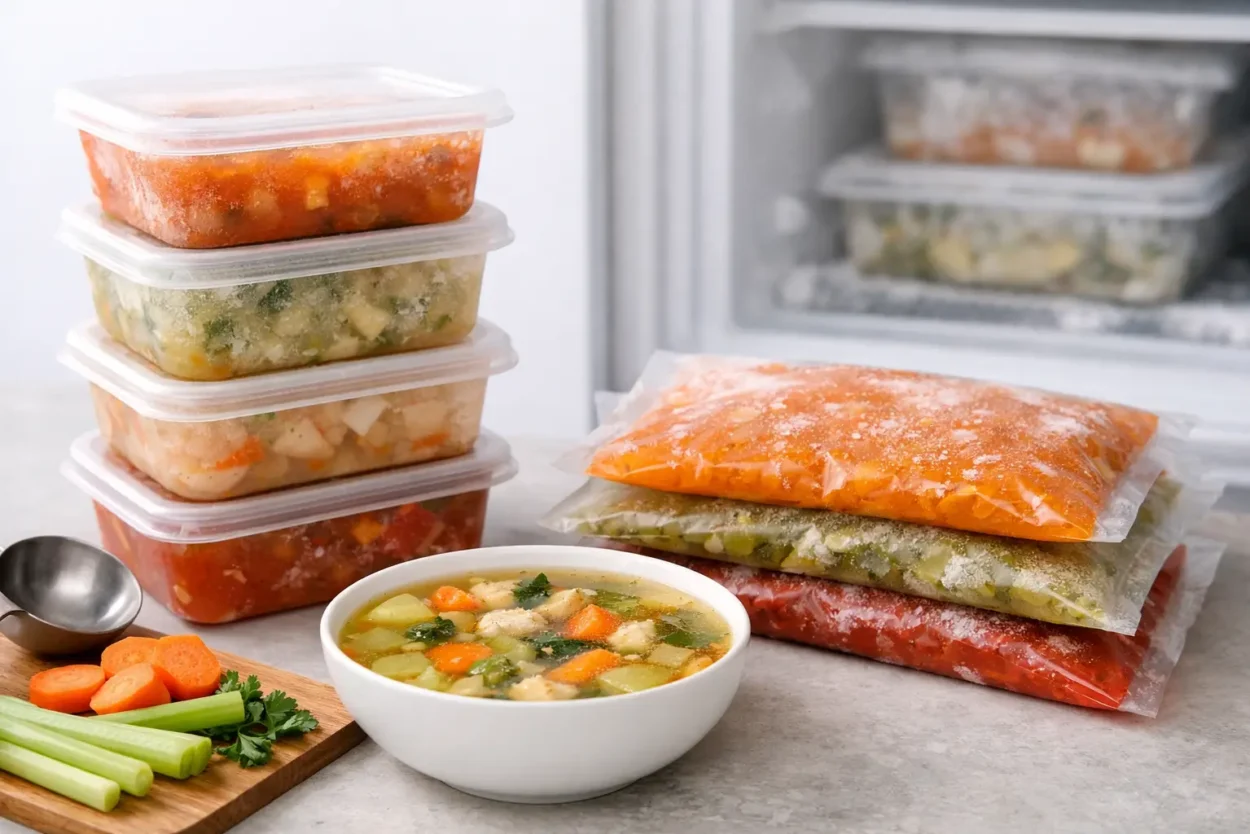
Choose freezer-safe containers, jars designed for freezing, or sturdy freezer bags. Portioning is worth the extra minute because it lets you thaw only what you need. A single-serving container is ideal for work lunches, while a two-person portion is perfect for an easy dinner.
Leave about an inch of space at the top of rigid containers. Soup expands as it freezes, and overfilling can crack a container or push off the lid. For freezer bags, press out as much air as possible, seal them tightly, and freeze them flat on a baking sheet. Once frozen, the bags can be stacked vertically like files to save valuable freezer space.
A Simple Freezer Soup Checklist
Before storing your soup, make sure you have done four things:
- Cooled it quickly in smaller portions rather than leaving the whole pot out.
- Used clean, freezer-safe containers or heavy-duty freezer bags.
- Left room for expansion and removed excess air where possible.
- Added a clear label with the soup name, portion size, and date.
How Long Can Soup Stay in the Freezer?
For the best taste, plan to use frozen soup within two to three months. A well-wrapped container can remain safe longer, but flavors may become dull and freezer burn can affect the texture. Freezer burn is not dangerous, but the dry, icy patches can make a bowl of soup less appealing.
Keep your freezer at 0°F or below, and avoid placing hot containers directly against frozen food. Consistent temperature helps preserve both flavor and food quality. If you have a busy household, create a small freezer zone for ready-to-eat meals so soup does not get buried behind frozen vegetables and ice cream.
The Best Ways to Thaw and Reheat Frozen Soup
The safest way to thaw soup is in the refrigerator overnight. This works especially well for large containers and creamy soups that benefit from gentle reheating. Once thawed, use the soup within three to four days.
For a faster option, place a sealed freezer bag or container under cold running water, changing the water regularly if you are using a bowl. You can also reheat many soups directly from frozen in a saucepan over low heat. Add a splash of water or broth if it seems too thick, cover the pan, and stir as the frozen block loosens.
Microwave reheating is convenient for individual portions. Use a microwave-safe bowl, cover it loosely to prevent splatters, and stir every minute or two so the center heats evenly. Whatever method you choose, heat soup until it is steaming hot throughout. For leftovers containing meat, poultry, or seafood, aim for 165°F.
Creamy or cheese-based soups deserve a little patience. Reheat them over low heat and stir frequently. If the texture looks separated, whisking can help. For a smoother finish, a brief pass with an immersion blender can work well for pureed soups, though it is not the best choice for chowders with chunks of potato or seafood.
Can You Refreeze Soup After Thawing?
It depends on how the soup was thawed and handled. If it thawed in the refrigerator and has stayed cold, you can refreeze it, although the texture may decline with every freeze-thaw cycle. This is most useful when you thawed more than expected but have not yet reheated the entire batch.
Do not refreeze soup that sat at room temperature for an extended period. And once you have reheated a portion for dinner, it is better to refrigerate any leftovers and eat them within a few days rather than freeze them again. Freezing in smaller portions from the beginning is the simplest way to avoid this question altogether.
Easy Soup Freezer Ideas for Busy Weeks
A freezer stocked with soup can make meal planning feel far more flexible. Freeze taco soup for a casual dinner, tomato soup for grilled cheese nights, or chicken and vegetable soup for the first hint of a cold. A big batch of lentil soup or white bean kale soup also makes an affordable, satisfying lunch that does not require much effort.
For a more polished meal, freeze the soup base and add fresh finishing touches after reheating. A swirl of cream, squeeze of lemon, handful of herbs, grated Parmesan, crunchy croutons, or sliced avocado can make a freezer meal feel freshly made.
A labeled container of homemade soup is more than leftover food. It is a small favor to your future self – one that turns a busy evening into a warm, easy meal without much thought.