
This guide to curtain lengths helps you measure windows, choose floor-skimming styles, and hang panels at the right height for a polished look at home.
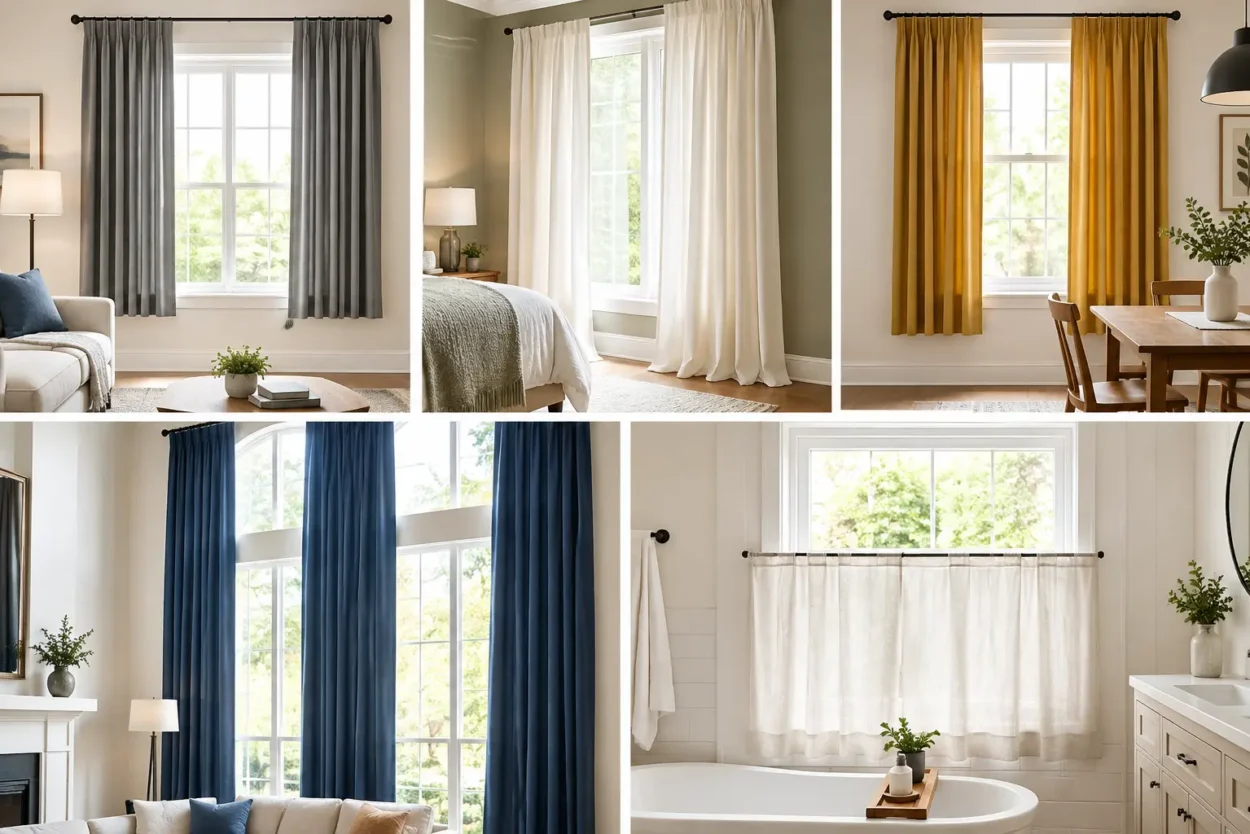
A Guide to Curtain Lengths for Every Room
Curtains can make a room feel taller, calmer, and more finished – but only when they land in the right place. This guide to curtain lengths takes the guesswork out of measuring, shopping, and hanging curtains so your windows look intentional rather than almost-right.
The good news: there is no single perfect length for every window. The best choice depends on how formal you want the room to feel, how often you open the curtains, and what sits below the window. A tailored floor-skimming panel may suit a living room, while a short, practical café curtain can make more sense above a busy kitchen sink.
Start With Where the Curtain Rod Will Go
The most common curtain mistake happens before the fabric is even measured: placing the rod directly above the window frame. Hanging it higher gives the eye more vertical space, which makes standard ceilings feel taller and windows look larger.
For most rooms, install the rod about 4 to 6 inches above the top of the window trim. If there is enough wall space, you can go closer to the ceiling or just below the crown molding. This works especially well in bedrooms and living rooms, where full-length curtains create a softer, more polished look.
Extend the rod beyond each side of the frame, too. Aim for 6 to 10 inches on each side when possible. That extra width lets the panels stack mostly outside the glass when open, allowing in more daylight and giving the window a more generous appearance.
Measure from the top of the rod or from the bottom of the curtain rings, depending on how you plan to hang the panels. Do not measure from the top of the window. Your final curtain length should reflect the actual hanging point.
Guide to Curtain Lengths: The Main Options
Curtain length changes the mood of a room more than many people expect. These are the most useful options to know before you order panels.
Sill-length curtains
Sill-length curtains end at or just above the windowsill. They are usually the most practical option for small windows with furniture underneath, such as a kitchen window above a sink, a bathroom window, or a window with a deep built-in bench.
To get this look, measure to about 1/2 inch above the sill. Keeping the hem slightly clear prevents the fabric from bunching or catching on the ledge. Sill-length curtains are casual and functional, but they do not create the same height and drama as full-length panels.
Apron-length curtains
Apron-length curtains hang roughly 4 inches below the bottom of the window trim. They are a smart middle ground when full panels would interfere with a radiator, a desk, a toddler bed, or storage beneath the window.
This length can look slightly dated if the fabric is too stiff or the rod sits low. Make it feel more current by mounting the rod higher and choosing a simple, lightweight fabric in a clean color or subtle pattern.
Floor-skimming curtains
For most living rooms, bedrooms, dining rooms, and home offices, floor-skimming is the go-to choice. The curtain hem should sit about 1/2 inch above the floor. It looks tailored, prevents dust from gathering at the hem, and makes daily opening and closing much easier.
This is also the best option for households with pets, young children, or robot vacuums. A panel that barely clears the floor still looks elevated without becoming a magnet for fur, crumbs, and snags.
Breaking curtains
Breaking curtains are about 1 inch longer than the distance to the floor, so the fabric bends gently where it meets the ground. The effect is relaxed and layered, especially with linen, cotton, or softly textured fabrics.
Choose a small break if you want a less formal version of full-length curtains. It is forgiving on slightly uneven floors, but it requires a little more maintenance than a skim because the bottom edge can collect dust.
Puddled curtains
Puddled curtains extend 2 to 6 inches onto the floor, creating visible folds of fabric. This is a romantic, luxurious look often seen in formal bedrooms, dressing rooms, and spaces where curtains are more decorative than functional.
The trade-off is real: puddled panels can be hard to move, tricky to clean around, and impractical near doors or in high-traffic areas. They work best when you love the look enough to accept the upkeep. If you are unsure, start with a modest 2-inch puddle rather than a dramatic sweep of fabric.
How to Measure Curtain Length Correctly
Use a metal measuring tape and measure each window separately. Even windows that look identical can vary by an inch or more, particularly in older homes. Measure twice before buying panels, and write down whether your measurement begins at the rod, ring clip, or curtain track.
For a floor-skimming look, measure from the hanging point to 1/2 inch above the floor. For a breaking look, measure to the floor and add about 1 inch. For puddled curtains, add between 2 and 6 inches depending on the amount of fabric you want gathered at the base.
Ready-made curtain lengths are commonly sold in 63-, 84-, 96-, and 108-inch options. An 84-inch panel can work in a room with an 8-foot ceiling if the rod is mounted near the top of the trim. If you plan to mount the rod high, 96-inch panels are often the better fit. For taller ceilings, 108-inch panels may be the easiest option.
Avoid choosing a shorter panel just because it is available in stores. A panel that ends several inches above the floor can make a room look unfinished. When your measurement falls between standard sizes, it is usually better to buy longer curtains and hem them than to settle for curtains that are too short.
Don’t Forget Curtain Width
Length gets most of the attention, but narrow curtains can make an otherwise beautiful installation look skimpy. For a full, gathered look when curtains are closed, the total width of your panels should be about 1.5 to 2.5 times the width of the window or rod.
The right fullness depends on the material. Sheer curtains look best with more fabric, often close to 2 to 2.5 times the window width. Thick velvet or lined blackout panels need less fullness because the fabric already has more volume. If the curtains are mainly decorative and will stay open, you can get away with less width, but they should still look substantial enough to frame the window.
Match the Length to the Room’s Real Life
A beautiful choice is only useful if it works for the way you live. In a formal dining room, floor-skimming drapes can make the setting feel special. In a nursery, cordless shades paired with short decorative side panels may be safer and easier to manage. In a kitchen, a washable sill-length curtain is often more sensible than fabric brushing the floor near spills and cooking messes.
Also consider what is underneath the window. A radiator, air vent, baseboard heater, desk, or built-in seat may affect your plan. Long curtains can sometimes block heat flow or interfere with furniture, so apron-length panels or inside-mounted shades may be a better solution. Style matters, but comfort and function should get the final vote.
Easy Fixes for Curtains That Are Almost Right
If your curtains are too long, hemming tape offers a quick no-sew fix for lightweight fabrics. For lined, heavy, or expensive panels, professional alterations are worth considering because they preserve the curtain’s shape and weight.
If they are too short, moving the rod slightly lower can help, but only if the new position still looks balanced. Another option is to add decorative trim or a coordinating fabric band to the bottom edge. This can turn a frustrating measurement mistake into a custom-looking detail.
When your curtains arrive, hang them before making any final adjustments. Fabric may relax after a few days, and floors are not always level from one side of the window to the other. Pin the hem first, step back across the room, and check the overall line before committing.
The best curtain length is the one that makes your room feel finished while fitting your everyday routine. Measure from the rod, give yourself permission to hem, and let the scale of the room guide you. A few thoughtful inches can make a surprisingly big difference.