
Learn how to revive dry curls with a simple wash-day reset, better moisture habits, and easy styling fixes for softer, bouncier definition at home today.
How to Revive Dry Curls Without Starting Over
Dry curls can make a good haircut feel suddenly wrong. One day your texture looks springy and defined; the next, it feels rough, puffy, flat at the roots, or strangely limp at the ends. The good news is that learning how to revive dry curls usually does not require a dramatic chop or an expensive shelf of products. It starts with figuring out whether your hair needs water, conditioning, gentler handling, or a break from buildup.
Curly hair has natural bends and coils that make it harder for scalp oils to travel down each strand. That is why dryness is common, even when your scalp does not feel dry at all. A few thoughtful changes can bring back softness, shine, and definition without turning your routine into a full-time project.
Start With a Moisture Reset
When curls are dry, the instinct is often to pile on oils or heavy butters. Those can help seal in moisture, but they cannot replace the water your hair is missing. Start your next wash day by thoroughly soaking your hair with warm, not hot, water. Let the water run through your curls for a minute before applying shampoo or cleanser.
Use a gentle shampoo if your hair feels coated, dull, or unusually difficult to style. Product buildup, dry shampoo, hard-water minerals, and heavy leave-ins can sit on the hair and keep moisture from doing its job. If your curls feel clean but brittle, a co-wash or moisturizing cleanser may be the better choice.
Follow with a rich conditioner and give it time to work. Instead of rinsing immediately, clip up your hair and leave the conditioner on for three to five minutes while you finish the rest of your shower. Detangle in sections with your fingers or a wide-tooth comb, beginning at the ends. Rushing through knots can create breakage that makes dry curls look even frizzier.
Add a Deep Conditioner When Hair Feels Rough
A deep-conditioning treatment can make a noticeable difference when your curls feel stiff, crunchy, or straw-like. Use one about once a week or every other week, depending on how dry your hair is. Choose a moisture-focused mask with ingredients such as aloe, glycerin, fatty alcohols, shea butter, or plant oils.
Protein treatments can also be useful, especially if your curls have been bleached, colored, heat-styled, or feel overly stretchy when wet. But more protein is not always better. If your hair feels hard and snaps easily after protein-heavy products, switch back to moisture for a few wash days. Healthy curls need a balance, and the right balance varies from person to person.
How to Revive Dry Curls Between Wash Days
You do not need to completely rewash your hair every time your curls lose their shape. A light refresh can bring definition back while protecting your hair from over-cleansing.
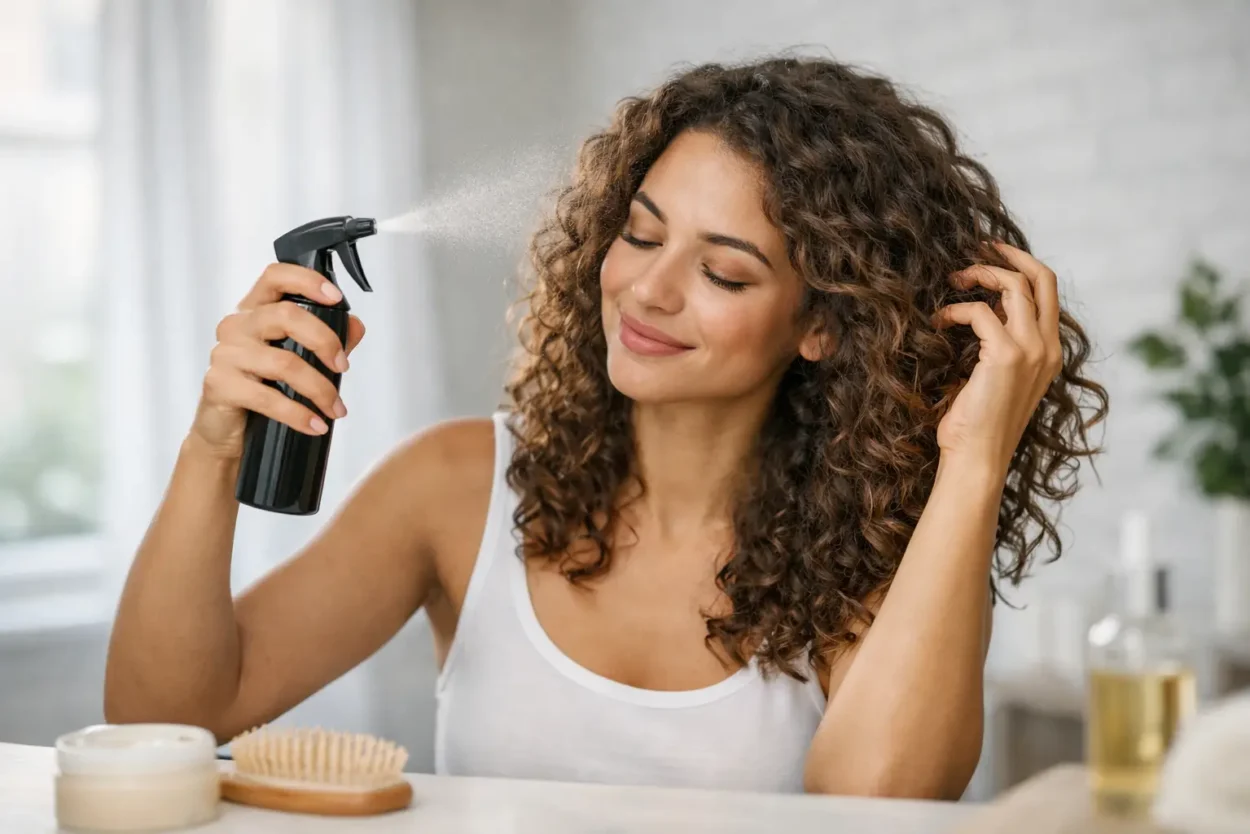
Begin with a spray bottle filled mostly with water. Mist your driest areas until they are lightly damp, not dripping. Then smooth or scrunch in a small amount of leave-in conditioner, curl cream, or foam. The best product depends on your curl pattern and density: fine curls often prefer a lightweight foam or spray, while thicker coils may need a creamier leave-in.
Focus on the sections that actually need help. Refreshing every inch with several products can leave curls sticky or weighed down. If the front pieces are frizzy but the back still looks good, work only on the front. This small habit saves time and keeps your natural volume intact.
For flattened roots, use a few small clips at the crown while your hair air-dries, then remove them once the roots are dry. You can also diffuse on low heat and low airflow for a few minutes. The goal is to lift the roots without blasting the entire curl pattern apart.
Change the Habits That Keep Curls Dry
Great products help, but daily habits often decide whether curls stay hydrated after wash day. If you have been stuck in a cycle of dry ends and frizz, these simple changes are worth trying:
- Use a microfiber towel or soft cotton T-shirt instead of rubbing with a traditional bath towel. Rough towels can pull apart curl clumps and create frizz.
- Apply leave-in products to very wet or damp hair. Water helps distribute the product and gives curls the hydration they need before styling.
- Sleep with your hair protected in a loose pineapple, satin bonnet, or satin pillowcase to reduce friction and moisture loss overnight.
- Limit high heat from flat irons, curling irons, and very hot diffusers. When heat is necessary, use a heat protectant first.
The order of your styling products matters, too. A reliable starting point is leave-in conditioner first, then curl cream if you need softness or shape, followed by gel or mousse for hold. The hold product can feel a little crunchy at first, but once hair is fully dry, gently scrunch out the cast with clean, dry hands. You are left with softer curls that still have structure.
Watch for Signs of Buildup or Over-Moisturizing
Not every dry-looking curl is truly lacking moisture. Sometimes hair looks dull and frizzy because it is coated in too many rich products. Other times, it feels soft but droopy because it has been conditioned heavily without enough cleansing or hold.
If your hair feels waxy, takes a long time to get wet, or has little bounce even after conditioning, try a clarifying shampoo once in a while. Clarifying is especially helpful if you use lots of butters, oils, gels, or dry shampoo. Follow it immediately with a deep conditioner, since clarifying shampoos can be more cleansing than your usual wash.
If your curls feel overly soft, limp, and unable to hold their pattern, reduce the amount of leave-in or cream you use. Add a lightweight gel or mousse instead of another moisturizing layer. Reviving curls is less about using the most product and more about using the right amount for your hair that day.
Treat Your Ends Like the Oldest Part of Your Hair
Your ends have lived through more washing, weather, styling, and friction than the hair near your scalp. They are often the first place dryness shows up. Give them extra attention by applying conditioner and leave-in product from the mid-lengths to ends before using what remains on your roots.
If the ends are visibly split, thin, or constantly tangling, a small trim may be the refresh your curls need. Trimming does not make hair grow faster, but removing worn-out ends can make your overall curl pattern look fuller and healthier. You do not have to lose length to see a difference. Even a light dusting can help.
Know When Dryness Needs More Than a Routine Change
If your scalp is itchy, flaky, painful, or irritated, or if you are experiencing sudden breakage or noticeable shedding, it may be time to check in with a dermatologist or licensed hair professional. Scalp concerns, medication changes, hormonal shifts, and chemical damage can affect how your curls behave.
For everyday dryness, though, patience usually pays off. Give a new routine two or three wash days before judging it, especially if you are changing how you cleanse or style. Curls respond best to consistent care, gentle handling, and enough water to do what they naturally do best: curl, bounce, and take up space.