
Use these container gardening tips to choose pots, soil, plants, and watering routines that keep patio herbs, flowers, and vegetables thriving all season.
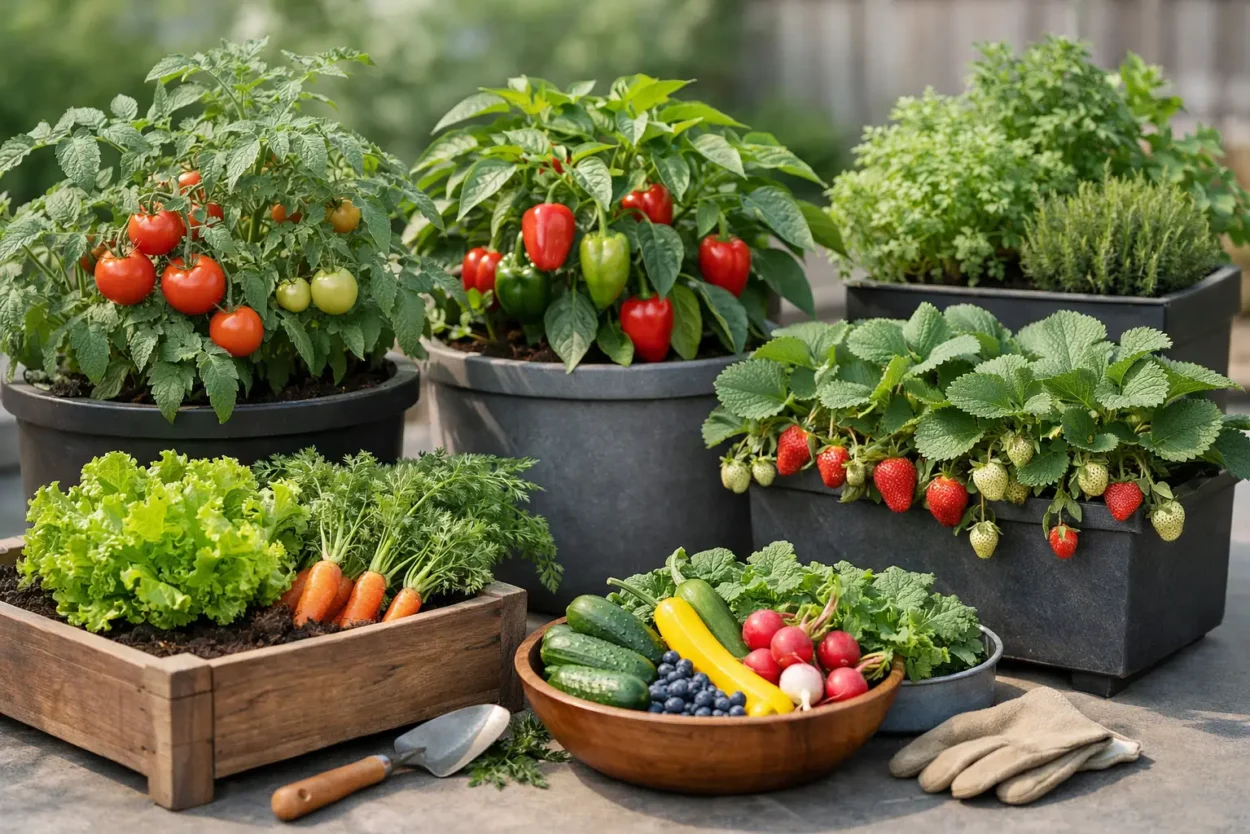
12 Container Gardening Tips for Better Harvests
A sunny porch, a small balcony, or even a bright front step can produce more than a few pretty pots. With the right container gardening tips, you can grow fresh basil for dinner, cherry tomatoes for snacking, colorful flowers, and leafy greens without a traditional backyard. The secret is not having a perfect setup. It is matching your plants, pots, soil, and routine to the space you actually have.
1. Start With the Light You Can Offer
Before buying plants, spend a day noticing where sunlight falls. Most vegetables, including tomatoes, peppers, cucumbers, and basil, need six to eight hours of direct sun for their best growth. A spot that gets bright light but only two or three hours of sun is better suited to lettuce, spinach, parsley, mint, coleus, impatiens, or begonias.
Morning sun is generally gentler than harsh late-afternoon sun, especially in hot climates. If your balcony becomes blazing hot after 3 p.m., a heat-loving plant may thrive there while tender greens may bolt or scorch. Plant tags are useful, but your own space is the real guide.
2. Pick a Pot That Is Bigger Than You Think
Small pots look charming, but they dry out quickly and leave little room for roots. Larger containers hold more soil, which keeps moisture and temperature more stable. They also give vegetable plants the space they need to produce.
For a single herb plant, a 6- to 8-inch pot can work well. Lettuce and small flowers are happy in wider, shallow containers. For tomatoes, peppers, eggplant, or one compact cucumber plant, choose a container that holds at least 5 gallons. A large pot may feel like a commitment at first, but it usually means less watering and fewer stressed plants later.
Material matters, too. Terracotta has a classic look but is porous, so soil dries faster. Plastic and glazed ceramic hold moisture longer. Fabric grow bags offer good drainage and are easy to move, though they can need frequent watering in peak summer. Choose what fits your style and your schedule.
3. Never Skip Drainage Holes
A beautiful container without drainage is a plant problem waiting to happen. Roots need both water and oxygen. When water collects at the bottom of a pot, roots can rot, leaves may yellow, and growth slows down.
Use pots with drainage holes, and make sure those holes are not blocked by a saucer, packed soil, or an overly tight surface beneath the container. If you are repurposing a bucket, metal tub, or decorative planter, add several holes to the bottom before planting.
There is no need to add rocks or gravel beneath the soil. This old trick does not improve drainage and can leave roots sitting in a wetter soil layer. Fill the pot with quality potting mix instead.
4. Use Potting Mix, Not Garden Dirt
One of the most useful container gardening tips is also one of the simplest: buy potting mix made for containers. Soil taken from a yard often becomes dense and compacted inside a pot. It may also carry weed seeds, insects, or plant diseases.
A good potting mix stays light enough for roots to grow, while still holding moisture. If it feels dry and compacted after a season, refresh the container with new mix or blend in compost before replanting. For edible plants, look for an all-purpose mix that is suitable for vegetables and herbs.
You can save money by reusing last season’s soil for flowers or adding it to a garden bed, but avoid relying on exhausted old mix for heavy-feeding crops like tomatoes. Fresh soil gives new plants a much better start.
5. Match Plants to the Container
A container garden works best when each plant has enough room to mature. Crowding may look lush at first, but plants compete for water, nutrients, airflow, and sunlight. That can lead to smaller harvests and more fungal problems.
Look for compact, patio, bush, dwarf, or container varieties when shopping for seeds and transplants. These are bred to stay manageable in pots. A dwarf tomato, for example, is often a smarter choice than a full-size indeterminate variety that wants to climb six feet tall.
You can combine compatible plants in one large container. Try basil with a patio tomato, lettuce with radishes, or trailing sweet potato vine with sun-loving flowers. Keep their light and water needs similar. Mint is the big exception: plant it alone, because it spreads aggressively and can take over the pot.
6. Plant at the Right Depth
Most seedlings should be planted at the same depth they were growing in their nursery pot. Tomatoes are different. They can be planted deeper, with some lower leaves removed, because they form roots along the buried stem. This helps create a stronger, more stable plant.
After planting, press the mix gently around the root ball and water thoroughly. Leave about an inch of space between the soil surface and the pot rim. This makes watering much less messy and keeps soil from washing out every time you use the hose or watering can.
7. Water Deeply, Then Check Again Tomorrow
Container plants dry out much faster than plants in the ground, particularly during sunny, windy, or humid summer weather. The goal is not to water on a rigid calendar. Check the soil with your finger instead. If the top inch feels dry, it is usually time to water.
Water slowly until it runs from the drainage holes. A quick splash only dampens the surface, encouraging shallow roots. Early morning is ideal because plants can take up moisture before the day heats up, and wet leaves have time to dry.
In a heat wave, large vegetables and hanging baskets may need water every day, sometimes twice a day. On the other hand, constantly soggy soil is just as damaging as dry soil. If leaves look limp but the soil is wet, hold off on watering and check that drainage is working.
8. Feed Plants Through the Growing Season
Potting mix contains some nutrients, but regular watering gradually washes them away. Flowering and fruiting plants need extra food to keep producing. A balanced liquid fertilizer every two to four weeks is an easy option for beginners.
Follow the label directions rather than adding extra. More fertilizer does not automatically mean more tomatoes or bigger blooms. Too much can burn roots or create lots of leafy growth with few flowers. For herbs and leafy greens, a lighter feeding routine is usually enough.
If you prefer a lower-maintenance approach, mix a slow-release fertilizer into the potting soil at planting time. It depends on the product, but many formulas feed plants for several months.
9. Give Tall Plants Support Early
Tomatoes, peas, beans, and some flowering vines need support before they become heavy or tangled. Add a tomato cage, bamboo stakes, or a small trellis at planting time. Trying to force a support into a fully rooted pot later can damage roots and stems.
Tie stems loosely with soft garden ties or strips of fabric as they grow. Avoid wire or tight string that can cut into the plant. A little structure also improves airflow, which helps leaves dry faster after rain or watering.
10. Harvest Often and Deadhead Flowers
Regular harvesting tells many edible plants to keep producing. Pick basil tips before the plant flowers, snip lettuce leaves as needed, and gather beans and cucumbers when they are young and tender. Leaving overripe produce on the plant can slow new growth.
The same idea applies to flowering containers. Remove faded blooms from petunias, geraniums, marigolds, and similar annuals to encourage more flowers. A few minutes of trimming while you water can make a pot look freshly planted for much longer.
11. Watch for Problems Before They Spread
Check your plants every few days, especially the undersides of leaves. Aphids, spider mites, caterpillars, and whiteflies are easier to manage when you spot them early. A strong spray of water can remove many small pests, while hand-picking works well for larger caterpillars.
Yellow leaves do not always mean disease. They may signal overwatering, underwatering, nutrient issues, or simply older foliage near the base of a plant. Remove leaves that are clearly damaged or diseased, but take a moment to look at the soil and light conditions before treating anything.
12. Refresh Your Containers Between Seasons
A container garden does not have to end when summer does. Replace warm-season plants with fall lettuce, kale, pansies, or ornamental cabbage once temperatures cool. In mild areas, herbs and greens can continue for months.
At the end of a season, empty dead plants, wash containers, and store supports. If a plant had a serious pest or disease issue, discard its soil rather than reusing it. This small reset makes spring planting feel easier, cleaner, and more exciting.
Container gardening rewards attention more than perfection. Start with two or three plants you will genuinely use or enjoy seeing every day, notice how they respond to your space, and let each season teach you what to grow next.