Find the best kitchen organization tools for drawers, cabinets, counters, and pantries, plus simple tips to choose pieces that fit your cooking routine.
12 Best Kitchen Organization Tools That Work
A junk drawer that will not close, a spice cabinet full of duplicates, and a countertop crowded with appliances can make a perfectly good kitchen feel frustrating. The best kitchen organization tools do more than create a tidy look for photos. They make weekday cooking faster, reduce food waste, and help you find what you need before the pasta water boils.
The key is choosing tools that solve a real friction point in your own kitchen. A beautiful pantry bin is not very useful if your main problem is a stack of baking sheets sliding out of a lower cabinet. Start with the areas you use most, then add organizers that fit your space, habits, and budget.
How to Choose Kitchen Organization Tools
Before buying anything, take a quick inventory of what is actually getting in the way. Measure drawer interiors, cabinet shelves, and the depth of your pantry before choosing bins or racks. A tool that is two inches too tall can become clutter rather than a solution.
It also helps to organize by routine instead of by product category alone. Keep coffee supplies near the coffee maker, prep tools close to the main work surface, and everyday dishes within easy reach of the dishwasher. The best setup is the one that makes putting items away as easy as taking them out.
Best Kitchen Organization Tools for Drawers
1. Adjustable Drawer Dividers
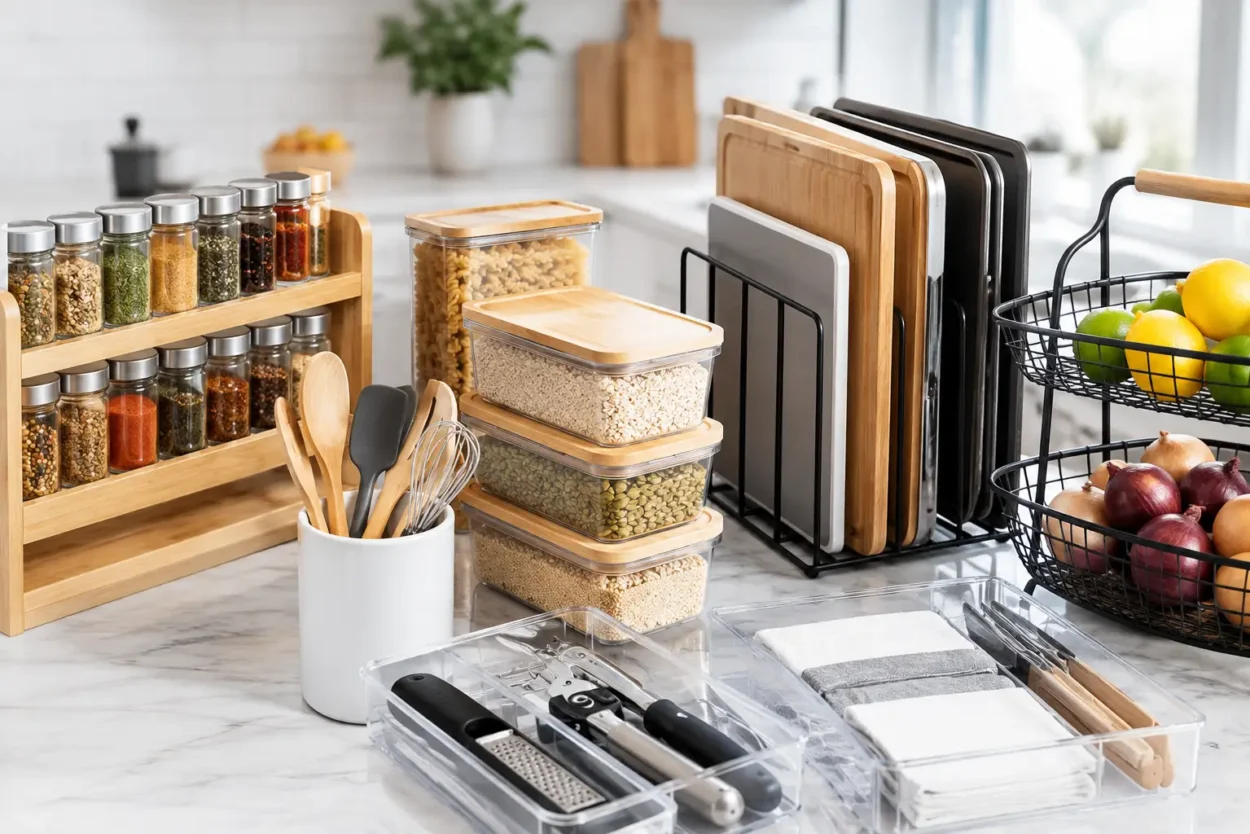
Adjustable dividers are a simple fix for drawers that become a tangle of utensils, foil boxes, batteries, and takeout menus. They create clear zones without requiring a custom drawer insert. Use them in wide drawers for cooking tools, lunch supplies, or food storage lids.
Choose spring-loaded or non-slip dividers that stay secure when the drawer opens and closes. They work especially well for renters because they can be moved or reconfigured without installation.
2. Expandable Utensil Trays
A basic utensil tray is one of the most useful upgrades for a busy kitchen, but expandable versions make better use of awkward drawer widths. Separate everyday forks and spoons from specialty tools such as peelers, measuring spoons, and can openers.
Look for a tray with removable compartments if your utensil collection changes often. Bamboo offers a warm, polished appearance, while plastic is lighter, easier to wipe clean, and usually more affordable.
3. Food Storage Lid Organizers
Containers are easy to stack. Their lids are another story. A dedicated lid organizer keeps round, square, and rectangular tops standing upright so you can grab the right size without emptying a cabinet.
This is a small tool with a big payoff if you pack lunches or save leftovers regularly. For best results, recycle warped or unmatched lids first. No organizer can make a drawer feel orderly if it is holding containers you no longer use.
Best Kitchen Organization Tools for Cabinets
4. Pull-Out Cabinet Shelves
Deep lower cabinets tend to hide pots, small appliances, and pantry staples behind whatever is stored in front. Pull-out shelves bring the back of the cabinet to you, making them a smart choice for cookware, mixing bowls, and heavier items.
They cost more than simple bins, and some versions need mounting, so they are worth prioritizing in the cabinets you open every day. If you rent, a freestanding sliding organizer can provide a similar benefit without permanent hardware.
5. Under-Sink Pull-Out Bins
The area under the sink often turns into a catchall for cleaning sprays, sponges, trash bags, and dishwasher tablets. Pull-out bins make this hard-working spot much easier to manage, especially when plumbing limits what can fit.
Choose a two-tier design only if your pipes leave enough clearance. Otherwise, a low bin paired with a small door-mounted caddy can keep your essentials visible without forcing them into a tight space.
6. Vertical Bakeware Racks
Baking sheets, cutting boards, muffin tins, and cooling racks are notoriously annoying to stack. A vertical rack lets each piece slide out independently, which means no more lifting five pans to reach the one you need.
Use one inside a tall cabinet or a deep drawer near the oven. This is also a practical way to store large platters that rarely fit neatly into standard dish cabinets.
7. Shelf Risers
Shelf risers add a second level inside cabinets, making better use of open vertical space. They are ideal for mugs, small plates, canned goods, or bowls that would otherwise form a precarious tower.
They are inexpensive and require no installation, but they work best with similarly sized items. If every mug is a different height, a riser may create more visual clutter than it solves.
Pantry and Refrigerator Tools Worth Buying
8. Clear Pantry Bins
Clear bins turn loose snacks, sauce packets, breakfast bars, and baking supplies into easy-to-see categories. They also make it easier to pull out one group at a time rather than searching through a crowded shelf.
Avoid buying a full matching set before you know what you need to store. Begin with a few bins for the categories that spill or get lost most often, such as snacks, pasta, or breakfast foods. Handles are especially helpful on high or deep shelves.
9. Airtight Dry Food Containers
Airtight containers can make a pantry look streamlined, but their bigger advantage is keeping dry foods fresh and protected from moisture. They are useful for flour, sugar, cereal, rice, oats, and pet food.
The trade-off is that transferring food takes time, and not every ingredient needs decanting. Use containers for items you buy repeatedly in larger packages. Keep the original label or write the expiration date on a removable label so nothing sits forgotten at the back of the shelf.
10. Lazy Susans
A turntable is one of the best solutions for deep corner cabinets and refrigerator shelves. Place oils, vinegars, sauces, or condiments on a lazy Susan, then spin it to see every option at once.
Raised edges help prevent bottles from tipping over. For the refrigerator, choose a style that is easy to wash and make sure it can rotate without hitting the shelf walls.
11. Refrigerator Drawer Organizers
Refrigerator bins are helpful for grouping yogurt, cheese sticks, lunch ingredients, produce, or meal-prep items. They can also encourage better food habits because healthy grab-and-go choices are easier to spot.
Do not overfill them. A refrigerator organizer should make food visible, not hide it behind another layer of plastic. Labeling a bin for “use first” is a simple trick for leftovers and produce that need attention soon.
Smart Countertop and Wall Storage
12. A Slim Rolling Cart or Utility Rack
A narrow rolling cart can turn an unused gap beside the refrigerator or cabinet into practical storage for pantry staples, dish towels, or frequently used appliances. It is a flexible option for small kitchens because it can move when you need extra floor space.
For a more permanent solution, wall-mounted rails and hooks can hold mugs, utensils, or lightweight pans. Keep wall storage selective, though. Too many items on display can make a kitchen feel busier, even when it is technically organized.
Make the Tools Work for You
The most organized kitchens are not packed with organizers. They have a place for everyday items and a realistic system for putting those items back. After adding a new tray, bin, or rack, give it two weeks of normal use. If it creates an extra step or does not fit your routine, adjust it without guilt.
Start with one drawer, one cabinet, or one pantry shelf rather than trying to overhaul the entire room in a weekend. A kitchen that supports the way you cook is more satisfying than one that simply looks perfectly arranged.