
Learn how to freeze fresh herbs in oil, water, or bags, with simple storage tips that keep basil, parsley, dill, and more ready for weeknight meals fast.
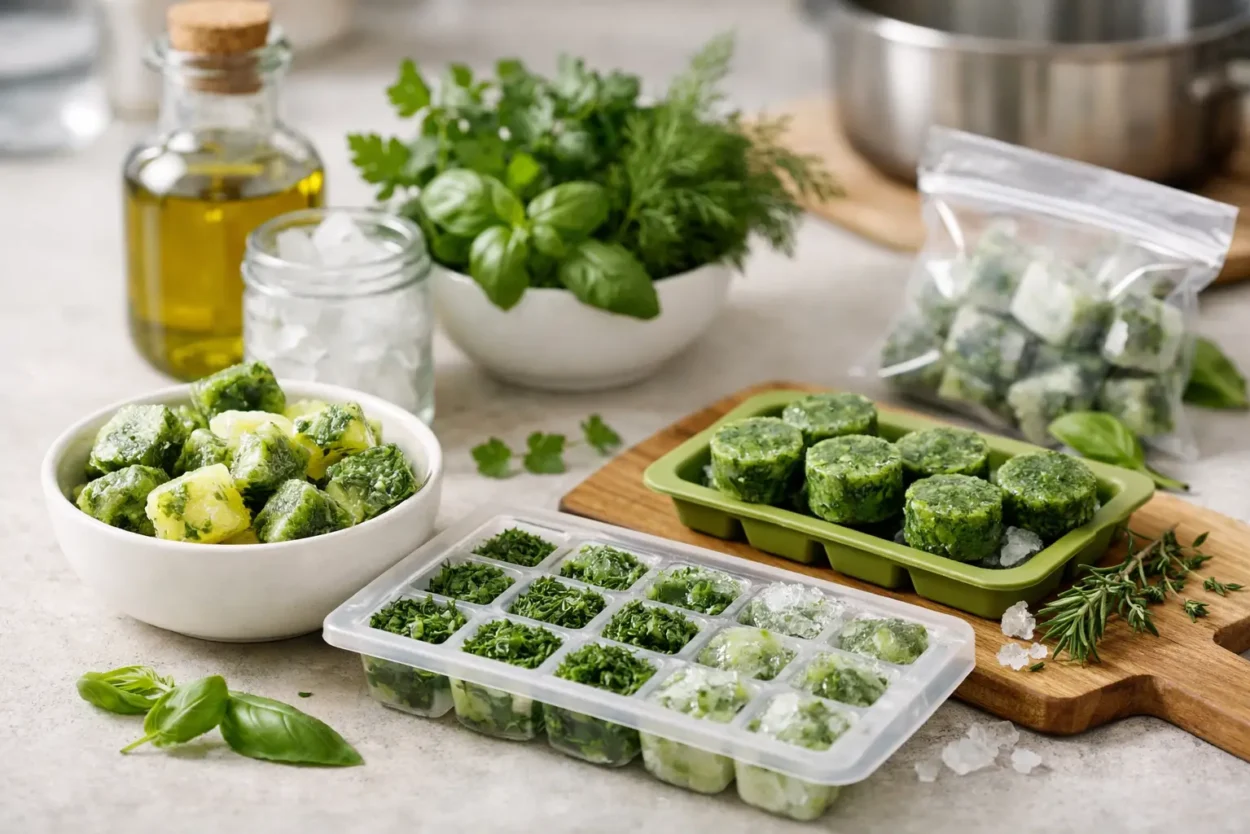
How to Freeze Fresh Herbs for Easy Cooking
That half-used bunch of cilantro does not need to turn slimy in the crisper drawer by Friday. Once you know how to freeze fresh herbs, you can keep their bright flavor close at hand for soups, sauces, marinades, and quick weeknight dinners.
Freezing will not give herbs the same crisp texture they have straight from the garden or grocery store. The leaves soften after thawing, so they are not ideal as a fresh salad garnish. But for cooked dishes, dressings, blended sauces, and anything that needs a burst of green flavor, frozen herbs are one of the easiest kitchen shortcuts around.
How to Freeze Fresh Herbs: Start With the Right Prep
The best herbs to freeze are the ones you use often and cannot always finish in time. Parsley, cilantro, dill, chives, basil, mint, oregano, thyme, rosemary, and sage all freeze well. Tender herbs such as basil, parsley, cilantro, dill, and mint benefit most from freezing in oil or water. Woody herbs, including rosemary and thyme, are especially easy to freeze whole.
Start while the herbs still look lively. Yellowing leaves, dark spots, and wilted stems will not improve in the freezer. Remove rubber bands, discard damaged pieces, and rinse the herbs under cool running water if they need it.
Drying is the step people tend to rush, and it makes a real difference. Excess water can create ice crystals and leave herbs dull or freezer-burned. Spread the rinsed herbs over a clean kitchen towel or paper towels, then pat them dry thoroughly. A salad spinner is useful for leafy herbs, but give them a final towel dry afterward.
Before freezing, think about how you cook. If you usually toss rosemary sprigs onto roasted potatoes, freeze sprigs. If you add cilantro to soups and taco fillings, chop it first. Preparing herbs in the portions you actually use means you will not have to wrestle with a frozen green block later.
Choose the Best Freezing Method for Your Herbs
There is no single best method for every herb or recipe. Freezing whole leaves is the simplest option, while herb cubes are more convenient for cooking. Pick the approach that fits what you plan to make over the next few months.
Freeze herbs in bags for the fastest option
For a low-effort method, place clean, dry herbs in a freezer-safe zip-top bag. You can freeze leaves whole, leave small sprigs intact, or roughly chop the herbs first. Press out as much air as possible before sealing the bag, then label it with the herb name and date.
This works particularly well for parsley, cilantro, dill, chives, oregano, thyme, rosemary, and sage. Lay the bag flat in the freezer so it stores neatly and freezes quickly. Once frozen, gently break up the herbs through the bag as needed.
For basil and mint, bag freezing works, but expect softer, darker leaves after thawing. That is perfectly fine for pesto, pasta sauce, smoothies, and cooked dishes. It is less appealing if you want whole, fresh-looking leaves for a finishing touch.
A helpful trick for woody herbs is to freeze sprigs on a small tray first. Once firm, transfer them to a bag. The leaves are easier to strip from rosemary or thyme stems while still frozen, and the pieces are less likely to clump together.
Freeze chopped herbs in water
Ice cube trays turn chopped herbs into ready-to-use portions. Finely chop your herbs, divide them among the compartments, then cover with water. Freeze until solid, pop the cubes into a labeled freezer bag, and return them to the freezer.
Water-packed cubes are a smart choice for herbs headed to soups, stews, rice, beans, sauces, and braises. Parsley, cilantro, dill, mint, and chives all work nicely this way. Drop a cube directly into a hot pan or simmering pot. There is no need to thaw it first.
Use a small ice cube tray if you like precise portions. Most standard cubes hold about 1 to 2 tablespoons of chopped herbs, depending on how tightly you pack them. If you often cook for one or two people, smaller cubes can prevent waste.
Keep in mind that water cubes can add a little moisture to a recipe. That will not matter in a soup, but it may not be ideal for a delicate sauté or a sauce you are trying to reduce quickly.
Freeze herbs in olive oil for richer flavor
For herbs you plan to sauté, roast, or blend into sauces, olive oil cubes are hard to beat. Add chopped herbs to an ice cube tray, fill each compartment about two-thirds full, then pour in enough olive oil to cover them. Freeze until solid and transfer the cubes to a freezer-safe container or bag.
Basil, parsley, cilantro, oregano, thyme, rosemary, sage, and chives all taste great preserved in oil. A basil-and-oil cube can start a quick tomato sauce. Rosemary and olive oil are perfect with chicken, potatoes, or white beans. Parsley cubes are handy for garlic shrimp, pasta, and vegetable soups.
Use only enough oil to cover the herbs. The goal is a useful cooking portion, not an oversized cube that makes a dish greasy. For most recipes, one cube is a good starting point, and you can add another if you want a stronger herbal flavor.
Do not store fresh herbs in oil in the refrigerator for long periods. The freezer is the safer choice for preserving oil-covered herbs. Freeze the cubes promptly, keep them frozen, and use them directly from the freezer.
Make pesto cubes when basil is abundant
If you have a big basil haul, turn it into pesto before freezing. Blend basil with olive oil, garlic, nuts if you like them, and a little salt. It is best to leave out Parmesan or other cheese until serving, since the texture is often better when it is added fresh.
Freeze pesto in ice cube trays, then move the cubes to a freezer bag. These small portions make dinner feel more put together on busy nights. Stir one into hot pasta with a splash of cooking water, spoon it over roasted vegetables, or use it as a base for a quick sandwich spread.
Label, Store, and Use Frozen Herbs Well
Labeling sounds basic, but frozen dill can look a lot like frozen parsley after a few weeks. Write the herb name, the freezing method, and the date on every bag or container. If you are freezing several herb cubes, it also helps to note whether they contain water, olive oil, or pesto.
For best flavor, use frozen herbs within six months. They are generally still safe longer if they have stayed continuously frozen, but their aroma and color slowly fade. Keep them toward the back of the freezer, away from the door, where temperatures are more stable.
Avoid thawing herbs on the counter. In most cases, the easiest move is to add them directly to a warm dish. For cold recipes, such as a yogurt dip or vinaigrette, let a measured portion thaw in the refrigerator or stir it in while still slightly frozen.
Frozen herbs taste strongest when added later in cooking. Long simmering can mute their flavor, especially with delicate herbs such as parsley, cilantro, dill, and basil. Add woody herbs like thyme, rosemary, and sage earlier if you want them to infuse the dish more deeply.
Common Freezing Mistakes to Avoid
The biggest mistake is freezing herbs while they are wet. Water droplets become ice, which can damage the leaves and create a watery result in the pan. Take a few extra minutes to dry them well.
Another common issue is packing too much into one container. A giant bag may seem efficient, but it encourages you to thaw more than you need. Freezing herbs in small bags or cubes makes everyday cooking easier.
Finally, do not expect freezer herbs to replace every use of fresh herbs. Save fresh leaves for salads, cocktails, and pretty garnishes when texture matters. Let frozen herbs shine in the everyday dishes that make your kitchen smell amazing.
The next time a recipe calls for a spoonful of herbs, you will be glad to have a little summer flavor waiting in your freezer.