
Learn when to repot houseplants with seven clear signs, seasonal timing, and simple steps that protect roots and help indoor plants keep growing well now.
When to Repot Houseplants: 7 Signs to Watch
A houseplant can look healthy above the soil while quietly running out of room below it. Roots may be circling the pot, pushing water away from the soil, or leaving no space for fresh nutrients. Knowing when to repot houseplants helps you avoid two common problems: waiting until a plant is stressed and repotting so often that it struggles to settle in.
Repotting is not a yearly chore for every plant. Some fast growers need attention every spring, while slow-growing plants can stay happily put for several years. The goal is to respond to what your plant is telling you, not follow a strict calendar.
When to Repot Houseplants: The Best Time of Year
For most indoor plants, spring through early summer is the easiest time to repot. Longer days and active growth give roots a better chance to spread into their new soil and recover from the disruption. If your pothos, monstera, philodendron, spider plant, or peace lily is beginning its growing season, it will usually adapt quickly.
That said, a plant with severe root crowding, compacted soil, or a pest issue may need repotting at any time of year. Winter repotting is not automatically harmful, but growth is slower in lower light, so recovery can take longer. If the issue is not urgent, wait until spring. If roots are cracking the pot or water runs straight through without soaking in, go ahead and make the move.
Avoid repotting a plant that is already dealing with major stress, such as recent shipping, extreme heat, cold damage, or a sudden change in light. Give it a few weeks to adjust first, unless the current pot is clearly creating an emergency.
7 Signs It Is Time to Repot Your Plant
1. Roots are growing out of the drainage holes
A few roots peeking from the bottom are not always a crisis. But if thick roots are winding through every drainage hole or lifting the plant upward, the pot has likely become too small. This is especially common with fast-growing plants such as spider plants and pothos.
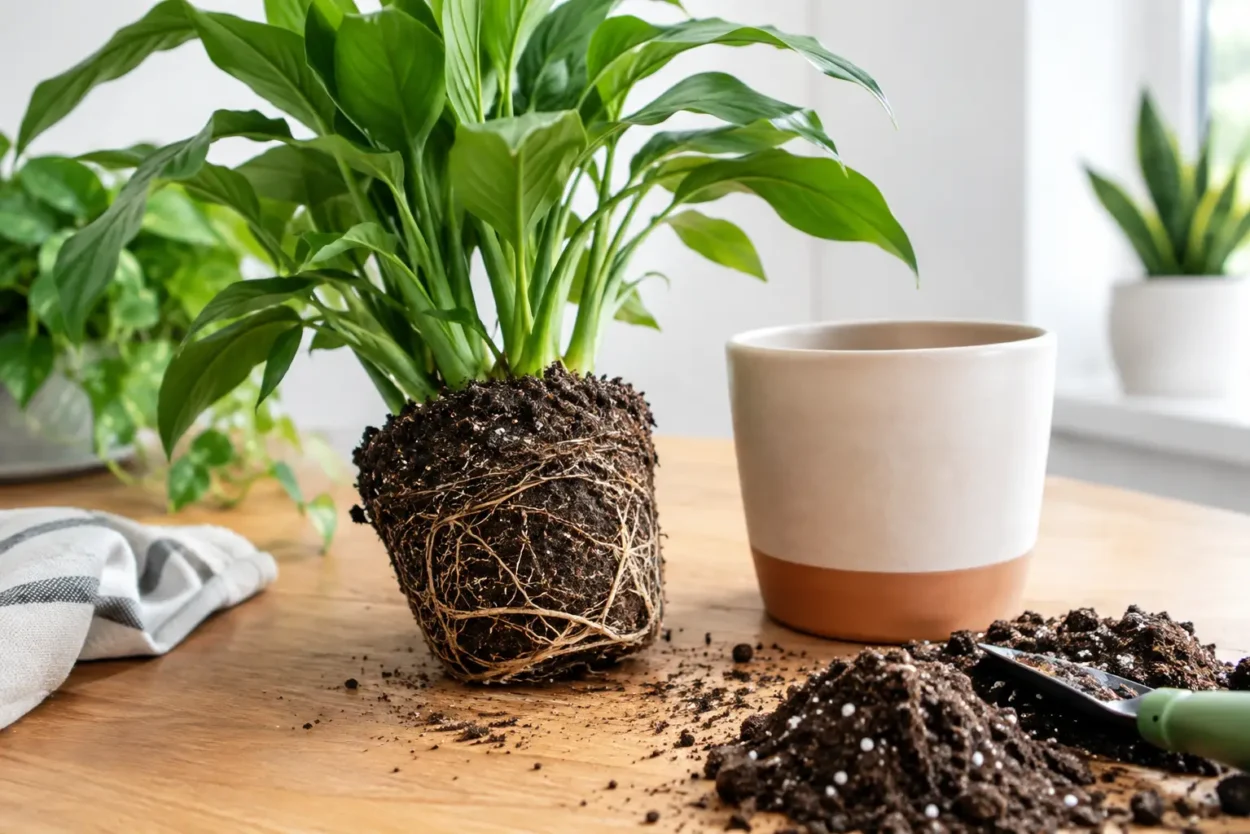
Check the root ball before assuming. Slide the plant gently from its pot. If you see more roots than soil around the outside, it is ready for a little more room.
2. Water runs through the pot immediately
When a plant is severely root-bound, there may be so little soil left that water cannot soak in properly. You water it, and the liquid quickly pours from the drainage holes, leaving the root ball dry in the center.
This can also happen when potting mix becomes hydrophobic, meaning it repels water after drying out repeatedly. In that case, you may not need a larger pot, but you probably do need fresh soil and a closer look at the roots.
3. The plant dries out much faster than usual
If a plant that once needed water every seven to 10 days now wilts after three or four days, crowded roots may be using up the available moisture quickly. Warm weather, brighter light, and indoor heating can also speed up drying, so compare the change with your plant’s environment.
A moisture check matters here. Push a finger about an inch into the soil or use a moisture meter before watering. If the pot is drying rapidly even when conditions are stable, repotting may help.
4. Growth has slowed during its active season
A plant will naturally grow less in winter, so do not judge it by a quiet January. But during spring and summer, a healthy plant with proper light, water, and fertilizer should usually show some new growth.
When growth slows despite good care, roots may have filled the available space or the old potting mix may no longer offer enough nutrition and air pockets. Repotting with fresh mix can give it the reset it needs.
5. The pot is bulging, cracking, or tipping over
Roots can put surprising pressure on a container. Plastic pots may bow outward, while ceramic pots can crack. A tall plant that constantly tips over may also need a heavier container or a slightly wider base.
Do not choose an oversized pot just to solve a tipping problem. A heavy cachepot or plant stand can add stability without surrounding the roots with too much damp soil.
6. The soil is compacted or has a white crust
Old soil eventually breaks down and becomes dense, which limits oxygen around the roots. You may notice that water pools on the surface, the soil feels hard, or a white mineral crust appears around the rim. A crust alone can often be wiped away, but compacted soil is a stronger sign that a refresh is due.
Most houseplants grow best in a mix that holds moisture while still allowing extra water and air to move through. Dense garden soil is not a substitute for indoor potting mix.
7. The plant has outgrown its look and space
Sometimes repotting is partly practical and partly aesthetic. A plant may be healthy but so top-heavy that it no longer suits its small nursery pot. Moving it into a slightly larger container can make it safer, more balanced, and easier to display.
Just keep the size increase modest. For most houseplants, a pot that is 1 to 2 inches wider in diameter is enough. Large plants may need a container 2 to 4 inches wider, but bigger is not always better.
How to Repot Without Shocking Your Houseplant
Start with a clean pot that has at least one drainage hole. Decorative pots without drainage are fine as outer covers, but they are risky as a plant’s main home because excess water has nowhere to go.
Choose a fresh potting mix suited to the plant. A standard indoor mix works for many tropical foliage plants. Succulents and cacti need a grittier, faster-draining blend, while orchids require a chunky bark-based medium. Matching the soil to the plant is often more useful than simply buying the most expensive bag on the shelf.
Water your plant lightly a day before repotting if the soil is very dry. Then ease it from the pot, supporting the plant near its base. Loosen only the outer roots with your fingers. If roots are tightly circling in a thick ring, gently untangle them so they grow outward rather than continuing to spiral.
Add a small layer of mix to the new pot, set the plant at the same height it was growing before, and fill around the sides. Press the soil lightly enough to support the plant, but do not pack it down hard. Water until moisture reaches the root zone, then let excess water drain completely.
Afterward, return the plant to its usual light conditions rather than placing it in harsh direct sun. Hold off on fertilizer for about four to six weeks. Fresh potting mix often contains nutrients, and newly disturbed roots do not need an extra push right away.
When You Should Not Repot
Not every unhappy-looking plant needs a new container. Yellow leaves can come from overwatering, low light, pests, or normal aging. Brown leaf tips may point to dry air, inconsistent watering, or mineral buildup. Repotting without identifying the cause can add another layer of stress.
Also, some plants prefer being slightly snug in their pots. Hoyas, snake plants, ZZ plants, and certain flowering plants can tolerate, or even enjoy, modest root crowding. If the plant is growing well and water is still moving through the soil normally, there is no need to disturb it simply because a year has passed.
A good repot should feel like a small upgrade, not a dramatic relocation. Pay attention to roots, soil, watering patterns, and the season, then give your plant just enough extra space to keep growing comfortably.