Wondering why is my lawn patchy? Find the common causes, from poor soil to pests, plus simple fixes for fuller, greener grass at home today.
Why Is My Lawn Patchy? Causes and Easy Fixes
A lawn can look perfectly healthy from the sidewalk, then reveal thin spots, bare circles, and mismatched shades of green the moment you step outside. If you are asking, why is my lawn patchy, the answer is usually not one dramatic problem. It is often a mix of how the lawn is watered, mowed, fed, and used – plus what is happening underneath the soil.
The good news is that patchy grass is usually fixable. Start by identifying the pattern, because a few small bare spots need a different solution than an entire yard that looks thin and tired.
Why Is My Lawn Patchy? Start With the Pattern
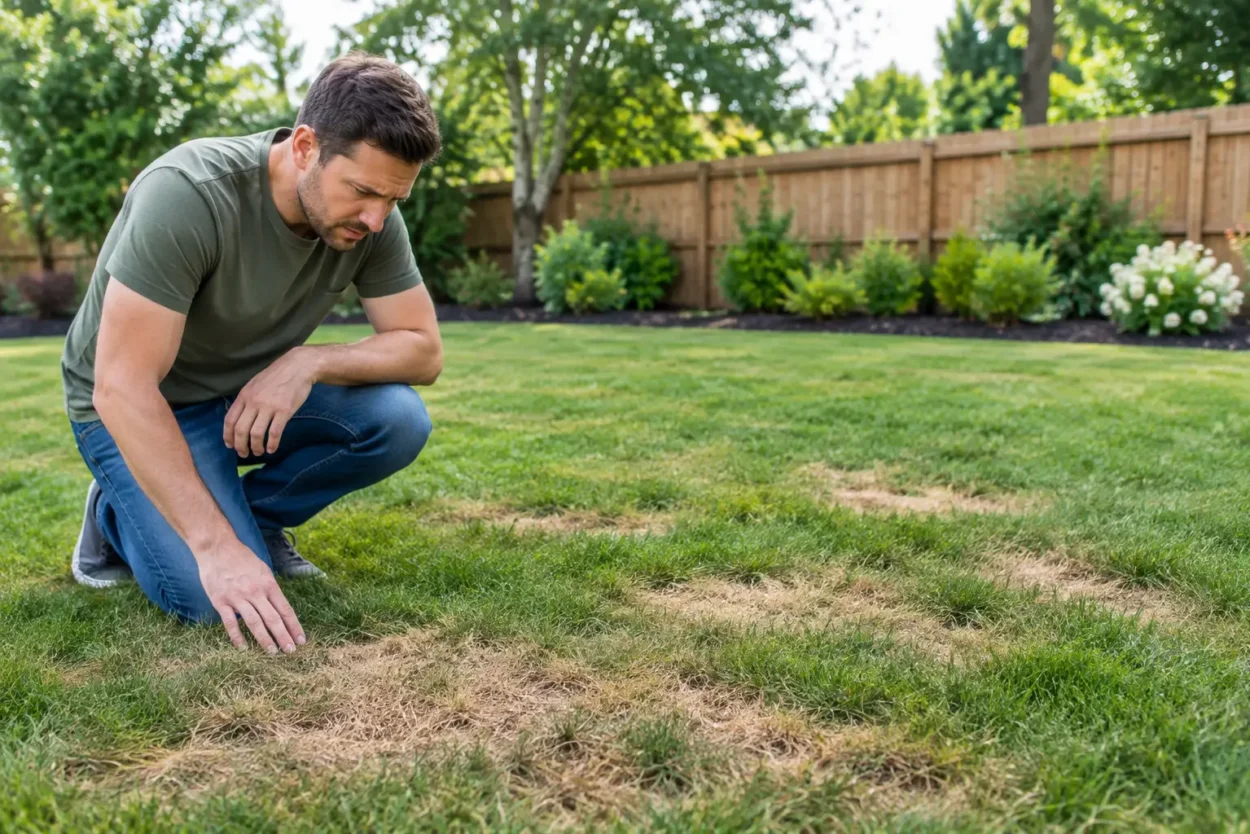
Before buying seed or fertilizer, look closely at where the patches appear. Their location offers useful clues. Thin grass along a driveway or sidewalk may be dealing with heat and compacted soil. Bare spots under a tree may be getting too little sun. Circular brown patches can point to disease, while turf that lifts up easily may have grubs feeding on the roots.
Also consider timing. If your lawn looks rough after a long, hot summer, drought stress may be the main issue. If it comes out of winter patchy, cold damage, snow mold, pet urine, or a weak fall lawn-care routine could be involved. A patchy lawn is less frustrating when you treat it like a small home detective project instead of applying every product at once.
1. Your Lawn Is Getting Uneven Water
Grass needs deep, consistent watering to develop roots that can handle heat. Frequent light watering can leave roots shallow, so the lawn turns patchy quickly when temperatures rise. On the other hand, constantly soggy ground can weaken grass and encourage fungal problems.
Aim to water early in the morning, giving the lawn roughly 1 inch of water per week from rain and irrigation combined. In very hot or sandy areas, that may need to be split into two watering sessions. The goal is moist soil several inches down, not a lawn that stays wet all day.
If one section is always brown, check sprinkler coverage before assuming the grass is dead. A blocked sprinkler head, a missed corner, or a system that runs for too little time can create surprisingly sharp patch lines. Place a few empty cans around the yard during a watering cycle to see whether each area receives a similar amount.
2. Mowing Too Short Is Stressing the Grass
A closely shaved lawn may look tidy for a day, but cutting grass too short removes the leaf surface it needs to make energy. It also exposes the soil to more heat, which dries out the lawn faster and gives weeds room to move in.
For most common cool-season lawns, such as tall fescue and Kentucky bluegrass, a mowing height of about 3 to 4 inches works well. Warm-season grasses have different preferences, so check the needs of your specific type. Whatever grass you have, avoid removing more than one-third of the blade height at a single mowing.
A dull mower blade is another quiet culprit. Instead of making a clean cut, it tears the grass tips, leaving them ragged and more vulnerable to browning and disease. If your lawn looks grayish or frayed a day after mowing, sharpen the blade before changing your watering routine.
3. Compacted or Poor Soil Is Blocking Root Growth
Healthy grass starts below the surface. When soil is packed down by foot traffic, kids playing, pets, heavy equipment, or years of mowing, water and air have a harder time reaching the roots. The result can be thin grass in the exact places your household uses most.
A simple test is to push a screwdriver into damp soil. If it barely goes in, compaction may be part of the problem. Core aeration, which removes small plugs of soil, is often the most useful fix for a compacted lawn. For cool-season grass, early fall is usually ideal. For warm-season varieties, late spring or early summer is generally a better fit.
Soil quality matters, too. Clay-heavy soil can drain poorly, while very sandy soil may dry out too fast. A soil test can show whether your yard is low in nutrients or has a pH level that makes it difficult for grass to use what is already there. This is especially helpful before applying fertilizer, since adding more product will not solve every lawn problem.
4. Thatch May Be Crowding Out New Grass
Thatch is the layer of dead stems, roots, and organic material that builds between the green grass blades and the soil. A little thatch is normal. Too much can prevent water, fertilizer, and seed from reaching the soil where they are needed.
If the lawn feels spongy underfoot or you see a thick, brown layer when you part the grass, thatch could be contributing to patchiness. Dethatching can help, but it is not a universal annual chore. Aggressive dethatching at the wrong time can stress a lawn that is already struggling.
For a moderate thatch issue, core aeration may be enough. If the layer is especially thick, use a dethatching rake or power dethatcher during your grass type’s active growing season, then water well afterward. Follow with overseeding only if the soil will remain warm enough for seeds to establish.
5. Pests, Pets, and Lawn Disease Can Create Bare Spots
Some patches have a clear biological cause. Grubs feed on grass roots and can leave areas that feel loose or roll back like carpet. Skunks, raccoons, and birds digging into the lawn may be a sign that grubs are underneath.
Fungal disease is more likely when the weather is humid, the lawn stays wet overnight, or nitrogen fertilizer has been overapplied. Brown patch, dollar spot, and other common issues can look similar from a distance, so avoid treating every brown area with a fungicide. Improve airflow, water in the morning, and avoid excessive fertilizer first. If the damage keeps spreading, a local lawn professional or county extension office can help identify the issue.
Pet urine often causes small, straw-colored spots with a darker green ring around the edge. The best response is to rinse the area with water soon after your dog uses it. Do not add lime or home remedies unless a soil test shows they are needed, because they can create a new imbalance.
6. Shade Can Make Grass Thin Out
Grass needs more sun than many homeowners realize. Under dense trees, beside tall fences, or on the north side of a house, turf may survive but never become thick. In those areas, adding more seed without changing the conditions can become an expensive cycle.
Try pruning lower tree branches to increase filtered light and remove fallen leaves promptly. Choose a shade-tolerant seed blend if the area receives a few hours of sun. If it stays deeply shaded most of the day, consider switching that section to mulch, stepping stones, or shade-loving ground cover. A lawn does not have to be wall-to-wall grass to look intentional and welcoming.
How to Repair Patchy Lawn Areas
Once you have addressed the cause, repairing the damaged spots is straightforward. Rake away dead grass and weeds so the soil is exposed, then loosen the top inch or two of soil. Add a thin layer of compost or quality topsoil if the ground is hard, uneven, or low in organic matter.
Use seed that matches your existing lawn as closely as possible. Cool-season grasses are best seeded in early fall in much of the United States, while warm-season lawns are often repaired with plugs, sprigs, or seed in late spring and early summer. Timing matters because new grass needs mild conditions and consistent moisture to establish.
Spread seed evenly, lightly press it into the soil, and keep the surface consistently damp until seedlings appear. Once the new grass is growing, gradually water less often but more deeply. Wait until it reaches mowing height before cutting it, and use a sharp mower blade.
For a small number of bare spots, sod patches can give faster visual results. They cost more than seed, but they are useful when you need an immediate fix or when erosion is a concern. Just remember that sod still needs good soil contact and regular watering to root properly.
A Simple Routine for a Fuller Lawn
The most reliable lawns are not usually the ones treated with the most products. They are maintained with a few consistent habits: mow at the right height, water deeply, fertilize based on soil needs, and address compacted areas before they become bare. Overseeding thin cool-season lawns each fall can also keep them looking dense and resilient.
Give your lawn a little time after making changes. Grass repairs rarely look perfect in a week, but a few thoughtful adjustments can turn scattered patches into a greener yard that feels good under bare feet – and looks better every time you come home.