
Mulch versus compost can both improve a garden, but they do different jobs. Learn when to use each, how to apply them, and when to use both for better soil.
Mulch Versus Compost: What Your Garden Needs
A freshly mulched flower bed can look instantly polished, while a few shovelfuls of compost can make tired soil feel full of possibility. That is why the mulch versus compost question trips up so many gardeners. Both are made from natural materials, both support healthier plants, and both can belong in the same yard. But they work in very different ways.
The simplest distinction is this: mulch protects the soil from above, while compost improves it from within. Once you know what each material is meant to do, choosing between them becomes much easier.
Mulch versus compost: the quick difference
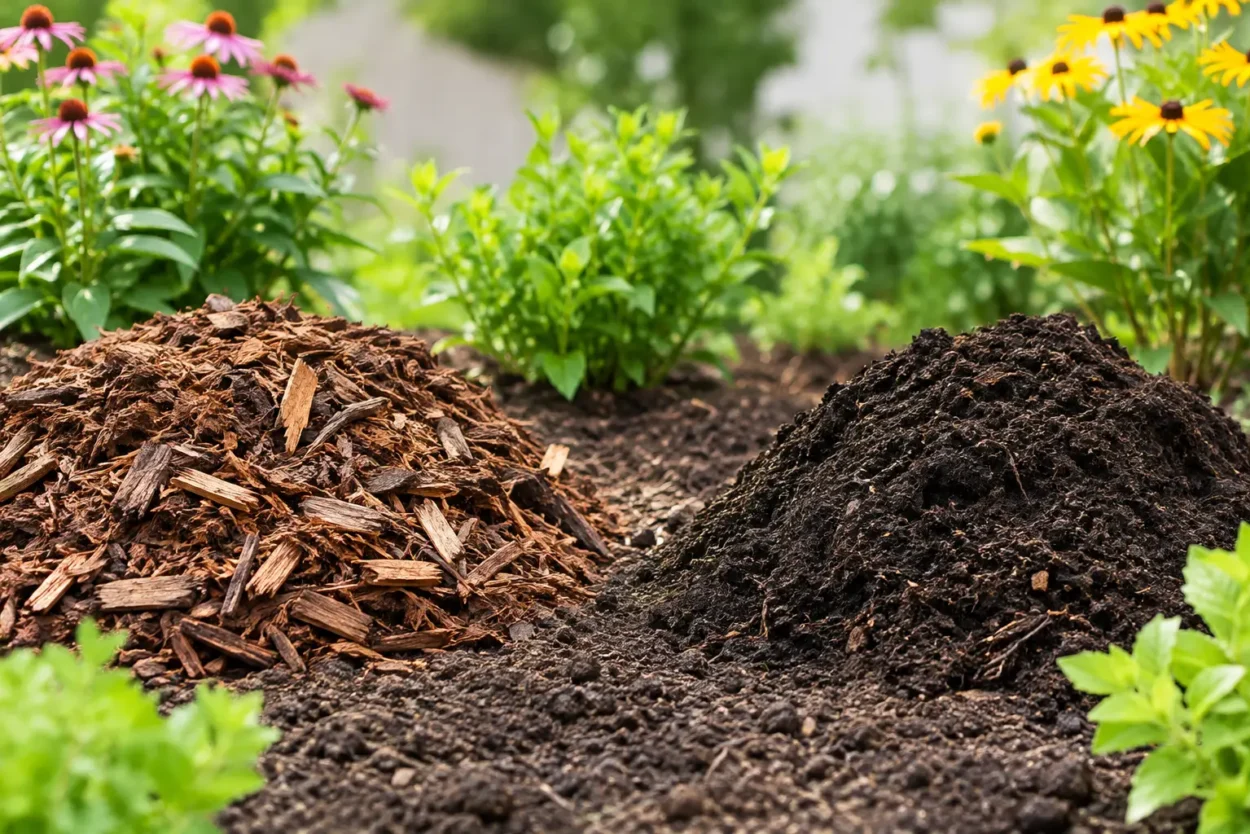
Mulch is a layer of material spread on top of the soil. It may be shredded bark, wood chips, pine straw, leaves, grass clippings, or even gravel in a decorative landscape bed. Its main job is to cover and protect the ground.
Compost is decomposed organic matter that has broken down into a dark, crumbly, soil-like material. It is usually made from a mix of yard waste, food scraps, leaves, manure, and other plant-based materials. Its main job is to feed and improve the soil.
Think of mulch as a protective blanket and compost as a nourishing meal. A blanket does not replace a meal, and a meal does not make a blanket unnecessary. Healthy gardens often benefit from both.
What mulch does for your garden
Mulch earns its place because bare soil dries out quickly, heats up in the sun, and gives weed seeds an open invitation. A two- to three-inch layer of organic mulch creates a buffer between the soil and the weather.
It helps soil hold moisture
Summer watering can feel never-ending in a vegetable patch or container garden. Mulch slows evaporation, so the soil stays moist longer after you water. That can mean less frequent watering and fewer stressed plants during hot, dry spells.
This is especially useful around hydrangeas, tomatoes, peppers, newly planted shrubs, and any plant that prefers consistently moist soil. Mulch will not fix poor watering habits, but it gives you more breathing room between waterings.
It suppresses weeds
Weeds need light to germinate and grow. A properly applied mulch layer blocks much of that light, making it harder for weed seeds to establish. You may still see a few determined weeds, particularly after heavy rain or wind, but pulling them is far easier when the bed is mulched.
For the best weed control, pull existing weeds first. Spreading mulch over tall, established weeds usually creates a messy problem rather than solving one.
It protects roots and soil structure
Mulch insulates the soil. It helps keep roots cooler in summer and reduces dramatic temperature swings during colder months. It also cushions the impact of rain, which helps prevent the soil surface from crusting or washing away.
Organic mulches slowly break down over time. As they do, they add a small amount of organic matter to the top layer of soil. That is a nice bonus, but it is not the same as adding a meaningful amount of finished compost.
Which mulch should you use?
For most ornamental beds, shredded bark or wood chips are easy, attractive choices. They stay in place well and last longer than finer materials. Pine straw has a soft, natural look and works well around acid-loving plants, although it does not dramatically change soil acidity the way many gardeners assume.
In vegetable gardens, straw, chopped leaves, or untreated grass clippings can be practical options. Avoid hay when possible, since it may carry weed seeds. Also skip fresh wood chips directly mixed into vegetable soil, as they can temporarily use nitrogen while decomposing.
What compost does for your garden
Compost does not usually stay on the surface as a thick, decorative layer. Instead, it is mixed into planting beds, worked into the top few inches of soil, added to planting holes in moderation, or spread thinly over a lawn or garden bed.
It improves soil texture
This is one of compost’s biggest strengths. Clay-heavy soil can be dense, sticky, and slow to drain. Sandy soil may drain so quickly that plants struggle to access enough moisture. Compost helps both.
In clay soil, it encourages better structure and improves drainage. In sandy soil, it helps hold moisture and nutrients longer. The change is not always dramatic after one application, but repeated additions can make a garden bed noticeably easier to plant and maintain.
It supports healthier plant growth
Finished compost contains nutrients, but it should not be treated like a high-powered fertilizer with a guaranteed nutrient ratio. Its value is broader than that. Compost feeds beneficial soil organisms and helps the soil hold onto nutrients that plants need.
For hungry crops such as tomatoes, squash, cucumbers, and leafy greens, compost gives the growing area a strong foundation. You may still need fertilizer depending on your soil, the plants you grow, and how intensely you garden. A soil test is the best way to avoid guessing.
It can reduce kitchen and yard waste
Composting is also a satisfying way to turn everyday scraps into something useful. Fruit and vegetable trimmings, coffee grounds, crushed eggshells, dry leaves, and small amounts of untreated yard waste can all become future garden material.
Do not add meat, dairy, oily foods, pet waste, or diseased plants to a basic backyard compost pile. These materials can attract pests or create problems you do not want to spread through the garden.
When to use mulch, compost, or both
If your main problem is weeds, dry soil, or a planting bed that looks unfinished, reach for mulch. If your main problem is compacted soil, weak plant growth, or a bed that has been planted year after year without improvement, start with compost.
For many gardens, the best approach is a simple two-step routine. Add compost first, then add mulch.
In spring, spread about one to two inches of finished compost over the bed and gently mix it into the top few inches of soil if you are preparing for new planting. You can also leave a thin layer on the surface around established plants. Then apply two to three inches of mulch on top, keeping it away from stems and trunks.
This combination gives plants better soil below and better protection above. It is one of the easiest upgrades you can make to a garden that is struggling to stay moist, tidy, and productive.
Common mistakes to avoid
The biggest mulch mistake is piling it against tree trunks, shrub stems, or the crowns of perennials. This is often called a mulch volcano, and it can trap moisture against the plant, encourage rot, and give pests a hiding place. Leave a small bare ring around the base of each plant.
Using too much mulch is another common issue. More is not always better. A layer deeper than about three inches can keep excess moisture in the soil and reduce air movement. Fine-textured materials, such as grass clippings, can mat together and shed water rather than letting it soak in.
With compost, the mistake is assuming that any dark material is ready to use. Finished compost should smell earthy and look mostly uniform, not sour, slimy, or full of recognizable food scraps. Unfinished compost can still be useful in a pile, but it is not ideal around young plants.
It also helps to remember that compost is not potting soil. For containers, use a quality potting mix as the base and add compost sparingly, usually no more than about one-quarter to one-third of the total mix. Too much compost can make containers heavy and hold more water than roots need.
Can compost be used as mulch?
Yes, but only in a limited way. A thin layer of compost, around one inch, can act as a light mulch while also feeding the soil. It works particularly well in vegetable beds, where you may want to reapply it each season.
Still, compost breaks down quickly and does not block weeds or preserve moisture as effectively as bark, straw, or leaves. If appearance, moisture retention, or weed suppression matters, top the compost with a more durable mulch.
A simple choice for every season
Use compost when you are building or refreshing the soil. Use mulch when you want to protect what you have already planted. In early spring, compost supports new growth; once the soil warms and plants are in place, mulch helps keep that progress from drying out or getting crowded by weeds.
Your garden does not need perfection to improve. Start with one bed, add a layer of compost where the soil needs help, and finish with mulch where you want less watering and weeding. Small, repeatable care is what turns an ordinary patch of ground into a garden you want to spend time in.