
Use this Egypt packing list to pack for heat, temples, city days, desert tours, and Nile cruises without overpacking or missing essentials.
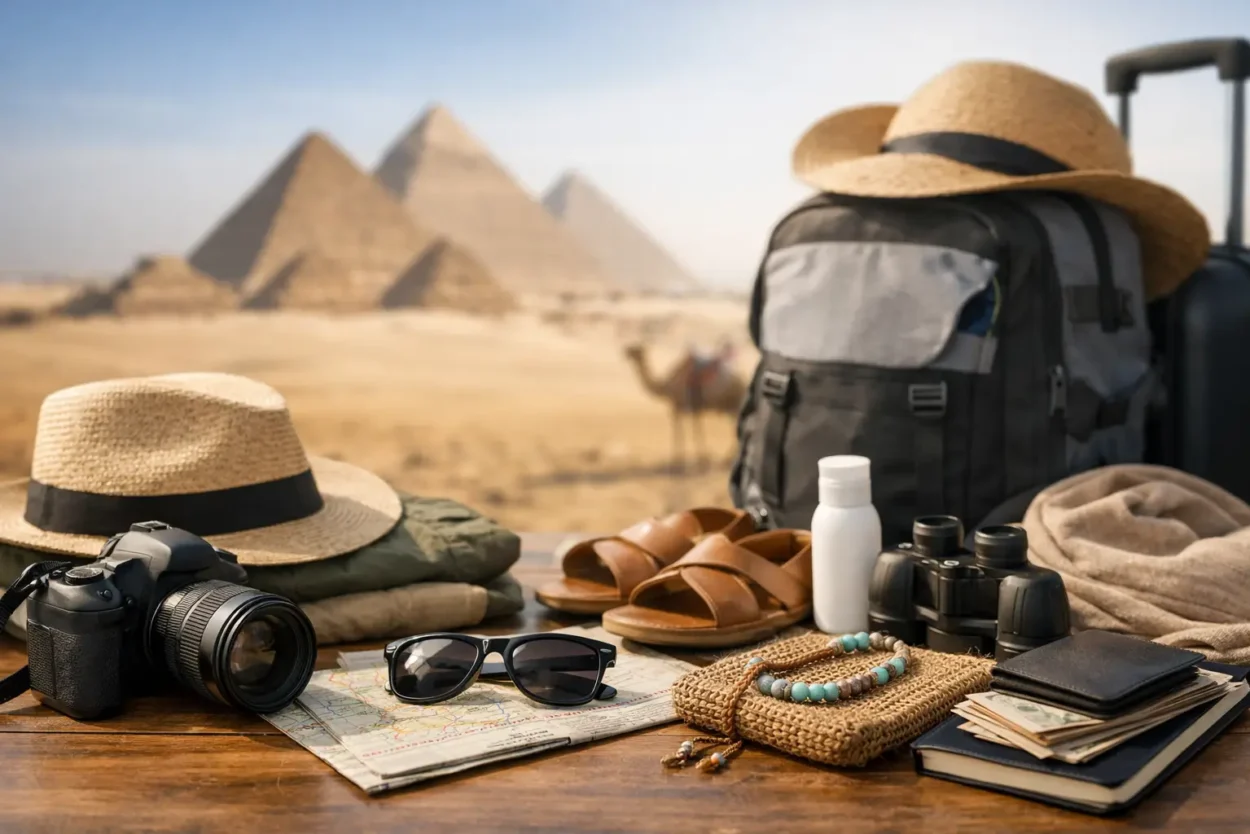
Egypt Packing List for a Smart, Easy Trip
The fastest way to ruin an Egypt trip is packing like you’re headed to a generic beach vacation. Between desert heat, conservative dress norms, temple visits, long travel days, and icy hotel air conditioning, a smart Egypt packing list needs a little more range than swimsuits and sunscreen.
If you’re trying to keep your suitcase light without getting caught unprepared, the sweet spot is breathable clothing, comfortable walking shoes, sun protection, and a few practical extras that make busy sightseeing days much easier. Egypt is one of those trips where what you wear affects not just comfort, but also how smoothly your days go.
What to know before building your Egypt packing list
Egypt is hot for much of the year, but the heat is not the whole story. Days can be blazing, especially in places like Luxor and Aswan, while mornings, evenings, and winter months can feel surprisingly cool. Desert excursions can also shift quickly from intense sun to chilly wind.
There’s also the cultural side. Egypt is used to international travelers, especially in resort areas and on Nile cruises, but modest clothing is still the easiest and most respectful choice in many public places. That usually means lightweight pieces that cover shoulders and knees rather than anything tight, sheer, or ultra-revealing.
Your itinerary matters too. Packing for Cairo museums, ancient sites, and domestic flights looks different from packing for a Red Sea resort. Most travelers need a middle-ground wardrobe that works for city sightseeing, religious sites, and maybe one or two nicer dinners.
Clothing that works in Egypt
The best clothes for Egypt are light, loose, and easy to layer. Think breathable cotton, linen blends, and airy performance fabrics that won’t cling in the heat. Loose pants, midi skirts, maxi dresses, and relaxed long-sleeve tops usually work better than very short shorts or heavy denim.
For women, flowy dresses and wide-leg pants are especially useful because they feel cool while still offering coverage. A lightweight button-down shirt can double as sun protection during the day and a modest layer when visiting mosques or more traditional areas. A scarf is worth packing too, not because you’ll always need it, but because it comes in handy for extra coverage, wind, dust, or strong sun.
For men, lightweight T-shirts, breathable long pants, and collared shirts are solid staples. Shorts are common in beach destinations, but in cities and at historic sites, lightweight pants often feel more appropriate and protect better from sun exposure.
Plan for outfits you can repeat. Egypt is not the kind of trip where anyone needs a different look three times a day. A few mix-and-match pieces are more useful than a suitcase full of options.
A simple clothing formula
A practical clothing plan for a one-week trip might include 4 to 6 breathable tops, 2 to 3 pairs of lightweight pants or long skirts, 1 to 2 dresses or nicer evening outfits if your trip includes a cruise or upscale hotel dinners, sleepwear, underwear, and one light layer such as a cardigan or overshirt. If you’re visiting in winter, add a sweater and a light jacket.
Swimwear belongs in your bag if you’re staying at a resort, cruise, or hotel with a pool. Just don’t assume that swimwear alone covers your daytime clothing needs.
Shoes you’ll actually wear
Ancient sites are beautiful, but they are not gentle on your feet. Uneven stone, sandy paths, stairways, and long museum visits make comfortable walking shoes non-negotiable. This is not a trip for brand-new sandals that still need breaking in.
Your best bet is one dependable pair of walking sneakers or supportive travel sandals with grip. If you want a second pair, make it something easy for evenings or hotel downtime. High heels are usually more trouble than they’re worth unless you have one very specific event planned.
If your itinerary includes desert activities, closed-toe shoes are usually the safer pick. Sand gets everywhere either way, but sneakers or trail shoes offer more stability than thin sandals.
Sun, heat, and skin protection essentials
A lot of people underestimate how draining Egypt’s sun can be. Even if you handle summer well at home, hours at open-air temples and archaeological sites feel different when there’s very little shade.
Sunscreen is essential, and so is reapplying it. Bring a hat with real coverage, not just a fashion cap that leaves your neck exposed. Sunglasses are a must, and a reusable water bottle makes a big difference on sightseeing days.
Lip balm with SPF is one of those small items that earns its place quickly. So is a simple facial mist or moisturizer if your skin gets dry from sun, flights, and air conditioning. If you’re sensitive to heat, a portable hand fan or cooling towel can be surprisingly useful, especially from late spring through early fall.
The non-clothing items most travelers are glad they packed
A good Egypt packing list is not just about outfits. There are a few practical items that make the trip smoother, especially if you’re moving between cities.
A power adapter is worth checking before you leave, and a portable charger is almost always useful on long sightseeing days. You’ll probably use your phone heavily for photos, directions, tickets, and translation. A small crossbody bag or anti-theft day bag also makes city days easier than carrying a large tote.
Tissues and hand sanitizer are smart to keep with you. Public restrooms at tourist sites can be hit or miss, and having your own basics removes a lot of friction. Wet wipes, pain reliever, and any personal medications should stay in your carry-on rather than your checked bag.
It’s also smart to pack a small amount of laundry soap or a travel detergent sheet if you like washing lighter items in the sink. In a hot climate, this can help you pack less.
What to wear in Cairo, on a Nile cruise, and at the Red Sea
This is where one-size-fits-all advice starts to fall apart. Cairo is busy, urban, and more style-diverse than some travelers expect, but practical modesty still makes life easier. You’ll likely be most comfortable in breathable, polished casual clothes with good walking shoes.
A Nile cruise usually calls for the same daytime practicality, but evenings can feel a little more dressed up. Nothing overly formal is required on most cruises, but a simple midi dress, jumpsuit, or collared shirt with clean pants fits right in.
The Red Sea resort areas, including places like Sharm El Sheikh and Hurghada, tend to be more relaxed. Swimwear, cover-ups, sandals, and resort clothing make more sense there. Still, if you leave the resort or travel between destinations, modest lightweight layers are still worth having.
What not to pack
Heavy fabrics are the first thing to skip. Thick jeans, stiff jackets, and anything that traps heat will probably stay in your suitcase. Very tight or overly revealing clothes are also less versatile, especially if you plan to visit mosques, markets, or local neighborhoods.
You can also skip overpacking shoes. Most travelers rotate between one main walking pair and one backup or evening pair. Bringing five pairs usually just means carrying more weight.
Expensive jewelry is another easy no. It rarely adds much to the trip and creates one more thing to keep track of. The same goes for bulky beauty routines. Stick with a streamlined version of what you actually use.
A seasonal note that changes your packing
Summer in Egypt is intensely hot, particularly inland. If you’re traveling from May through September, prioritize ultra-light fabrics, extra sun protection, and hydration gear. During this period, coverage can actually feel cooler than exposed skin if the fabric is loose and breathable.
Winter is milder and often ideal for sightseeing, but don’t assume it stays warm after sunset. Cairo can feel brisk in the evenings, and desert areas can get cold. A light jacket, closed shoes, and a couple of layers matter more than people expect.
Spring and fall are often the easiest seasons to pack for, though sand and wind can show up, so sunglasses and a scarf still earn their place.
Final Egypt packing list essentials
If you want to keep it simple, build your Egypt packing list around breathable modest clothing, one great pair of walking shoes, sun protection, a scarf, a reusable water bottle, and a small day bag. Then adjust for your itinerary, season, and whether your trip leans more historic, urban, or resort-focused.
Packing well for Egypt is less about bringing more and more about bringing the right things. When your clothes are comfortable, respectful, and easy to move in, you spend less time fiddling with your outfit and more time looking up at the places you came to see.
Comments are closed.