Can you freeze pancake batter? Yes – but texture matters. Learn when it works, how to store it, and the best way to thaw and cook it well.
Can You Freeze Pancake Batter? Yes – Here’s How
Saturday-morning energy is great until you realize you made enough pancake batter for a small brunch party. If you’re wondering, can you freeze pancake batter, the short answer is yes – but the better answer is that some batters freeze much better than others.
That distinction matters. Freeze the right kind of batter the right way, and you can save time on busy mornings without sacrificing fluffy, golden pancakes. Freeze the wrong one carelessly, and you may end up with separated batter, uneven texture, or pancakes that cook up flat.
Can You Freeze Pancake Batter Successfully?
Yes, you can freeze pancake batter, especially if you want to prep breakfast ahead of time. It works best with basic homemade batters and many box-mix batters. The biggest question is not whether it can be frozen, but how the ingredients respond once thawed.
Batter changes in the freezer because water expands and ingredients can separate. If your batter contains baking powder or baking soda, those leavening agents may lose some strength over time. That means pancakes made from thawed batter can be a little less airy than pancakes cooked right after mixing.
That said, the difference is often small if you freeze the batter soon after making it and use it within a reasonable window. For most everyday cooks, the convenience is worth it.
Which Pancake Batters Freeze Best?
Simple batters tend to hold up best. A standard mix of flour, milk, eggs, butter or oil, and baking powder usually freezes fairly well. But richer or more delicate batters can be less predictable.
Best batters for freezing
Classic buttermilk pancake batter is usually a good candidate, though it may need a quick stir after thawing. Basic dairy-free pancake batter also freezes well if it does not rely on whipped ingredients for lift. Boxed pancake mixes prepared according to package directions are often freezer-friendly too.
Batters that may not freeze as well
If the batter includes whipped egg whites, mashed bananas, fresh berries, or very thin plant-based milks, texture can shift more after thawing. Fruit-heavy batters can become watery, while whipped batters can lose the lightness that made them special in the first place.
Chocolate chips, nuts, or spices are usually fine. Fresh fruit is where things get trickier.
The Best Way to Freeze Pancake Batter
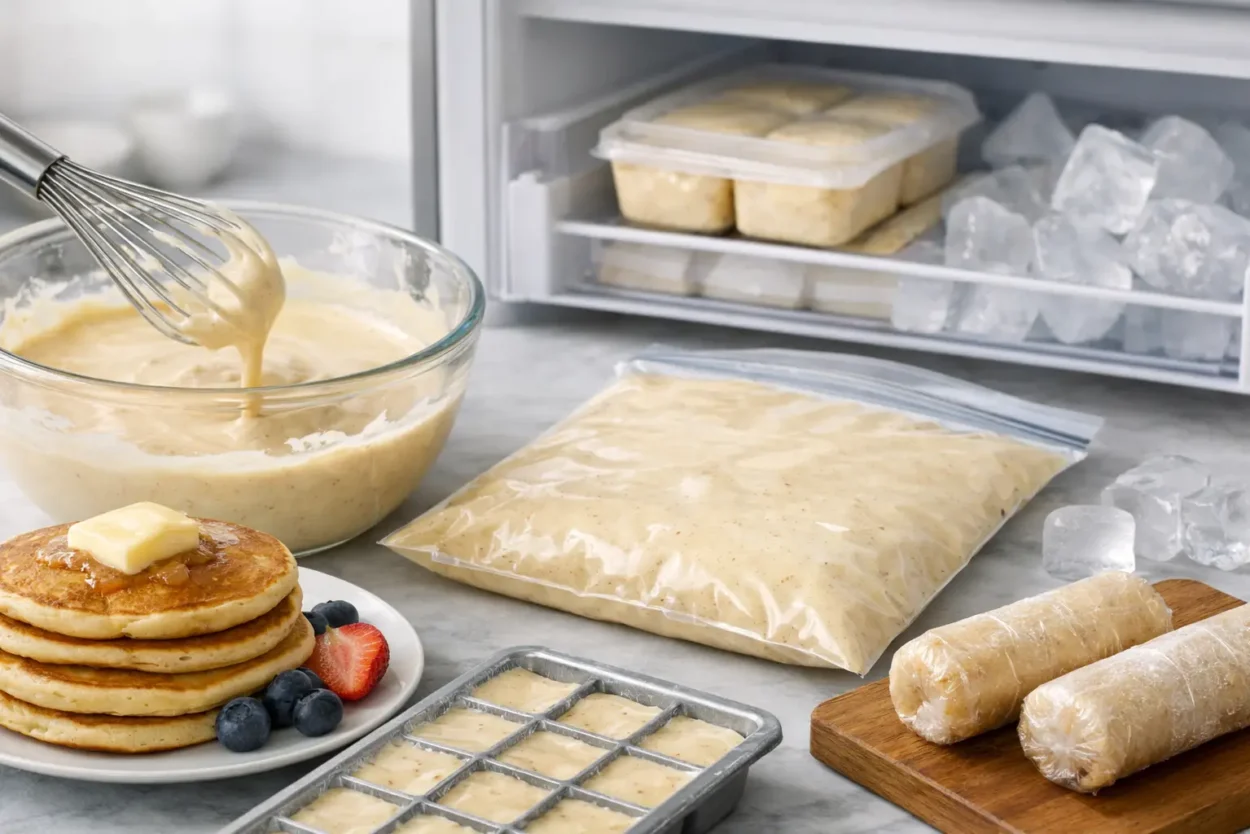
If your goal is quick, low-stress breakfasts, portioning is everything. Instead of freezing one large container, freeze the batter in amounts you’ll actually use at once.
A freezer-safe zip-top bag works especially well. Pour in the batter, press out excess air, seal it tightly, and lay it flat in the freezer. Flat bags freeze faster, stack neatly, and thaw more evenly. You can also use airtight containers, but leave a little room at the top since batter expands as it freezes.
Label the bag or container with the date. Pancake batter is best used within about one month for the best texture and rise. It may still be safe a bit longer if continuously frozen, but quality tends to drop.
If you like easy kitchen shortcuts, freezing batter in single-breakfast portions makes life much easier. One bag for two people is far more useful than one giant mystery bag you forget about for six weeks.
Can You Freeze Pancake Batter With Baking Powder in It?
This is the part that makes people hesitate, and for good reason. Baking powder starts reacting once it meets liquid, so freezing batter with it already mixed in can reduce its lifting power over time.
That does not mean the batter is ruined. It just means your pancakes may be slightly less fluffy after thawing, especially if the batter has been frozen for a while. If you know you’re making batter specifically for freezing, one smart move is to mix the dry and wet ingredients separately and combine them fresh later. But if the batter is already made, freezing it is still a perfectly practical option.
Another workaround is to stir in a tiny extra pinch of baking powder after thawing, if the batter looks flat and you want a little more lift. Don’t overdo it, though. Too much can affect both flavor and texture.
How to Thaw Frozen Pancake Batter
The easiest method is to move the batter from the freezer to the refrigerator the night before you want to use it. Slow thawing helps the texture stay more consistent and reduces the chance of uneven separation.
If you froze the batter in a zip-top bag, place the bag in a bowl in the fridge while it thaws. Once it’s soft again, give it a gentle knead or pour it into a bowl and stir lightly. You want the batter recombined, but not aggressively mixed, since overmixing can make pancakes tougher.
If you’re short on time, you can thaw the sealed bag in a bowl of cool water. This is faster, but fridge-thawing usually gives better results.
Avoid thawing pancake batter at room temperature for long stretches. Since it contains eggs and milk in many cases, it should be treated like any other perishable food.
What Pancakes Made From Frozen Batter Taste Like
Most of the time, they still taste like pancakes you’ll be happy to eat. The flavor usually stays very close to fresh batter, especially if the batter was frozen quickly and used within a few weeks.
The main difference is texture. Freshly mixed batter tends to produce the fluffiest pancakes. Thawed batter may cook up a touch denser or slightly less tender, depending on the recipe. That’s more noticeable in delicate homemade recipes than in everyday family-style pancakes loaded with syrup, fruit, or butter.
So if you’re making brunch for guests and want perfect height and texture, fresh batter is your best bet. If you want a fast weekday breakfast with less mess, frozen batter can be a great trade-off.
Pancake Batter vs. Cooked Pancakes: Which Is Better to Freeze?
This really depends on what you care about most.
Freezing batter gives you a more freshly cooked result. You still get the smell of pancakes on the griddle, crisp edges, and a just-made feel. It’s ideal if you want convenience without giving up the cooking step.
Freezing cooked pancakes is even easier. You skip the mixing and cleanup, then just reheat what you need. For very busy mornings, cooked pancakes are often the more foolproof choice because you don’t have to worry about thawed batter texture at all.
If you have room in the freezer, both options can make sense. Freeze cooked pancakes for grab-and-go mornings, and freeze batter when you want that fresh-off-the-pan experience.
Common Mistakes When You Freeze Pancake Batter
One of the biggest mistakes is keeping it frozen too long. Batter does not age as gracefully as some other freezer foods, and leavening fades with time.
Another issue is poor sealing. If air gets in, the batter is more likely to develop freezer burn or absorb off flavors. Thin containers with lots of empty space are not doing you any favors.
Overmixing after thawing is another common problem. When the ingredients separate, it’s tempting to beat the batter until perfectly smooth. Resist that urge. A few small lumps are fine and often better for texture.
And if your batter contains fresh fruit, expect changes. Blueberries may bleed color, bananas can turn mushy, and strawberries often become watery. It’s usually better to freeze a plain batter and add fruit when cooking.
How to Use Frozen Pancake Batter for the Best Results
Once thawed, look at the batter before pouring it onto the pan. If it seems slightly separated, stir it gently. If it looks much thinner than before freezing, add a spoonful of flour. If it seems too thick, a splash of milk can help bring it back.
Use a preheated skillet or griddle and cook a test pancake first. That one pancake tells you almost everything – whether the batter needs a little adjustment, whether the heat is right, and whether the texture is where you want it.
This is one of those kitchen tasks where flexibility helps. Pancake batter is forgiving, and small tweaks after thawing can make a big difference.
So, Should You Freeze Pancake Batter?
If you like meal prep, hate waste, or want breakfast to feel easier, yes – freezing pancake batter is worth trying. It is not the perfect method for every recipe, and it does come with a small texture trade-off. But for simple pancake batters and everyday mornings, it works well enough to earn a spot in your routine.
A little planning goes a long way here. Freeze it in useful portions, thaw it in the fridge, and keep your expectations realistic. The result may not be identical to freshly mixed batter, but it can still get you very close to a warm stack of pancakes with a lot less effort.
Sometimes that’s exactly the kind of kitchen win you need.