
Learn how to meal prep breakfast with simple ideas, smart storage tips, and easy routines that save time, money, and weekday stress.
How to Meal Prep Breakfast That You’ll Eat
If your mornings keep turning into coffee first, food later, you are not alone. Learning how to meal prep breakfast is less about becoming ultra-organized and more about making the easiest choice the good choice when your alarm feels rude and your schedule is packed.
The best breakfast prep is the kind you will actually use. That usually means simple meals, familiar ingredients, and a plan that fits your real week instead of an ideal version of it. You do not need a fridge full of matching containers or a Sunday afternoon marathon. You need a few dependable options that taste good on day three and still feel easy at 7 a.m.
How to meal prep breakfast without making it complicated
A lot of people quit breakfast prep because they start too big. They make five different recipes, buy too much produce, and end up with containers they forget to eat. A better approach is to pick two breakfast styles for the week: one grab-and-go option and one heat-and-eat option.
That split works because mornings are not always the same. Some days you have time to microwave egg muffins and sit down for ten minutes. Other days you need something you can carry out the door, like overnight oats or a breakfast burrito wrapped in foil. Building in that flexibility makes the habit stick.
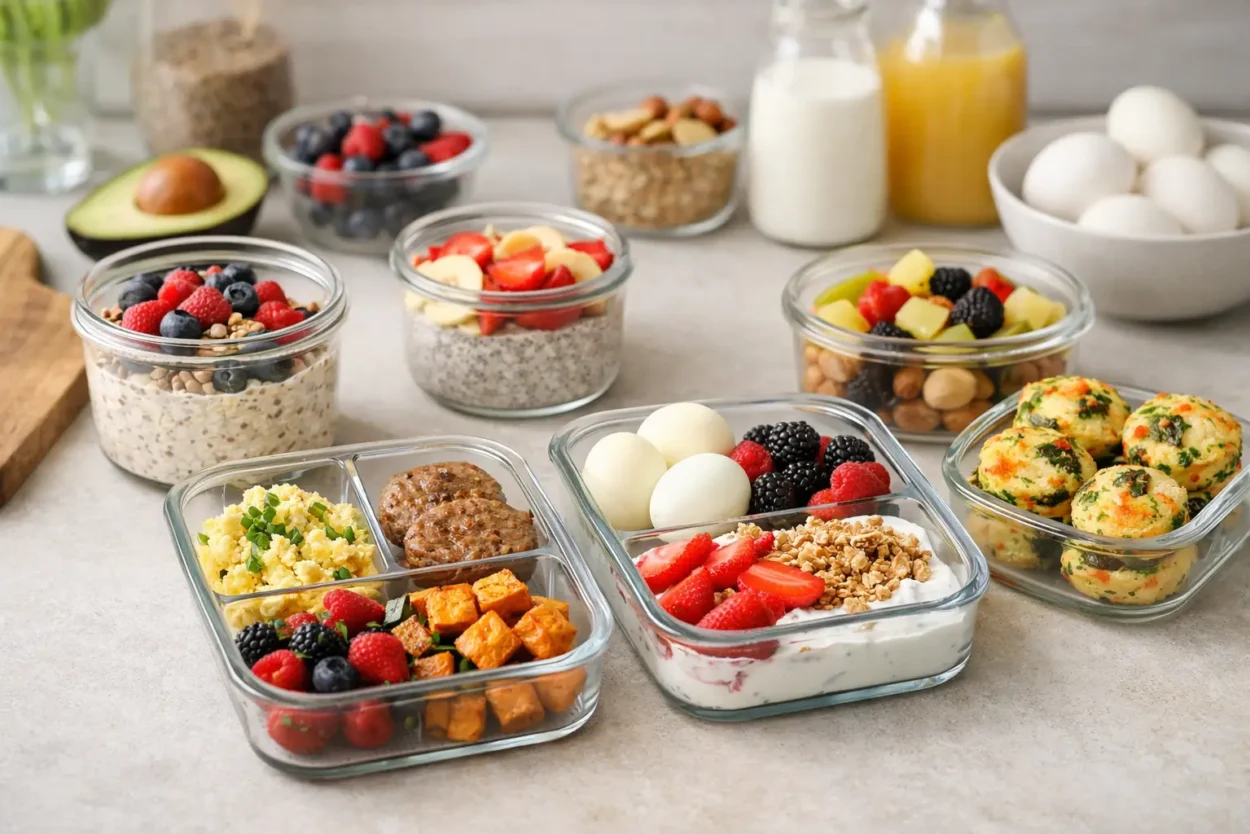
It also helps to think in components instead of full recipes. If you prep hard-boiled eggs, washed fruit, cooked breakfast potatoes, and a batch of Greek yogurt parfait jars, you can mix and match all week. That feels less repetitive and gives you more room to adjust if your appetite changes.
Start with the breakfasts that hold up well
Not every breakfast is worth prepping ahead. Pancakes can be frozen and reheated, yes, but scrambled eggs often lose their texture. Avocado toast is great fresh and disappointing after storage. The trick is choosing meals that stay pleasant after a few days in the fridge or freezer.
Overnight oats are one of the easiest places to start. They are cheap, fast, and easy to customize with berries, peanut butter, cinnamon, chia seeds, or honey. Egg muffins are another reliable option because they bake in one pan, portion easily, and reheat quickly. Breakfast burritos work well if you want something more filling, especially when packed with eggs, cheese, beans, and roasted veggies.
Yogurt bowls, chia pudding, baked oatmeal, freezer sandwiches, and cottage cheese snack boxes also make sense. The right choice depends on what you like eating early in the day. If you are not a sweet-breakfast person, there is no reason to force yourself into oats just because they photograph well.
A good breakfast prep formula
If you want meals that actually keep you full, build around three things: protein, fiber, and something satisfying enough that you do not end up raiding the snack drawer an hour later. For some people that means eggs, whole-grain toast, and fruit. For others it is yogurt with granola and berries, or oatmeal with nuts and banana.
This matters because the prettiest meal prep is not always the most useful. A tiny smoothie and half a muffin may look light and healthy, but if it leaves you hungry by 10 a.m., it is not helping much. Breakfast should make your morning easier, not turn into a second problem.
The easiest routine for weekly breakfast prep
The fastest way to figure out how to meal prep breakfast is to choose one prep day and keep the session short. Most people do well with 30 to 60 minutes once or twice a week. You can do a bigger prep on Sunday, then restock one or two items midweek if needed.
Start by checking your week. Count how many breakfasts you actually need at home, at work, or on the go. If you are going out for brunch Saturday or usually skip breakfast on Friday, do not prep seven full meals just because that sounds productive.
From there, make a small plan. Pick one main recipe, one backup option, and any simple add-ons. For example, you might make baked oatmeal for four days, boil six eggs, portion grapes into containers, and keep bagels in the freezer. That is enough structure to save time without boxing you into the exact same breakfast every day.
What to prep first
Start with foods that take the longest to cook. Bake your oatmeal, roast potatoes, or cook sausage first. While those are in the oven, mix overnight oats, portion yogurt, or slice fruit. If you are making breakfast burritos, set up an assembly line so everything cools slightly before wrapping.
Cooling matters more than people think. If you seal hot food right away, condensation builds up and can make things soggy. Let items sit for a bit before storing them, especially eggs, potatoes, and baked goods.
Smart storage makes breakfast prep work
Meal prep gets much easier when your food is visible and easy to grab. Clear containers help, but you do not need anything fancy. The goal is to store breakfast in portions you can use immediately, not in one giant container you have to deal with when you are half awake.
Fridge breakfasts like egg muffins, oats, parfaits, and baked oatmeal usually hold well for three to five days. Freezer options like burritos, sandwiches, pancakes, and waffles can last much longer, which is helpful if you want to prep in bigger batches. The trade-off is texture. Some foods freeze beautifully, while others get watery or rubbery.
Labeling helps more than it sounds. Even a quick note with the name and date can save you from playing refrigerator detective later in the week. If your household shares food, this step helps even more.
Fridge or freezer?
Use the fridge for meals you know you will eat soon and want to reheat quickly. Use the freezer for extras or for mornings when your schedule is unpredictable. Many people do best with a mix of both.
For example, you might keep Monday through Wednesday breakfasts in the fridge and freeze the rest. That way, the food stays fresher, and you are less likely to waste ingredients. It is a small adjustment, but it can make your prep feel much more manageable.
Breakfast meal prep ideas that fit real life
If you want a practical starting point, go with combinations that feel familiar. Try overnight oats with almond butter and berries, egg muffins with spinach and cheese, or breakfast burritos with scrambled eggs, black beans, and salsa. Baked oatmeal with banana and cinnamon is another easy win, especially if you like something warm and slightly sweet.
For lower-effort prep, keep breakfast more assembly-based. Cottage cheese with pineapple, hard-boiled eggs with toast, yogurt with fruit and granola, or frozen waffles with nut butter can all count. Meal prep does not have to mean cooking every item from scratch.
This is where a lifestyle site like MUNIOM would always lean practical: the best breakfast is the one that fits your mornings, your budget, and your patience level. If washing a blender every day annoys you, stop pretending smoothies are your system. Build around what feels easy enough to repeat.
Common mistakes when learning how to meal prep breakfast
One common mistake is choosing meals based only on health goals and ignoring convenience. If a breakfast takes multiple reheating steps, extra toppings, and a pan to finish, it may not survive a busy weekday. Another issue is variety overload. Too many choices can create more work than you need.
Portion size is another thing to watch. If your breakfast is too small, you may end up buying something later anyway, which defeats part of the time and money savings. On the other hand, making oversized portions can leave you tired of the same meal by midweek.
There is also the freshness question. Some people love prepping five days at once, while others strongly prefer food made every two or three days. Neither is wrong. It depends on your schedule, your storage space, and how picky you are about texture.
Make it sustainable, not perfect
The most useful breakfast prep routine is one you can repeat when life gets busy. That usually means keeping a short grocery list, rotating a few favorites, and leaving room for shortcuts. Store-bought yogurt cups, frozen fruit, pre-cooked sausage, and whole-grain English muffins can all be part of a smart plan.
If you are just getting started, aim for three prepped breakfasts next week instead of seven. Notice what you reach for and what gets ignored. Over time, your routine gets easier because it becomes more personal.
Breakfast does not need to be fancy to be worth prepping. A few thoughtful choices now can give your future self one less decision to make, and that is often the kind of help that changes a whole morning.


Comments are closed.