
Looking for the best apps for learning Spanish? These 10 picks help beginners and intermediate learners build vocabulary, speaking, and confidence.
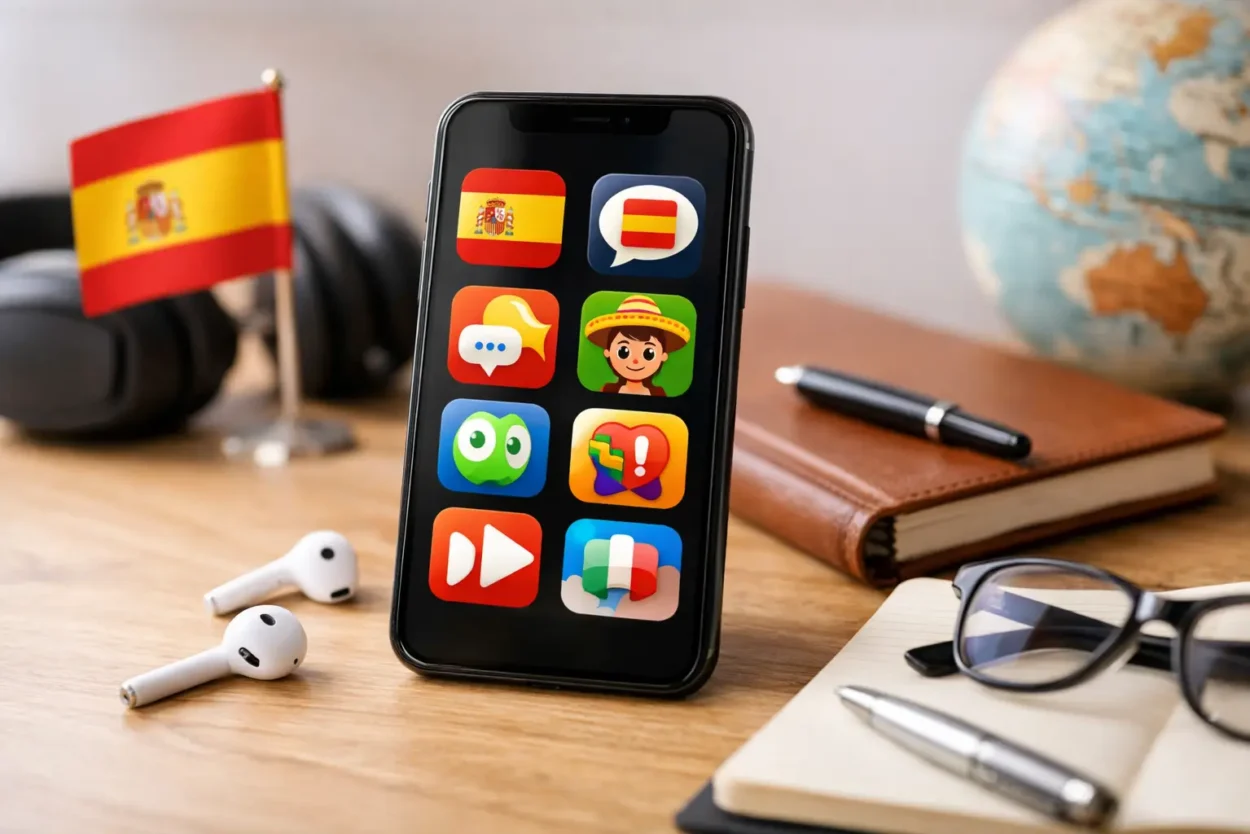
10 Best Apps for Learning Spanish
Some language apps make you feel productive without actually helping you speak. Others throw grammar at you so fast that opening the app starts to feel like homework. If you’re searching for the best apps for learning Spanish, the real question is simpler: which one fits the way you learn and the amount of time you actually have?
That matters more than people think. The best app for a busy beginner who wants 10-minute lessons on the couch is not the same as the best app for someone preparing for travel, brushing up for work, or trying to finally hold a real conversation with family. Spanish is one of the most practical languages to learn in the US, so there is no shortage of options. The hard part is picking one you will keep using after the first week.
10 best apps for learning Spanish
A good Spanish app should make progress feel clear. It should also match your goals, because vocabulary drills, conversation practice, and grammar training are not the same thing. These are the apps worth considering, along with where each one shines and where it may fall short.
Duolingo
Duolingo is still one of the easiest entry points for beginners. The lessons are short, colorful, and built to keep you coming back every day. If you struggle with consistency, that game-like format can help more than a serious textbook-style app.
Where it works best is habit-building. You can squeeze in a lesson while waiting in line or winding down at night, and over time that repetition helps basic vocabulary stick. The trade-off is that speaking and real-world conversation can feel limited. It is great for getting started, but many learners eventually outgrow it if they want deeper fluency.
Babbel
Babbel feels more structured and practical right away. The lessons focus on useful phrases and realistic conversation patterns, so it often feels closer to actual communication than pure word matching.
This is a strong pick if you want a little more explanation without getting overwhelmed. It teaches grammar in a digestible way, which is helpful for adults who like to know why a sentence works. It is less playful than Duolingo, though, so it may not be the best match if you need lots of motivation built into the app itself.
Busuu
Busuu sits in a nice middle ground between guided lessons and community learning. You work through structured Spanish units, but you can also submit exercises for feedback from native speakers. That feature can make the whole experience feel more personal.
It is especially useful if you want correction without paying for full one-on-one tutoring. The downside is that community feedback can vary in depth, and some people prefer a cleaner, more self-contained learning experience. Still, for many learners, that real-human element makes Busuu stand out.
Memrise
Memrise is a smart choice if your biggest goal is understanding how Spanish sounds in everyday life. The app leans heavily into vocabulary and listening, often using video clips and native-speaker pronunciation to make the language feel more natural.
That makes it helpful for travel prep or for learners who want to train their ear early. It is not the strongest option if you want a full grammar path from start to finish, but it can be excellent as a companion app. If textbook Spanish has ever felt too stiff, Memrise may feel refreshingly real.
Rosetta Stone
Rosetta Stone has been around for years, and its style is still very distinctive. It teaches through immersion, using images, audio, and pattern recognition instead of constant translation. Some learners love that because it pushes you to think in Spanish instead of mentally converting from English.
The catch is that immersion can feel slow or even frustrating at first. If you like clear grammar explanations, Rosetta Stone may test your patience. But if you want a polished platform and a more intuitive learning style, it remains a solid option.
Pimsleur
Pimsleur is one of the best picks for learners who want to speak out loud more often. Its lessons are audio-heavy and designed to build conversational ability through repetition and response. If your commute, walks, or chores are the main windows in your day, this format makes a lot of sense.
The strength here is speaking confidence. You are not just tapping answers on a screen. The weakness is that it can feel less visually engaging than app-first competitors, and some learners want more reading and vocabulary support alongside the audio. Even so, for pronunciation and speaking rhythm, it is hard to ignore.
Mondly
Mondly is designed to feel modern, fast, and beginner-friendly. It covers useful vocabulary, basic dialogues, and speaking exercises in a polished format that does not ask too much from you upfront.
This app is a good fit for casual learners who want a smooth experience without a steep learning curve. It may not go as deep as some competitors, especially for learners who eventually want stronger grammar foundations, but it is approachable and easy to stick with. Sometimes that matters more than having every advanced feature.
HelloTalk
HelloTalk is less of a traditional course app and more of a language exchange platform. You connect with native speakers, chat by text or voice, and learn through actual interaction. That can be incredibly useful once you know at least some basics.
This app works best for learners who are not afraid to make mistakes in public. It can be one of the most effective ways to build confidence, but it also requires more initiative than a guided lesson app. If you want the app to tell you exactly what to do every day, HelloTalk may feel too open-ended.
italki
italki is ideal if you want real lessons with real teachers. Technically, it is more of a tutoring platform than a standard app, but it belongs in this conversation because few tools improve speaking faster than one-on-one practice.
The obvious benefit is personalization. You can focus on travel Spanish, business Spanish, pronunciation, grammar, or conversation. The trade-off is cost, since regular sessions add up faster than a subscription app. For many people, the sweet spot is using italki alongside a cheaper daily-practice app.
LingoDeer
LingoDeer often flies under the radar, but it is surprisingly strong for learners who want a clean layout and better grammar support. The lessons are structured and beginner-friendly, and the app does a good job of explaining sentence patterns without making things feel too academic.
It is a particularly nice option for people who want more clarity than Duolingo offers. It may not have the same social buzz or brand recognition, but for focused learning, it holds up well. If you like straightforward progress over flashy features, LingoDeer is worth a look.
How to choose the best apps for learning Spanish
The best choice depends on how you want Spanish to fit into your life. If you are starting from zero and mainly need momentum, a habit-based app like Duolingo or Mondly may be enough to get moving. If you want stronger structure, Babbel or LingoDeer will likely feel more satisfying.
If your goal is conversation, it helps to think beyond traditional lessons. Pimsleur can train your speaking muscles, while HelloTalk and italki give you the kind of real interaction that no flashcard set can replace. For listening and natural phrasing, Memrise has an edge.
Budget matters too. Some apps are easy to try for free, while others make more sense if you know you are ready to commit. Free options can absolutely help, but paid apps often offer a more organized path and fewer distractions. It depends on whether you need convenience or depth most.
What actually helps you learn faster
No app can do all the work on its own. The people who make noticeable progress usually combine a main app with a simple routine. That might mean one structured lesson a day, five minutes of review, and one speaking session each week. It does not have to be intense. It just has to be repeatable.
It also helps to choose an app that matches your personality, not your fantasy self. If you know you hate long lessons, do not pick the most rigorous platform and hope your habits magically change. If you get bored by games, do not force yourself into a streak-based app just because it is popular. The best apps for learning Spanish are the ones you will still be opening next month.
A smart setup for many learners is one core app plus one conversation tool. For example, you might use Babbel for daily lessons and HelloTalk for practice, or Duolingo for consistency and italki for speaking. That combination usually gives better results than expecting one app to cover everything perfectly.
Spanish gets easier the moment it stops feeling like a giant project and starts feeling like part of your routine. Pick one app that feels manageable, use it consistently, and let progress build from there.