
Make air fryer salmon with crisp edges and flaky texture. Get cook times, temperature tips, seasoning ideas, and easy fixes for common mistakes.
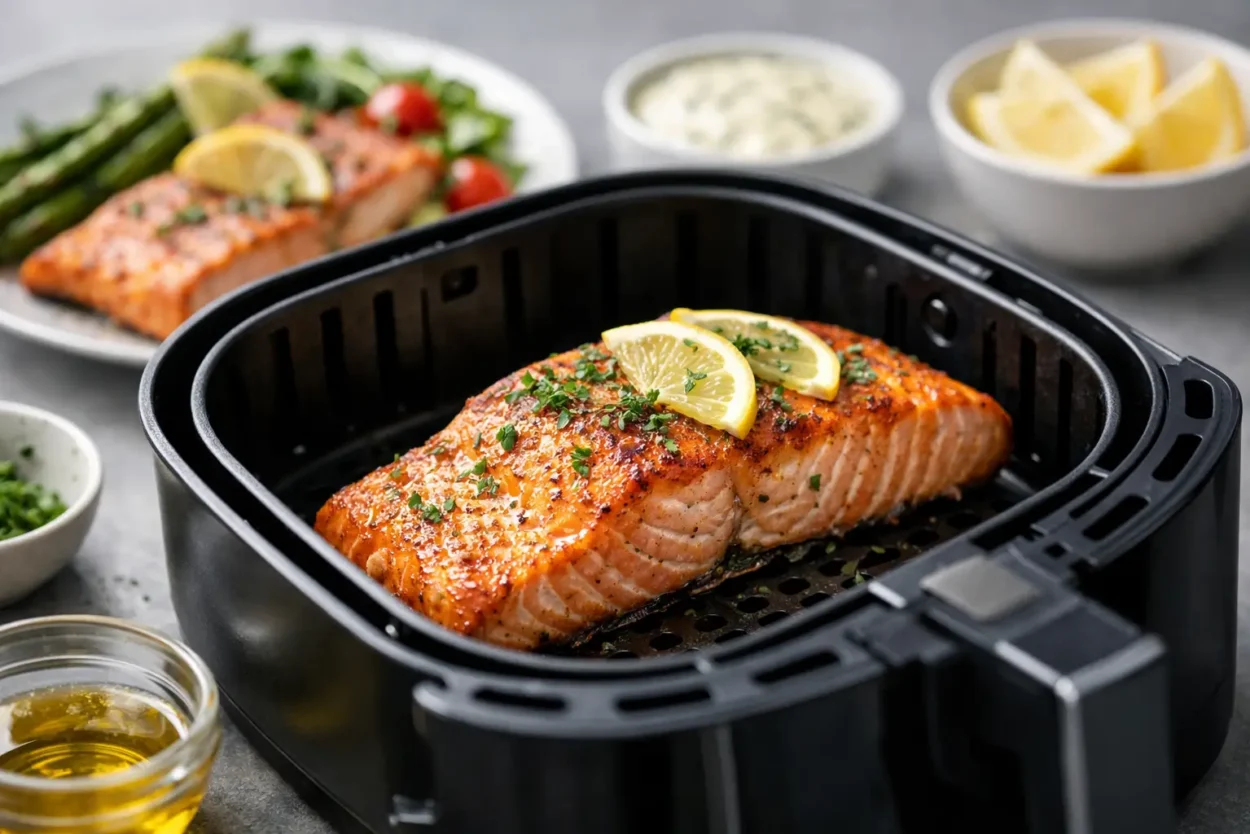
Air Fryer Salmon That Turns Out Perfect
Some weeknight dinners look ambitious but are secretly easy. Air fryer salmon is one of them. It cooks fast, feels a little elevated, and gives you that golden, lightly crisp top without heating up the whole kitchen.
If you have ever ended up with dry salmon, the air fryer can actually make things simpler once you know the timing. The trick is not just temperature. Thickness, skin-on versus skinless, and even how long the fish sits out before cooking all make a difference. Get those details right, and this becomes one of the most reliable meals in your rotation.
Why air fryer salmon works so well
Salmon is naturally rich, which makes it a great match for high, fast heat. The air fryer circulates hot air around the fillet, so the outside gets lightly browned while the inside stays tender. It is quicker than most oven methods and less messy than pan-searing.
It also works for a range of salmon styles. You can keep it simple with olive oil, salt, and pepper, or go sweeter with honey and garlic, spicier with chili flakes, or brighter with lemon and herbs. Because the cooking time is short, the fish still tastes fresh instead of overworked.
That said, air fryer salmon is not completely foolproof. Thin fillets can overcook fast, sugary marinades can darken early, and different air fryers run differently. A recipe time is a starting point, not a guarantee.
How to prepare salmon for the air fryer
Start with fillets that are close in size if you are cooking more than one. That makes it much easier to get even results. If one piece is much thinner than the other, the smaller one may be done several minutes earlier.
Pat the salmon dry with paper towels first. This small step helps the surface brown better and keeps the seasoning from sliding off. If the fish is very wet, it tends to steam instead of roast.
Next, rub or brush it lightly with oil. You do not need much. A little oil helps the seasonings stick and supports that crisp finish on the outside. Then season it. Salt and black pepper are enough for a clean, classic result, but garlic powder, paprika, onion powder, or Italian seasoning all work well too.
If your salmon has skin on, you can leave it that way. Skin-on fillets are often a little more forgiving because the skin acts like a barrier and helps hold moisture in. If you prefer skinless salmon, it still works beautifully, but watch the timing more closely.
Best temperature and cook time for air fryer salmon
For most fillets, 400 degrees Fahrenheit is the sweet spot. It cooks the salmon quickly and gives the top a nice finish without drying it out too easily.
A typical 1-inch-thick fillet usually needs 7 to 10 minutes at 400 degrees Fahrenheit. Thicker pieces can take 10 to 12 minutes. Very thin fillets may be ready in 6 minutes. This is why checking early matters.
The easiest way to judge doneness is by texture. Salmon should flake easily with a fork and look mostly opaque, with a slightly translucent center if you like it medium. If you prefer using a thermometer, 125 to 130 degrees Fahrenheit gives you a tender center, while 140 to 145 degrees Fahrenheit is more fully cooked.
It helps to preheat the air fryer for a few minutes if your model allows it. That gives you more consistent browning from the start. Also avoid overcrowding the basket. If the fillets are touching, the air cannot circulate as well, and the fish may cook unevenly.
A simple air fryer salmon method
This is the kind of base recipe you can memorize.
Preheat the air fryer to 400 degrees Fahrenheit. Pat two salmon fillets dry, then brush them with a little olive oil. Season with salt, black pepper, garlic powder, and paprika. Place the fillets in the basket skin-side down if using skin-on salmon. Cook for 7 to 10 minutes, depending on thickness, until the salmon flakes easily.
That is it. Add lemon after cooking for a brighter finish. If you squeeze it on before cooking, it can still taste good, but the surface may not brown quite as well.
Flavor ideas that keep it interesting
Once you know the basic method, changing the flavor is easy. This is one reason air fryer salmon stays useful instead of becoming another recipe you try once and forget.
For a sweet-savory version, mix a little honey, soy sauce, and minced garlic. Brush it on halfway through cooking rather than at the very beginning so it does not darken too quickly. For a fresher style, go with lemon zest, dill, and olive oil. If you want more heat, try chili powder, smoked paprika, and a pinch of brown sugar.
You can also use store-bought seasoning blends if you are short on time. Just check the salt level first. Some blends are quite salty, and salmon does not need much help in the flavor department.
Common mistakes and how to avoid them
The biggest mistake is overcooking. Salmon can go from tender to dry in a minute or two, especially in a powerful air fryer. If you are new to your machine, check the fish earlier than you think you need to.
Another common issue is sticking. Even nonstick baskets can grab delicate fish. A light coating of oil on the basket or a small piece of perforated parchment designed for air fryers can help. Just make sure you never place loose parchment in the air fryer without food on top of it.
Heavy marinades can also be tricky. A thick sauce may slide off, pool underneath, or burn around the edges before the salmon is done. If you love glazed salmon, it is usually better to cook the fish most of the way first, then brush on the glaze for the final 2 to 3 minutes.
Finally, resist the urge to keep opening the basket every minute. Checking once near the end is smart. Repeatedly stopping the air fryer slows cooking and makes timing less predictable.
What to serve with air fryer salmon
This dish pairs well with fast sides, which is exactly why it works on busy nights. Rice, quinoa, roasted potatoes, or a simple salad all fit naturally. If you want a very low-effort dinner, serve the salmon with air-fried asparagus, broccoli, or green beans.
It also works well cold the next day. Leftover salmon can be flaked into rice bowls, salads, wraps, or pasta. That makes it a good meal-prep option, even if you normally think of fish as something that has to be eaten immediately.
Fresh vs. frozen salmon in the air fryer
Fresh salmon is easier to control, but frozen salmon can still work. If the fillets are individually portioned, you can cook them from frozen, though the texture may be slightly less delicate than thawed fish.
For frozen fillets, start at 390 to 400 degrees Fahrenheit and add a few extra minutes. Usually, you will want to cook the salmon for about 4 to 5 minutes first, then open the basket, season it once the surface has thawed, and continue cooking until done. Expect a total time closer to 11 to 15 minutes, depending on thickness.
If you have time, thawing in the refrigerator first usually gives the best result. The fish cooks more evenly, and seasonings adhere better.
How to know when it is really done
There is a small window where salmon is at its best. Too early, and the center is underdone in a way some people will not enjoy. Too late, and the flakes turn chalky.
A good visual cue is gentle separation between the layers when pressed lightly with a fork. The center should look moist, not glossy raw. If white protein starts pushing out heavily from the surface, the salmon is still edible, but it is usually a sign it has gone a little too far.
This is where practice helps. After a couple of tries, you will get a feel for how your air fryer handles fish. That familiarity is what turns a good quick dinner into a dependable one.
Air fryer salmon is one of those recipes that makes healthy eating feel less like a project. Keep a couple of fillets in the fridge or freezer, pair them with one easy side, and dinner can feel fresh, fast, and far more put together than the effort suggests.

Comments are closed.