
Try these frizzy hair home remedies to smooth flyaways, add moisture, and make your hair easier to manage with simple ingredients.
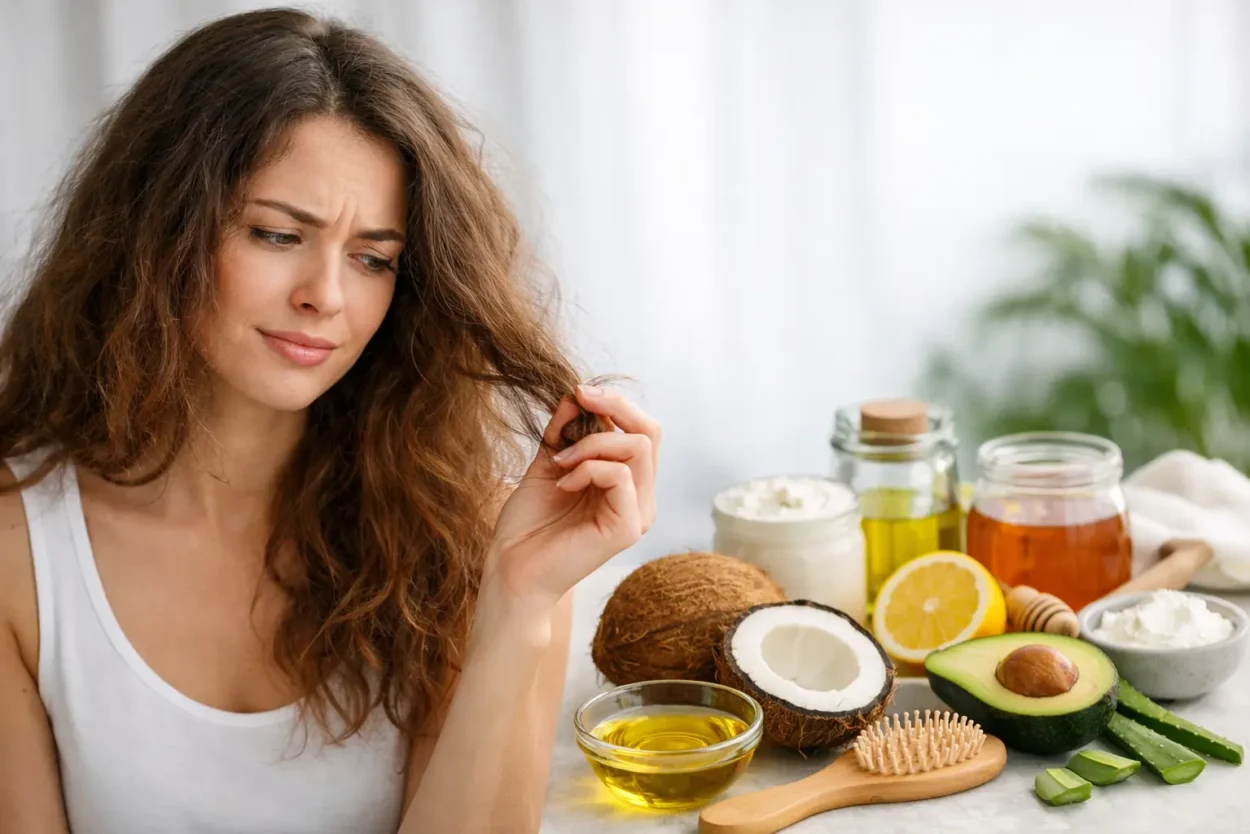
8 Frizzy Hair Home Remedies That Help
If your hair looks smooth when it’s wet and turns into a cloud the second it dries, you’re probably dealing with a moisture problem, not just a styling problem. That’s why the best frizzy hair home remedies focus on helping hair hold onto hydration, reducing roughness, and cutting down on the little habits that make frizz worse.
Frizz can show up for a lot of reasons. Humidity is the obvious one, but dry hair, heat damage, overwashing, harsh shampoos, rough towels, and even your pillowcase can all play a part. The good news is that you do not always need a shelf full of products to calm things down. A few smart home fixes can make hair softer, shinier, and much easier to manage.
Why frizz happens in the first place
Frizz usually starts when the outer layer of the hair, called the cuticle, lifts instead of lying flat. When that happens, moisture from the air gets in and the strand swells unevenly. The result is puffiness, flyaways, and that dry, rough texture that makes hair feel harder to style.
Some hair types are naturally more prone to this. Curly, wavy, coarse, color-treated, and high-porosity hair often frizzes more easily because the cuticle is already less compact. Fine hair can frizz too, especially if it is dry or overprocessed. So while frizz is common, the right fix depends on what your hair actually needs. If your hair is oily at the roots and dry at the ends, for example, heavy oils might help the ends but leave the top looking flat.
Best frizzy hair home remedies to try
Coconut oil for dry, puffy ends
Coconut oil is one of the most popular at-home options for frizz because it helps coat the hair and reduce moisture loss. It tends to work best on thicker, drier hair rather than very fine hair.
Warm a small amount between your hands and smooth it over the mid-lengths and ends. Start with less than you think you need. Too much can make hair greasy fast. You can also use it as a pre-shampoo treatment for 20 to 30 minutes before washing. That gives dry hair some extra softness without leaving as much residue behind.
If coconut oil makes your hair feel stiff or heavy, skip it. Not every natural remedy works for every texture.
Aloe vera for lightweight smoothing
Aloe vera is a good choice if you want something lighter than oil. It can help smooth the cuticle, add a bit of moisture, and make hair feel softer without weighing it down as much.
Use pure aloe vera gel or a simple aloe gel with minimal added fragrance and alcohol. Apply a small amount to damp hair, focusing on frizzy areas. You can leave it on as a light styling aid or mix a spoonful into a DIY hair mask. For wavy and curly hair, aloe can be especially useful when you want definition without a greasy finish.
Honey mask for extra moisture
Honey is a humectant, which means it attracts moisture. That can be helpful when hair feels dull and brittle, especially in dry indoor conditions.
Mix one tablespoon of honey with two to three tablespoons of conditioner or plain yogurt, then apply it to damp hair for about 15 to 20 minutes before rinsing. Mixing honey with something creamy makes it much easier to spread and wash out. On its own, it is messy and sticky enough to turn a simple hair mask into a project.
In very humid weather, humectants can be hit or miss. Some people love the softness they get from honey, while others feel like it makes hair fluffier. If your hair tends to expand in humidity, use this remedy occasionally rather than every wash day.
Avocado and olive oil mask for very thirsty hair
If your hair feels rough, straw-like, or overworked from bleach or heat styling, a richer mask can help. Mashed avocado combined with a little olive oil creates a treatment that softens dry strands and adds slip.
Use half a ripe avocado with one tablespoon of olive oil. Blend or mash it until completely smooth, then apply to damp hair for 15 to 20 minutes. Rinse thoroughly and follow with a gentle shampoo if needed. The smoother the mixture, the easier it is to rinse out. Lumpy avocado in your hair is not a fun surprise.
This remedy is better as an occasional reset than an everyday fix. It is nourishing, but it can be too rich for fine or low-density hair.
Apple cider vinegar rinse for buildup
Sometimes frizz is not only dryness. Product buildup, hard water residue, and an off-balance hair routine can leave hair looking dull, rough, and puffy. A diluted apple cider vinegar rinse may help hair feel smoother by clearing away some of that residue.
Mix one to two tablespoons of apple cider vinegar with one cup of water and pour it over your hair after shampooing. Let it sit briefly, then rinse and condition if needed. Hair often feels smoother after this, but stronger is not better. Too much vinegar or using it too often can dry hair out, especially if your scalp is sensitive.
Once every couple of weeks is enough for most people.
Rice water, with caution
Rice water gets a lot of attention in DIY beauty routines, and some people find it makes their hair feel stronger and shinier. That is likely due to the starches and amino acids it contains.
The catch is that rice water can also make hair feel stiff or protein-overloaded, especially if your hair is already dry. If you want to try it, use it as a quick rinse rather than a heavy treatment, and watch how your hair responds over the next day or two. If it feels brittle instead of smooth, this remedy is not the right match for you.
Cold water rinse for a quick finish
A cold or cool rinse is one of the simplest frizzy hair home remedies because it costs nothing and takes almost no extra effort. It will not transform severely damaged hair, but it can help the cuticle lie a little flatter and reduce that rough, fluffy finish after washing.
If a full cold rinse sounds miserable, especially in winter, just finish with cool water for a few seconds. Even that can help hair look a bit sleeker.
DIY leave-in spray for daily touch-ups
For frizz that shows up between wash days, a light leave-in spray is often more useful than another heavy mask. Mix water with a small amount of leave-in conditioner or aloe vera gel in a spray bottle and mist it lightly over dry or damp hair. Then smooth with your hands or a wide-tooth comb.
This works well for refreshing waves, curls, and dry ends without having to rewash your hair. Keep the mixture simple and make small batches so it stays fresh.
Home habits that make a bigger difference than masks
A lot of frizz comes from routine, not just products. If you put effort into home remedies but still rub your hair dry with a rough towel, use high heat every morning, and wash with a stripping shampoo, results will be limited.
Switching to a microfiber towel or soft cotton T-shirt can help right away. Pat or squeeze your hair dry instead of rubbing it. Sleeping on a satin or silk pillowcase can also reduce friction overnight, which is especially helpful for curly, wavy, or color-treated hair.
Heat styling matters too. If you use a flat iron or blow dryer often, lower the temperature when possible and always use some kind of heat protection. Frizz from dryness and frizz from damage can look similar, but damaged hair usually needs a gentler routine more than another DIY mask.
What to avoid when trying frizzy hair home remedies
Natural does not always mean better. Straight lemon juice, baking soda, undiluted essential oils, and overly frequent vinegar rinses can all irritate the scalp or make hair feel worse. Patch testing is worth the extra minute, especially if you have sensitive skin.
It also helps to avoid layering too many remedies at once. If you try coconut oil, aloe, honey, and a vinegar rinse in the same week, you will have no idea what actually helped. Start with one or two options based on your hair type and adjust from there.
When home remedies are not enough
If your hair is frizzy because of breakage, chemical damage, or a scalp issue, home remedies may only do so much. Hair that snaps easily, feels gummy when wet, or stays rough no matter what may need a more targeted product routine or a trim. And if your scalp is itchy, flaky, or inflamed, it is smart to rule out an underlying issue instead of treating everything as simple frizz.
The most effective fix is usually a combination of moisture, gentler handling, and realistic expectations. Frizz does not have to disappear completely for your hair to look healthy and feel better. A small shift in how you wash, dry, and protect it can go a lot further than chasing a perfectly polished finish.
Give your hair a little consistency, not just a one-time kitchen fix, and you will usually see the difference where it counts most – in how easy it is to wear every day.