Learn how to grow lovage, a beloved aromatic herb in Romanian cuisine. This complete guide covers planting, soil requirements, watering, harvesting, and storage methods.
How to Grow Lovage: Complete Garden and Container Growing Guide
Lovage is one of the most beloved aromatic herbs in cuisine. Its powerful aroma is especially associated with traditional soups and stews, but it can also be used in other culinary preparations.
Beyond its intense flavor, lovage is also a very easy plant to grow. Once planted in the garden, it can return year after year and produce aromatic leaves for a long period.
In this complete guide you will learn:
- how to plant lovage
- what type of soil it prefers
- how much light and water it needs
- whether it survives winter
- how to harvest correctly
If you want to discover other aromatic herbs you can grow at home, also read the Complete Guide to Aromatic Herbs.
What is lovage and why is it worth growing

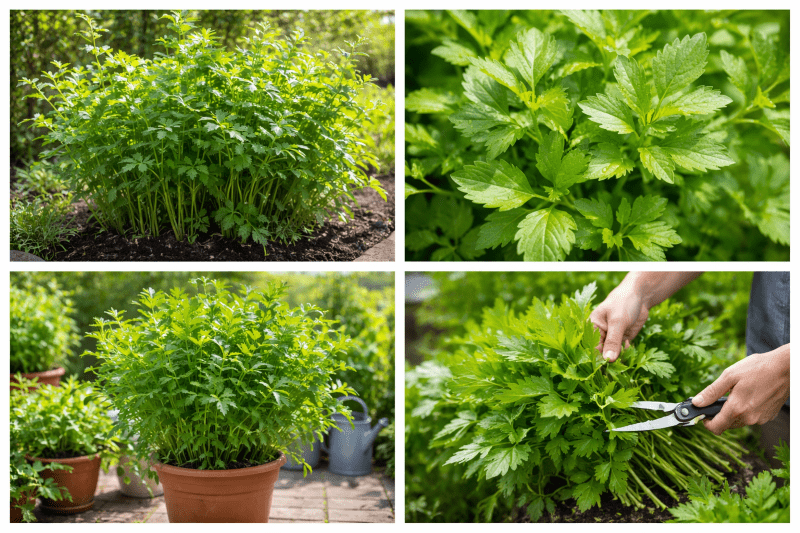
Lovage (Levisticum officinale) is a perennial aromatic plant native to Europe and Asia. It is known for its intense aroma, similar to that of celery.
Characteristics:
- large, green leaves
- thick stems
- can reach 1–2 meters in height
- powerful aroma
Benefits of growing lovage:
- perennial plant
- very hardy
- produces many leaves
- can be harvested year after year
When to plant lovage
Lovage can be planted in spring or autumn.
Recommended periods:
- March – April
- September – October
It can be grown from:
- seeds
- seedlings
- root division
Seed germination takes approximately:
2–3 weeks
What type of soil does lovage prefer
Lovage prefers soil that is:
- rich in nutrients
- well-aerated
- well-draining
- slightly moist
Ideal mix for containers:
- 50% universal soil
- 30% compost
- 20% perlite or sand
Fertile soil helps the plant produce larger leaves.
How much light does lovage need
Lovage prefers:
- moderate sun
- partial shade
It needs approximately:
4–6 hours of light per day
In very hot areas, some afternoon shade is beneficial.
How to grow lovage in containers
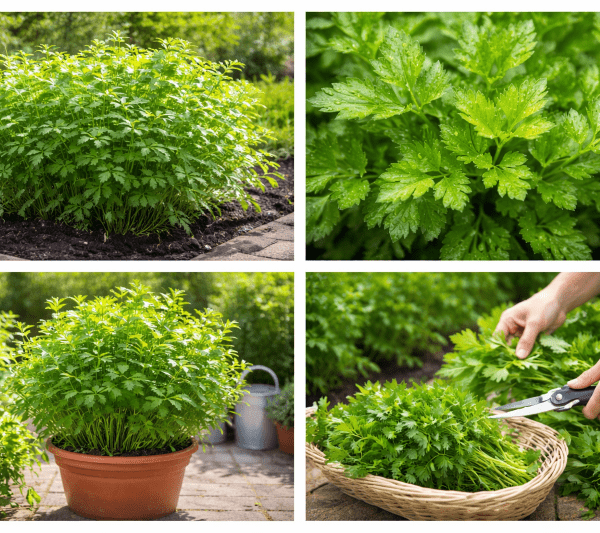
Lovage can be grown in containers, but it needs more space than other aromatic herbs.
Container size
Recommended dimensions:
- diameter: 25–30 cm
- depth: 30 cm
This plant develops strong roots.
Watering lovage
Lovage prefers consistently moist soil.
Guidelines:
- water 2–3 times per week in summer
- soil should not dry out completely
- avoid excess water
How to grow lovage in the garden

In the garden, lovage can become a very large plant.
Recommended spacing between plants:
60–80 cm
Benefits of garden cultivation:
- larger plants
- abundant harvest
- perennial plant that returns annually
Does lovage survive winter?
Yes. Lovage is a very hardy plant.
It can tolerate temperatures of approximately:
-15°C to -20°C
During winter:
- the aerial parts dry out
- the root remains in the soil
In spring the plant will grow again.
How to harvest lovage
Lovage can be harvested throughout the season.
Guidelines:
- cut the outer leaves
- use clean scissors or knife
- do not cut more than 1/3 of the plant
Regular harvesting stimulates new leaf growth.
How to store lovage
There are several simple methods.
Freezing
Leaves can be frozen:
- in bags
- in ice cubes with water or oil
This preserves the aroma very well.
Drying
Lovage can be dried:
- in bundles
- in a well-ventilated place
Common problems when growing lovage
Leaves turn yellow
Possible causes:
- soil too dry
- lack of nutrients
- excess water
Plant does not grow well
It can be caused by:
- poor soil
- lack of light
- insufficient space
Benefits of lovage
Lovage is known for its nutritional properties.
It is rich in:
- vitamins
- antioxidants
- essential oils
It is frequently used in:
- stews
- soups
- salads