
Discover the real differences between natural and synthetic textiles, their pros and cons. Learn which materials suit your needs best for comfort, durability, and sustainability.
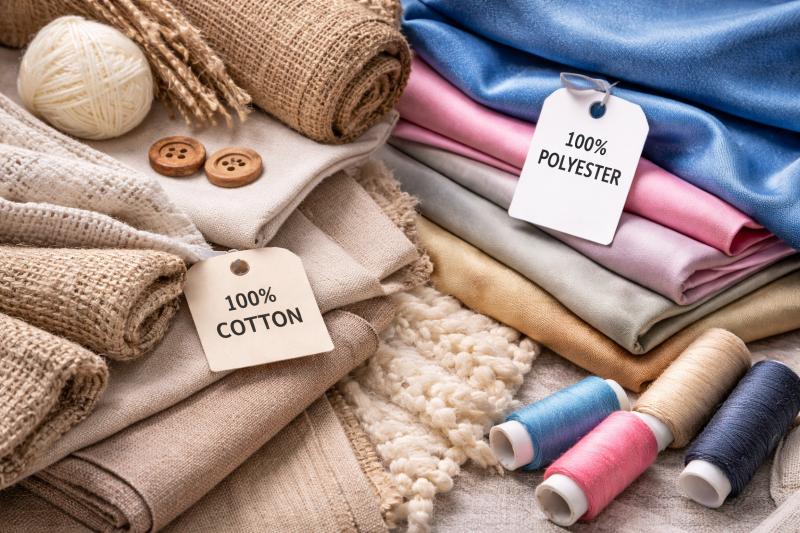
Natural vs Synthetic Textiles: Real Differences, Pros and Cons
When shopping for clothes, bed linens, or home textiles, we frequently encounter terms like cotton, wool, polyester, or viscose. Many wonder: what are the real differences between natural and synthetic textiles? Does it matter for health, comfort, or durability?
In this article, you’ll find a clear, myth-free explanation of natural vs synthetic textiles, so you can make informed choices tailored to your needs.
What are natural textiles?
Natural textiles are obtained from plant or animal sources, without complex chemical synthesis processes.
Examples of natural textiles:
- Cotton – from plant fibers
- Linen – from the flax plant
- Wool – from animal hair (sheep, alpaca, etc.)
- Silk – produced by silkworms
- Hemp – a durable plant fiber
General characteristics:
✅ allow skin to breathe
✅ are friendlier to sensitive skin
✅ absorb moisture well
✅ enhanced wearing comfort
What are synthetic textiles?
Synthetic textiles are created artificially, in the laboratory, from chemical substances derived mainly from petroleum.
Examples of synthetic textiles:
- Polyester
- Nylon (polyamide)
- Acrylic
- Elastane (Lycra)
General characteristics:
✅ high wear resistance
✅ don’t wrinkle easily
✅ lower production cost
✅ dry quickly
Real differences between natural and synthetic textiles
1. Comfort and breathability
Natural textiles:
- allow air circulation
- reduce perspiration
- ideal for summer or sensitive skin
Synthetic textiles:
- retain heat
- can create a “plastic” sensation
- less comfortable long-term
👉 Winner: natural textiles.
2. Impact on skin
Natural:
✅ lower risk of irritation
✅ suitable for allergies and dermatitis
Synthetic:
❌ can promote excessive perspiration
❌ can irritate sensitive skin
👉 Recommendation: for children or sensitive skin, choose cotton, linen, fine wool.
3. Durability and resistance
Natural:
- can wear out faster
- can shrink or wrinkle
Synthetic:
✅ highly resistant
✅ retain their shape
✅ easy to maintain
👉 Winner: synthetic textiles.
4. Care and washing
Natural textiles:
- require delicate washing
- some are difficult to iron
- may require special cleaning
Synthetic textiles:
✅ easy to wash
✅ don’t wrinkle
✅ dry quickly
5. Environmental impact
Natural:
✅ biodegradable
✅ more sustainable (if produced responsibly)
Synthetic:
❌ decompose slowly
❌ release microplastics during washing
👉 From an ecological perspective, natural textiles have the advantage.
Natural and synthetic textiles – comparison table
Frequently asked questions
❓ Which are better: natural or synthetic textiles?
👉 It depends on the purpose. For comfort and health – natural. For resistance and budget – synthetic.
❓ Is polyester harmful?
👉 It’s not toxic, but it can create discomfort and promote excessive perspiration.
❓ What materials are best for summer?
👉 Cotton, linen, hemp – natural, breathable textiles.
❓ Are there mixed materials?
👉 Yes, many textiles combine natural and synthetic fibers for balance between comfort and durability.
When is a mixed material recommended?
Mixed materials (e.g., cotton + polyester):
✅ reduce wrinkling
✅ increase resistance
✅ maintain a good level of comfort
👉 They are a practical choice for everyday clothing.
How to choose the right textile material?
✅ Read the label
✅ Think about the season
✅ Consider your skin type
✅ Decide what matters most: comfort or resistance
Conclusion
The differences between natural and synthetic textiles are real and important. There’s no universally “correct” choice, but one suited to your needs.
- For comfort, health, and sustainability → natural textiles
- For resistance, easy care, and price → synthetic textiles
- For balance → mixed textiles


Comments are closed.