
Master the art of choosing the best Korean cosmetics for your skin. Learn which star ingredients work, how to match products to your skin type, and avoid common K-beauty mistakes.
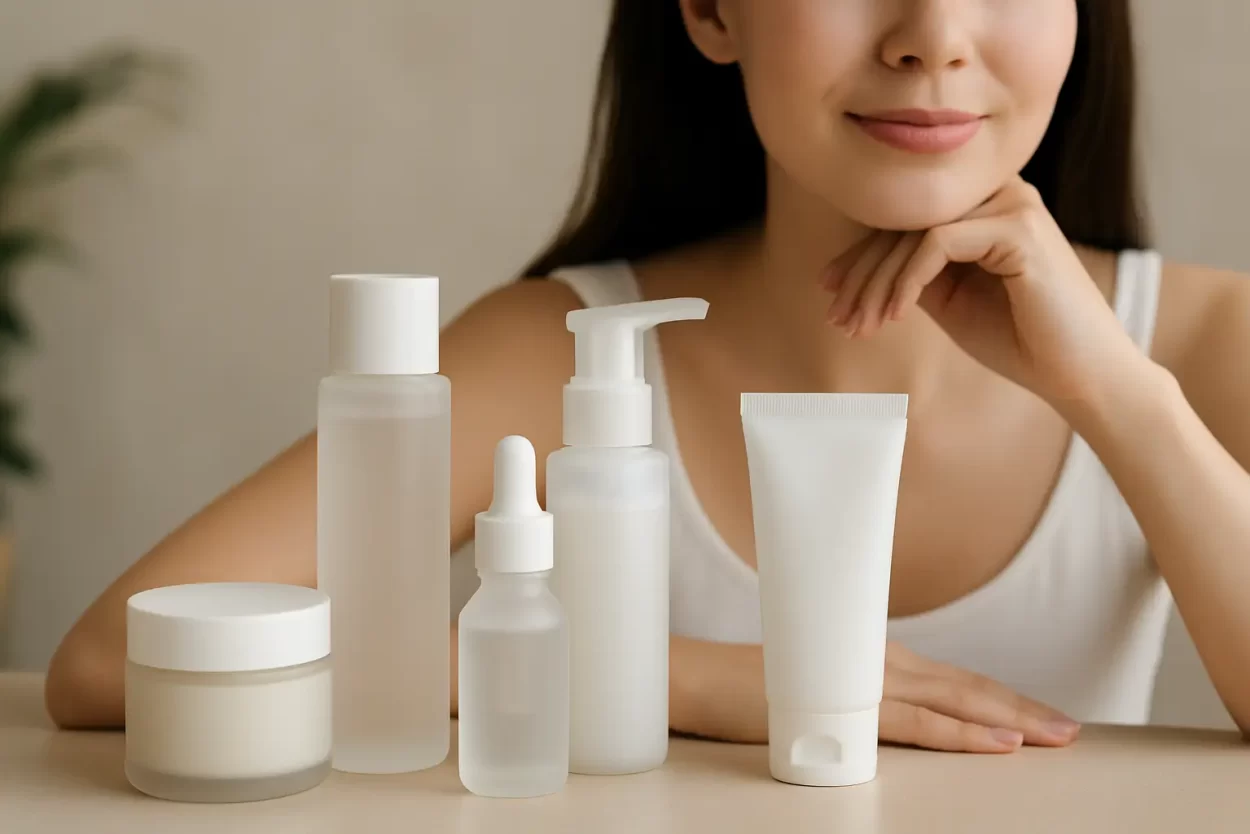
How to Choose the Best Korean Cosmetics for Your Skin Type
Have you ever picked up a highly-raved Korean cream, only to discover after a week that you’re either shiny like you’ve just applied an oil mask, or breakouts have appeared in places you never usually get them? It’s not because Korean cosmetics are bad. It’s because in K-beauty, matching your skin type matters far more than the brand or the packaging.
Korean cosmetics are valued for their pleasant textures, formulas focused on hydration and soothing ingredients, plus the concept of a routine built on clear steps. The less discussed part: there are many “famous” products that can be too rich, too fragrant, or simply unsuitable for sensitive or acne-prone skin. If you want to choose the best Korean cosmetics for you, use the right filter: what problem do you want to solve, what ingredients work for you, and what steps do you truly need.
What “best Korean cosmetics” really means
In practice, “best” are those that give you visible results without complicating your routine. There’s no universal ranking that works for everyone, because a toner with intense brightening effects might be perfect for resilient skin, but too harsh for reactive skin.
Think of K-beauty as a large menu. You don’t order everything. You pick 3-5 products that match your skin, your budget, and the time you actually have in the morning.
How to choose your products: 3 questions that cut through the confusion
Before you add “another essence” to your cart, answer these simply.
First question: what do you want to achieve in 4 weeks? Hydration, calming, reducing breakouts, evening out tone, better sun protection. One main goal helps you avoid mixing too many active ingredients.
Second: what is your skin type now, not five years ago. Skin can become drier in winter, oilier in summer, more sensitive during stressful periods or after strong acids.
Third: what do you tolerate? If you know that fragrances irritate your skin or that certain oils clog your pores, note that and check the labels.
Star ingredients in Korean cosmetics and when they’re worth it
K-beauty has a few recurring ingredients, and that’s where the difference between a well-chosen product and a hype-driven one appears.
Cica (Centella asiatica) for redness and damaged barriers
Centella, often called “cica,” is one of the best choices when you have irritated, red, stinging, or flaking skin. It works very well after exfoliation, after retinoids, or during periods when your skin reacts to anything. Trade-off: if you want quick results on spots or texture, cica isn’t an “attacking ingredient”—it’s a repair one.
Snail mucin for hydration and smoother texture
Snail mucin is popular for hydration, a fuller-looking skin appearance, and a sense of “calmed” skin. For some people prone to fungal acne or with sensitivity to certain formulas, it might not be ideal. The specific product and the other ingredients matter a lot here.
Niacinamide for pores, sebum control, and evening skin tone
Niacinamide is a very useful ingredient, especially if you have visible pores, excess sebum, or post-acne marks. But high concentrations can irritate some sensitive skin types. If you’re starting out, it’s safer to introduce it gradually and not combine it from the start with multiple powerful actives.
Hyaluronic acid and ceramides for “smart” hydration
Hyaluronic acid attracts water, ceramides repair the barrier. Together they can make the difference between skin that “holds” hydration and skin that dries out a few hours after applying cream. Caution: if the air is very dry and you use only hyaluronic serums without a cream on top, you might feel your skin tighter. Sealing with a cream is the key.
AHA/BHA for blackheads and texture
Chemical exfoliants are effective, but this is where most mistakes are made. If you have inflamed acne, use retinoids or have sensitive barrier, using BHA too often can worsen irritation. Start rarely, observe, adjust.
Korean routine, but in the realistic version (4 steps)
Yes, there is a 7-10 step routine. For most people, the effective version is shorter.
1) Gentle cleansing (double cleanse in the evening, simple in the morning)
In the evening, if you wear SPF or makeup, an oil/cleansing balm followed by a gentle gel can cleanse without making skin feel “squeaky.” In the morning, often just a delicate gel or even water is enough, if you’re not very oily.
2) Hydration in light layers
A hydrating toner or essence can provide comfort without feeling heavy. Here K-beauty excels: watery textures that sit nicely under cream.
3) Targeted treatment (one main active only)
Choose a serum for your main skin concern: niacinamide for sebum, cica for calming, vitamin C for radiance, BHA for blackheads. If you mix them all from the start, you won’t know what works and what irritates.
4) Cream + SPF (SPF every single day)
Choose your cream based on feel: gel-cream for combination/oily, richer cream for dry. SPF is the step that “holds” results long-term. Many Korean SPFs are comfortable, but check if your skin tolerates chemical filters or prefers gentler formulas.
Practical recommendations by skin type (without overcomplicating)
Oily or combination skin, with visible pores
Look for lightweight products: gentle cleansing gels, hydrating toners without heavy oils, serums with niacinamide or BHA used 2-3 times a week. Avoid “drying” skin with astringent products, because often it responds with even more sebum.
Dry skin, that tightens after washing
Choose gentle cleansing, toner/essence with hyaluronic acid and a cream with ceramides. A product with snail mucin can help with comfort and smoothing. If you exfoliate, do it rarely and gently. For dry skin, too many acids mean irritation and flaking.
Sensitive skin, with redness and quick reactions
Go for formulas with cica, panthenol, ceramides, without strong fragrance. Introduce products one at a time, spaced 4-7 days apart, so you see what you tolerate. Here “less” really does mean better.
Skin with active acne
You need consistency, not ten products. A gentle cleanser, a treatment with BHA or the right anti-inflammatory ingredient and an SPF that doesn’t clog your pores are the foundation. If you use dermatological treatments, keep K-beauty for hydration and barrier repair, not for even more active ingredients.
Common mistakes when buying Korean cosmetics
The most common is buying an entire routine all at once. It’s tempting, but if irritation appears, you won’t know the culprit.
The second mistake: choosing only by trend. A viral product can be excellent, but not for everyone.
The third: skipping SPF and investing only in serums. If you want fainter spots and more uniform texture, sun protection is the “piece” that makes the difference.
The fourth: combining too many actives in the same evening, especially AHA/BHA, retinoids and vitamin C. Your skin will quickly tell you it’s too much.
How to correctly test a new product (and save money)
Apply it on a small area for 2-3 days, then introduce it into your routine every other day. If everything is ok, increase the frequency. Keep the rest of your routine simple during the test period.
Another useful trick: change only one product at a time. Want a new cream? Don’t change your cleanser and serum in the same week.
Where to start if you’re new to K-beauty
If you don’t have time or interest for experiments, start with the basics: a gentle cleanser, a cream suitable for your skin type and a comfortable SPF. Only then add a single treatment, depending on your main goal.
If you want more practical guides to quickly choose products and avoid irritating combinations, you’ll find beauty articles on ruki.ro, in the same simple and applicable style.
Skin doesn’t need “the longest routine,” but the most suitable choices, repeated consistently. When you start buying with a clear purpose,


Comments are closed.