
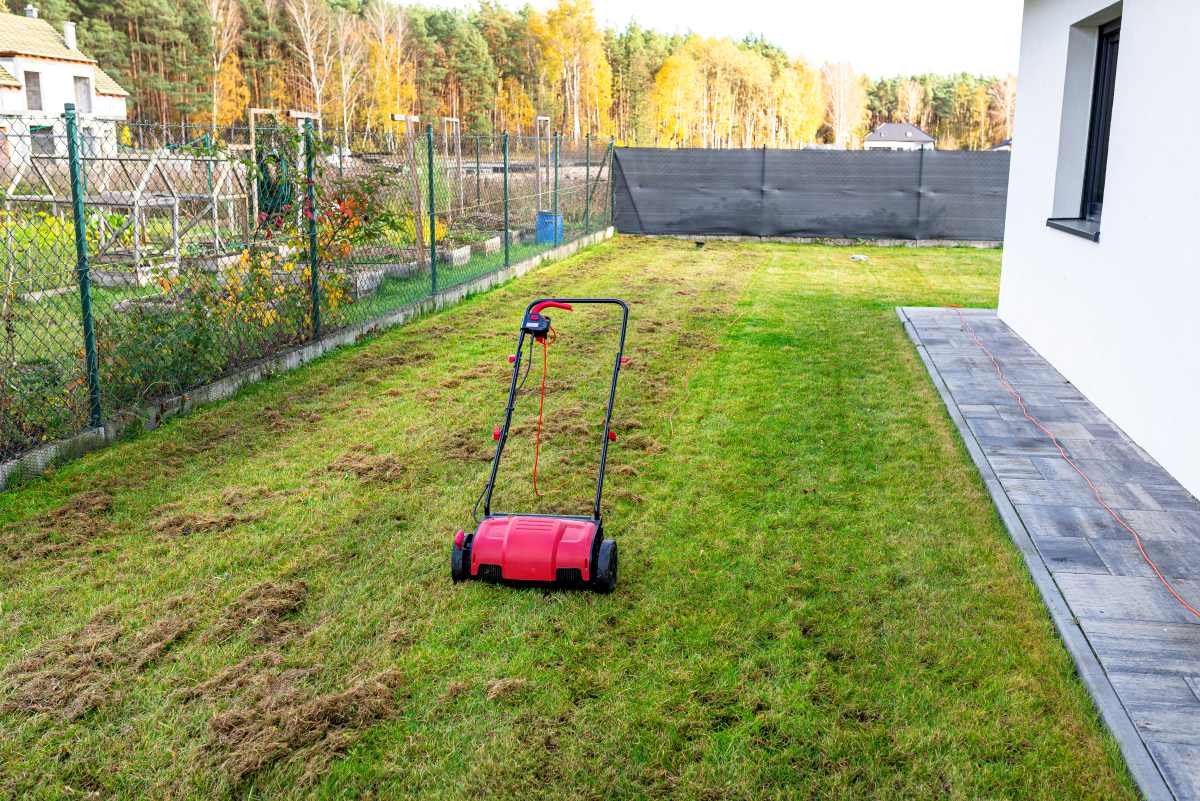
If you have a small garden and wonder how to keep the lawn always beautiful and healthy, scarification is one of the essential care procedures that you must perform periodically.
In this article you will find out what is the optimal period for scarification of the lawn, but also what are the steps to follow before and after this important operation.
What is lawn scarification and why is it important?
Lawn scarification consists of removing the layer of dead plant debris, moss and other deposits (“felt”) that accumulates at the base of the grass. If this layer becomes too thick, it prevents air, water and nutrients from properly penetrating the soil, affecting the health of the lawn.
Scarification helps aerate the soil, stimulates grass regeneration and prevents moss and fungal diseases.
When is the best time to scarify the lawn?
The optimal period for scarification of the lawn depends mainly on the season and weather conditions:
- Spring (March – April): This is the ideal time for the first scarification of the year. This season’s moderate temperatures and rainfall help the lawn regenerate quickly.
- Autumn: The second favorable period for scarification is in September-October. At this time the lawn is preparing for the cold season, and scarification helps it survive the winter better and come back strong the following spring.
Important: Do not scarify the lawn during very hot periods, in the height of summer or winter, as these conditions do not favor regeneration and can damage the lawn.
How to scarify the lawn correctly?
For optimal results, follow these steps:
1. Preparing the lawn before scarification
- Mow the grass: Before you start scarification, mow the lawn to about 3-4 cm. Thus, the scarifier will reach the layer of plant residues more easily.
- Check soil moisture: The soil should be slightly moist, but not wet. If the soil is too dry, scarification will be difficult; if it’s too wet, you risk damaging the lawn.
2. Scarification itself
- Choose the right equipment: For small gardens you can use a manual or electric scarifier, set to a depth of about 3-5 mm.
- Direction of work: Perform scarification in two passes in perpendicular directions to cover the entire surface evenly.
- Remove debris: Collect all plant debris resulting from scarification, either by hand with a rake or using a collector mower.
3. Lawn care after scarification
- Apply fertilizer: Immediately after scarification, it is recommended to apply a special lawn fertilizer, which helps the grass to recover quickly and grow densely.
- Irrigate properly: Make sure the lawn gets enough water in the days following scarification. Avoid, however, the excess that can lead to the appearance of fungal diseases.
- Reseeding (optional): If you notice areas of damaged grass or sparser areas, you can add lawn seed to ensure the uniformity and density of your lawn.
Frequently asked questions about lawn scarification:
Annual scarification (spring or autumn) is recommended. If you notice the rapid accumulation of plant debris, you can do two scarifications per year.
It is not recommended. Scarification is done at least one year after sowing, when the lawn is already well established.
For small gardens, you can use a manual or electric scarifier, while for larger areas gasoline scarifiers are recommended.
If scarification is not carried out regularly, the lawn can become choked, weak and prone to moss and disease.
Lawn scarification is a simple but highly effective process in maintaining a healthy and attractive lawn.
Respect the recommended periods (spring and autumn), prepare the lawn correctly and apply the proper care after scarification. Thus, you will always enjoy a beautiful, green and healthy lawn in your own colorful garden!


Comments are closed.