
Discover the complete guide to cheese varieties, from Romanian classics to international favorites. Learn about different types based on milk origin and ripening, plus tips for selecting and storing quality cheese.
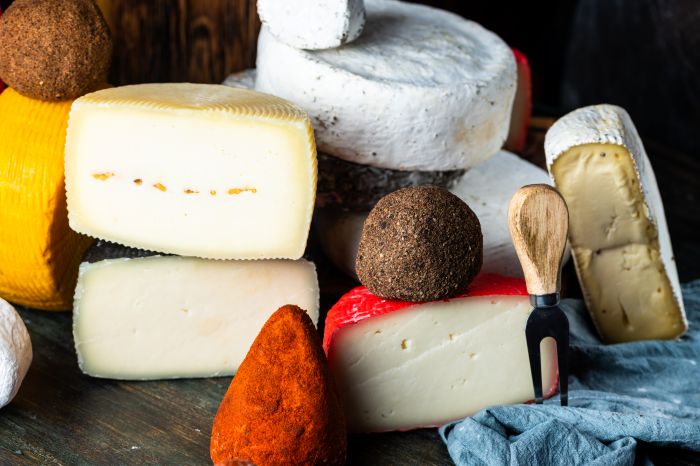
Types of Cheese: The Complete Guide for Cheese Lovers
Cheese is one of the most loved foods in the world – versatile, tasty and present in many culinary preparations, from simple sandwiches to sophisticated cheese platters. Although the term “cheese” is often used to designate a certain type of yellow cheese, the reality is that behind this name there are many varieties, each with its own characteristics, manufacturing methods and tastes.
In this article we will explore the main ones types of cheese, the differences between them, the areas of origin and delicious consumption ideas.
What is cheese?
The term “cheese” generally refers to semi-hard or hard, yellow, matured cheese obtained from (cow, sheep or goat’s) milk, which is sliceable and has an elastic texture.
Internationally, this category of cheeses is known as spun paste type cheeses or aged cheeses.
Types of cheese depending on the origin of the milk
1. Cow’s milk cheese
It is the most common type, having a mild, slightly sweet flavor and an elastic texture. It melts well and is frequently used in hot dishes: pizza, gratins, hot sandwiches, pasta.
Popular examples: Dalia cheese (Romania), Edam (Netherlands), Maasdam (Netherlands).
2. Sheep’s milk cheese
It has a more intense and salty taste with a slightly spicy aroma. It is preferred by those looking for cheeses with character. The texture is firmer than cow’s cheese.
3. Goat milk cheese
It has a distinctive taste, slightly acidic, with fresh notes. It is more easily digestible and is often preferred by people with lactose intolerance from cow’s milk.
Types of cheese depending on the ripening process
1. Fresh cheese
It is soft, with an elastic texture and a delicate taste. It is usually consumed within the first weeks of production.
2. Semi-ripened cheese
It has a more pronounced taste and a firmer texture. Maturation takes between 2 and 6 months.
3. Ripened cheese
It is intense in taste, with a hard and sometimes grainy consistency. It can be aged up to 12 months or more.
Popular types of cheese in the world
Dalia cheese (Romania)
One of the most popular Romanian varieties, made from cow’s milk, with a semi-firm texture and delicate taste. Ideal for direct or melted consumption.
Săveni cheese (Romania)
Traditional cheese from Botoșani, made from sheep’s milk, with a strong taste and distinct aroma. It is protected at European level (IGP).
Kashkaval (Balkans)
The name comes from Turkish and is used for matured cow’s or sheep’s milk cheeses, popular in Bulgaria, Serbia, Macedonia.
Aged Mozzarella (Italy)
Different from fresh mozzarella, the matured version is similar to classic cheese – denser, with a pronounced taste.
Provolone (Italy)
Ripened cheese, with a slightly smoky or spicy taste. It is produced in round or oblong shape.
Gouda (Netherlands)
It is one of the most famous varieties in the world. It can be young (creamy taste) or mature (strong taste, slightly sweet, with salt crystals).
Cheddar (England)
Although it is not considered a cheese in the classic sense, Cheddar falls into the category of semi-hard cheeses. The taste varies from mild to very intense.
Smoked cheese vs. unsmoked
Smoked cheese is put through a natural or artificial smoking process that gives it a distinct, woody flavor. Smoking is usually done with beech or cherry wood.
It is highly appreciated in hot dishes, such as:
- eggs with smoked cheese
- breaded cheese
- tarts and cheese pies
How do we choose a quality cheese?
✔ ingredients: Look for products that contain only milk, lactic cultures, rennet and salt. Avoid cheeses processed with vegetable oils.
✔ The smell: It should be pleasant, slightly sweet or salty, without sour smell.
✔ Texture: It should not be rubbery or crumbly, but firm and elastic.
✔ origin: If you prefer a traditional product, look for cheeses with a protected designation or from areas recognized for their quality.
How to store cheese?
- In the fridge, in cling film or cheese paper – not in airtight plastic so they don’t sweat.
- The ideal temperature: 4-8°C.
- Consumption time: After opening, it is best consumed within 5-7 days.
How do we consume cheese?
✨ On its own, along with nuts, grapes or dry white wine.
✨ In sandwiches – goes perfectly with roasted vegetables, ham or egg.
✨ Cooked – melts perfectly on pasta, pizza, potatoes au gratin or bruschetta.
✨ Fried – a real treat for lovers of crispy crust.
✨ On cheese boards – along with other cheeses, delicatessen, dried fruit and artisanal bread.
Cheese is not just a generic “yellow” cheese, but a whole universe of tastes and textures, shaped by the milk used, production techniques and ripening time. Whether you are a passionate gourmet or just want to improve your daily menu, knowing these types of cheese will help you choose the perfect option for every occasion.
Read also: What Wine Goes With Cheeses: The Complete Pairing Guide

Comments are closed.