This guide to flattering swimsuit styles helps you find cuts, support, and details that feel comfortable, look balanced, and suit your shape.
Guide to Flattering Swimsuit Styles
Shopping for swimwear can feel weirdly personal. A dress size you trust suddenly means nothing, the lighting is rude, and a suit that looked perfect online can feel all wrong the second it goes on. That is exactly why a guide to flattering swimsuit styles helps – not because there is one “right” body for any suit, but because certain cuts, fabrics, and design details change how a swimsuit fits, supports, and balances your shape.
The useful way to think about flattering swimwear is simple: it should feel secure, highlight features you like, and make getting dressed for the beach or pool less of a project. Flattering does not have to mean minimizing everything. Sometimes it means more support. Sometimes it means more leg. Sometimes it just means a suit that stays put when you move.
What flattering swimsuit styles really mean
A flattering swimsuit is not about hiding your body. It is about proportion, comfort, and personal preference. Two people with the same measurements may want completely different things from a swimsuit. One may want strong bust support and full coverage. Another may want a high-cut leg and a lower neckline because that feels more balanced and confident.
That is why fit matters more than trends. A trendy color or tiny detail can make a suit feel current, but the core of a good swimsuit comes down to construction. Look at how the bust is shaped, where the waistband or seams hit, how much stretch the fabric has, and whether the leg openings cut in or sit smoothly.
Guide to flattering swimsuit styles by design detail
If you want a faster way to narrow your options, focus on design features before you focus on body labels. These details tend to make the biggest difference.
Ruched fabric and wrap fronts
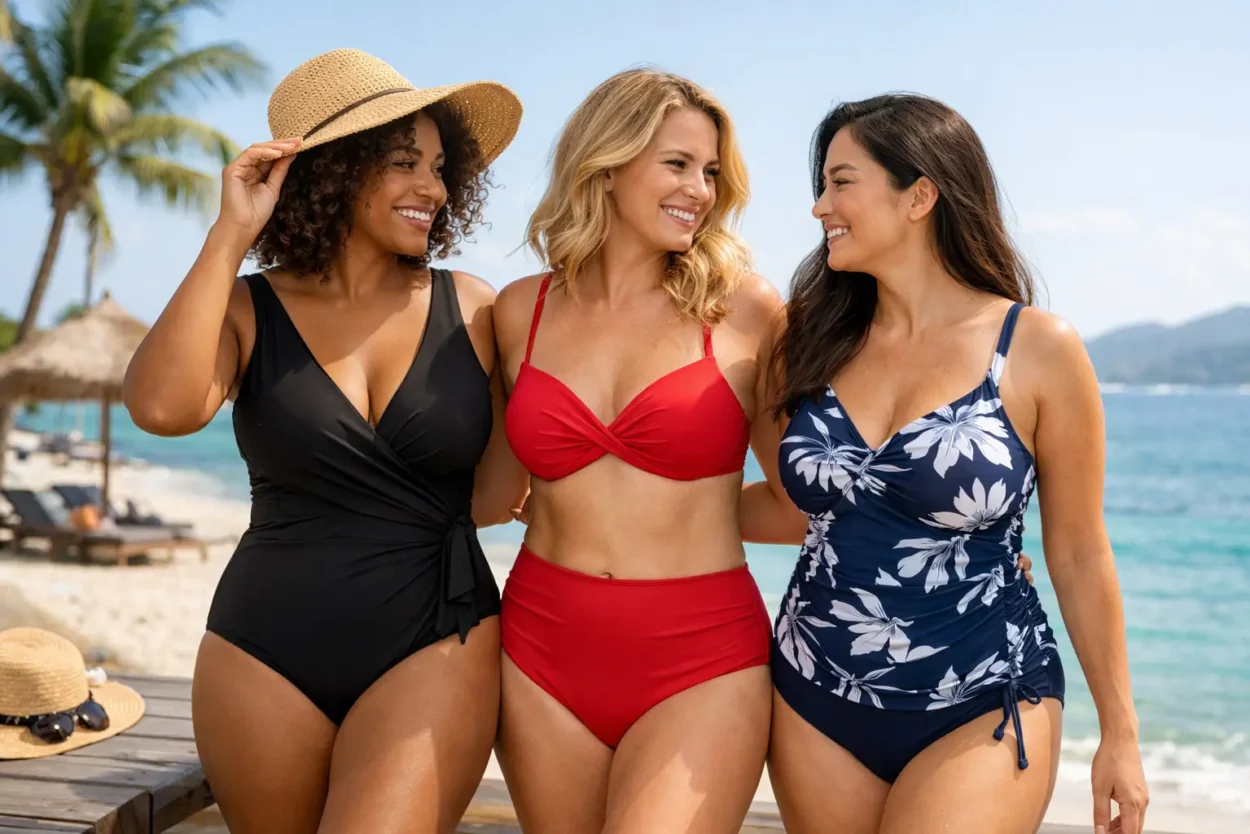
Ruching is popular for a reason. It softens the look of the midsection, adds texture, and can make a one-piece feel less flat and more shaped. Wrap fronts do something similar by drawing the eye diagonally, which creates a naturally balanced look through the torso.
This is a great choice if you want gentle definition without anything too structured. The trade-off is that heavy ruching can sometimes feel thicker or warmer, especially in very hot weather.
High-waisted bottoms
High-waisted bikini bottoms offer more coverage through the lower stomach and can create a smooth line at the waist. They also pair well with many top styles, from supportive underwire tops to sporty crop silhouettes.
The key is rise. If the waistband hits at your narrowest point, it often looks intentional and polished. If it lands awkwardly in the middle of the torso, it can feel less comfortable and less flattering.
High-cut legs
A higher leg opening can make legs appear longer and give a suit a more elongated shape. This works on many body types, especially if you feel better in a suit that does not visually shorten the hips and thighs.
That said, high-cut does not always mean high confidence for everyone. If you prefer more seat coverage, look for moderate high-cut styles rather than very retro or ultra-minimal versions.
Underwire, molded cups, and wide straps
Support changes everything, especially for fuller busts. Underwire tops, molded cups, side boning, and wider straps can make a swimsuit feel dramatically better within seconds. A flattering look often starts with not having to adjust your top every five minutes.
If you have a smaller bust, you may not need as much structure, but you still might like shaping from soft cups, triangle tops with removable padding, or tops with gathered center seams.
Color blocking and strategic seams
Panels at the waist, darker side sections, and angled seams can create a more sculpted look. These details are especially common in one-pieces and can be more effective than busy prints if your goal is clean, simple definition.
Prints still have their place. Smaller prints can soften the outline of the body, while larger prints or bright colors naturally draw attention wherever they are placed.
The best swimsuit shapes for common fit goals
The phrase “body type” can be helpful, but only up to a point. Most people are not a perfect category, so it makes more sense to shop for the result you want.
If you want more bust support
Look for one-pieces with built-in shelf bras, underwire bikini tops, halter tops with substantial bands, or balconette silhouettes. Adjustable straps are worth prioritizing because they let you fine-tune lift and comfort.
A tiny triangle top may still work if you like less support, but if you plan to swim, walk, or play beach volleyball, structure usually wins.
If you want more waist definition
Belted one-pieces, wrap styles, high-waisted bikinis, and suits with side ruching all help create shape through the middle. Deep V-necks can also make the torso look more defined by pulling the eye inward.
If belts feel too fussy, look for seams or contrast panels that do the same job with less hardware.
If you want to balance wider hips
Try tops with eye-catching details like ruffles, texture, brighter color, or a strong neckline. Off-the-shoulder styles and square neck tops can broaden the upper body visually, which creates balance.
On the bottom, medium to full coverage often sits more smoothly than very tight minimal cuts. The goal is not to hide the hips, just to choose proportions that feel harmonious.
If you want to add shape to straighter proportions
Cutout one-pieces, side-tie bottoms, textured fabrics, and suits with curved seams can all create more visual dimension. A high-cut leg and a structured top can also help add shape without making the suit overly complicated.
This is one of the easiest categories to shop because both sporty and fashion-forward styles tend to work well.
If you want more coverage without looking matronly
This is where modern swimwear has improved a lot. Fuller-coverage one-pieces, longline bikini tops, tankinis, and swim skirts now come in cleaner cuts and better colors. Look for sleek necklines, subtle waist detail, and solid fabrics rather than overly busy prints if you want coverage with a current feel.
Coverage is not the opposite of style. Often, it just means smarter construction.
One-piece vs. bikini vs. tankini
One-pieces are often the easiest place to start because they offer built-in structure and usually create a clean silhouette. They are especially helpful if you want tummy coverage, a more secure fit, or a suit that transitions easily from swimming to lounging.
Bikinis offer more flexibility because you can mix sizes and styles on top and bottom. That is a major advantage if your proportions are different top to bottom, which is extremely common. A flattering bikini is often less about showing more skin and more about getting a better custom fit.
Tankinis sit somewhere in the middle. They can be useful if you want coverage through the stomach but prefer two-piece convenience for fit or bathroom breaks. The challenge is that some tankinis can ride up or feel less sleek than a well-fitted one-piece, so fabric and length matter.
Fabric, fit, and the details people skip
Even the most flattering cut will fail if the fabric is thin, over-stretched, or poorly lined. Good swim fabric should feel compressive without being rigid. If a suit turns sheer when stretched or digs in harshly at the edges, it is not doing you any favors.
Pay attention to adjustable features. Ties, sliders, removable cups, and hook backs make a bigger difference than many shoppers expect. Also check the back coverage. A swimsuit can look perfect from the front and feel totally different once you move around.
If you are between sizes, the right choice depends on the suit. In a highly compressive one-piece, sizing up may be more comfortable. In a bikini top that loosens in water, sizing down may offer a better hold. There is no universal rule, which is why trying a few cuts is often more useful than obsessing over one number on the tag.
How to choose a swimsuit you will actually wear
The most flattering swimsuit is the one you do not spend all day adjusting. Think about your real plans. Are you sunbathing, swimming laps, chasing kids, going on vacation, or heading to a resort pool where you want something a little more polished? Different situations call for different priorities.
If you want one reliable option, a ruched or wrap-front one-piece with adjustable straps is hard to beat. If you like flexibility, a high-waisted bikini with a supportive top is one of the most wearable combinations out there. And if fashion matters just as much as function, a clean one-shoulder or square-neck suit can feel current while still being practical.
There is no prize for choosing the trendiest suit if it makes you feel stiff, exposed, or uncomfortable. The better move is choosing the style that makes you stand a little taller the minute you put it on. That is usually the suit that earns a permanent spot in your summer rotation.