
This beginner guide to chemical exfoliation explains acids, skin types, how often to use them, and how to avoid irritation or overdoing it.
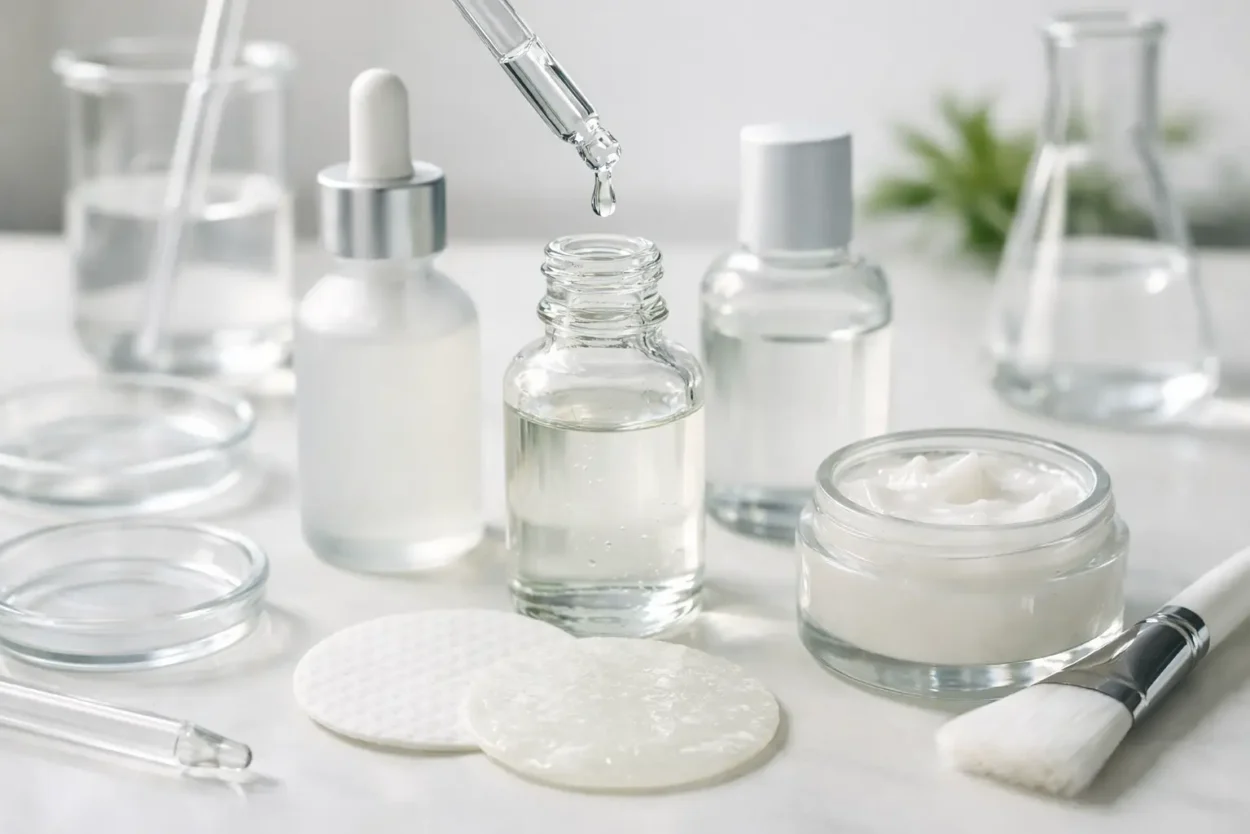
Beginner Guide to Chemical Exfoliation
If scrubs have ever left your face feeling raw, tight, or weirdly shiny, this beginner guide to chemical exfoliation will probably make your routine make a lot more sense. Chemical exfoliants sound intense, but they’re often gentler than grainy scrubs when you use the right one at the right pace.
The basic idea is simple. Instead of physically buffing away dead skin with a scrub or brush, chemical exfoliants use acids to loosen the bonds between old skin cells so they can shed more evenly. That can help with dullness, rough texture, clogged pores, post-breakout marks, and sometimes even fine lines. The catch is that more is not better. With exfoliation, the best results usually come from doing less than you think.
What chemical exfoliation actually does
Your skin naturally sheds dead cells, but that process can slow down for all kinds of reasons, including age, dryness, sun damage, and breakouts. When those dead cells hang around too long, skin can look flat and feel rough. Pores can also get backed up more easily.
Chemical exfoliation helps speed up that turnover in a controlled way. It can make skin look brighter, feel smoother, and absorb the rest of your skincare a little better. It’s also popular for acne-prone skin because some exfoliating acids can get into pores and help clear out oil and debris.
That said, exfoliation is not a fix for every skin issue. If your skin is inflamed, stinging, peeling, or dealing with a damaged barrier, adding acids usually makes things worse. Healthy-looking skin often comes from balance, not from using the strongest product on the shelf.
Beginner guide to chemical exfoliation acids
Not all exfoliating acids do the same job, so the best one depends on what your skin is like and what you want to improve.
AHAs
Alpha hydroxy acids, or AHAs, work mostly on the skin’s surface. They’re a common pick for dullness, uneven texture, and visible sun damage. Glycolic acid is the strongest-known option in this group because of its small molecular size, so it can be very effective, but also easier to overdo. Lactic acid is often a better starting point for beginners because it tends to be gentler and can feel a little more hydrating.
If your main goal is glow, smoother makeup application, or fading leftover marks from old breakouts, AHAs are often where people start.
BHAs
Beta hydroxy acid usually means salicylic acid. Unlike AHAs, it’s oil-soluble, which means it can move into pores and help break down buildup. That makes it especially useful for blackheads, whiteheads, and oily or acne-prone skin.
Salicylic acid can still be drying if you jump in too fast, but for congested skin it’s often more useful than a surface-focused acid.
PHAs
Polyhydroxy acids are the quieter option. They exfoliate more gently and are often better tolerated by sensitive or dry skin. If your skin gets irritated easily and you still want smoother texture, PHAs can be a smart entry point.
They may not give the dramatic overnight effect some people expect, but slower and steadier is often the better deal for beginners.
How to choose the right exfoliant for your skin type
If your skin is dry or sensitive, start with lactic acid or a PHA in a low-strength formula. These are usually easier to tolerate than strong glycolic acid treatments. If your skin is oily or regularly clogged, salicylic acid is often the most practical choice.
If your skin is combination, it depends on what bothers you most. Dullness and rough patches usually respond well to a mild AHA. Blackheads around the nose and chin often do better with a BHA. Some people eventually use both, but not at the same time when they’re starting out.
If you have rosacea, eczema, a compromised skin barrier, or you’re using prescription acne treatments, caution matters more than category. You may still be able to exfoliate, but a lower frequency and gentler formula are usually the safer route. When skin is already irritated, exfoliation should not be the first thing you add.
How often beginners should exfoliate
This is where people get into trouble. A product can be labeled gentle and still be too much if you use it every night from day one.
For most beginners, once or twice a week is enough to start. Give your skin at least two weeks before deciding whether you need more. If everything feels calm and your skin is handling it well, you can slowly increase frequency. Many people do well at two to three times a week. Daily use is not necessary for everyone, even if a brand says it’s safe.
Your skin will tell you when you’ve crossed the line. Tightness, unusual shininess, stinging when you apply basic products, redness, flaking, and breakouts that feel more angry than normal can all be signs you’re over-exfoliating.
How to use a chemical exfoliant in your routine
The easiest way to start is at night after cleansing and before moisturizer. Apply the exfoliant to clean, dry skin unless the product specifically says otherwise. Then follow with a simple moisturizer to help reduce irritation.
On exfoliation nights, keep the rest of your routine boring in the best way. Skip layering other strong actives until you know how your skin responds. That means being careful with retinoids, benzoyl peroxide, and high-strength vitamin C in the same routine. Some people can combine them eventually, but beginners usually do better when they separate them.
Sunscreen is non-negotiable the next morning. Exfoliated skin can be more vulnerable to sun damage, and skipping SPF can work against the brightening results you’re trying to get.
What percentage should beginners look for?
Higher numbers are not automatically better. Formula matters, pH matters, and your skin’s tolerance matters.
As a general rule, beginners often do well with a low to moderate strength product. Think lower-percentage lactic acid, a gentle salicylic acid leave-on, or a mild exfoliating toner or serum marketed for regular home use. Strong peel pads and high-percentage acid masks can wait.
A product that you can use consistently without irritation is far more useful than a strong one that leaves your skin upset for three days.
Common mistakes that make chemical exfoliation go wrong
The first is starting with too many products at once. If you introduce an acid, a retinoid, and a new cleanser in the same week, you won’t know what’s helping or what’s causing irritation.
The second is chasing fast results. Skin usually improves with consistency, not panic exfoliation. If your texture has been building up for months, it probably won’t disappear after two uses.
The third is using exfoliants on skin that is already compromised. If your face burns when you apply moisturizer, step away from the acids and focus on barrier repair first.
Another common mistake is assuming tingling means it’s working. Some formulas tingle. Some don’t. That sensation is not proof of effectiveness, and more sting does not mean better results.
How long does it take to see results?
You might notice smoother skin and a little more brightness within a few uses, especially with AHAs. Clogged pores and breakouts usually take longer, often several weeks of consistent use. Fading post-acne marks can take even more patience.
The most useful mindset is to watch for gradual improvement, not a dramatic overnight change. A good exfoliant should make your skin look more even and feel more refined over time, not leave it red and polished to the point of fragility.
When to stop and reset
If your skin suddenly becomes reactive, shiny in a tight way, patchy, or sore, stop exfoliating for a bit. Go back to a gentle cleanser, a basic moisturizer, and daily sunscreen. Once your skin feels normal again, you can decide whether to restart at a lower frequency or switch to a gentler acid.
There’s no prize for tolerating a product your skin clearly hates. The right routine is the one you can stick with comfortably.
A good beginner guide to chemical exfoliation should leave you feeling less intimidated, not more. Start with one product, use it sparingly, and let your skin set the pace. When exfoliation is done well, it doesn’t feel dramatic at all. It just quietly makes your skin look a little clearer, smoother, and more awake.

Comments are closed.