
Curious about castor oil lashes? Learn what it can and can’t do, how to apply it safely, and when to expect fuller-looking lashes at home.
Castor Oil Lashes: Does It Really Work?
If your lashes feel sparse after extensions, overzealous curling, or one too many rounds of waterproof mascara, castor oil lashes probably sound like an easy fix. The idea is simple: swipe on a cheap natural oil and wait for longer, fuller lashes. But the real answer is a little less dramatic and a lot more useful.
Castor oil is one of those beauty staples that keeps coming back because it is affordable, easy to find, and simple to use. What makes it popular for lashes is not that it has been proven to grow them like a prescription serum. It is that it can help lashes look healthier, feel softer, and break less easily. For many people, that alone makes lashes appear fuller over time.
What castor oil can actually do for lashes
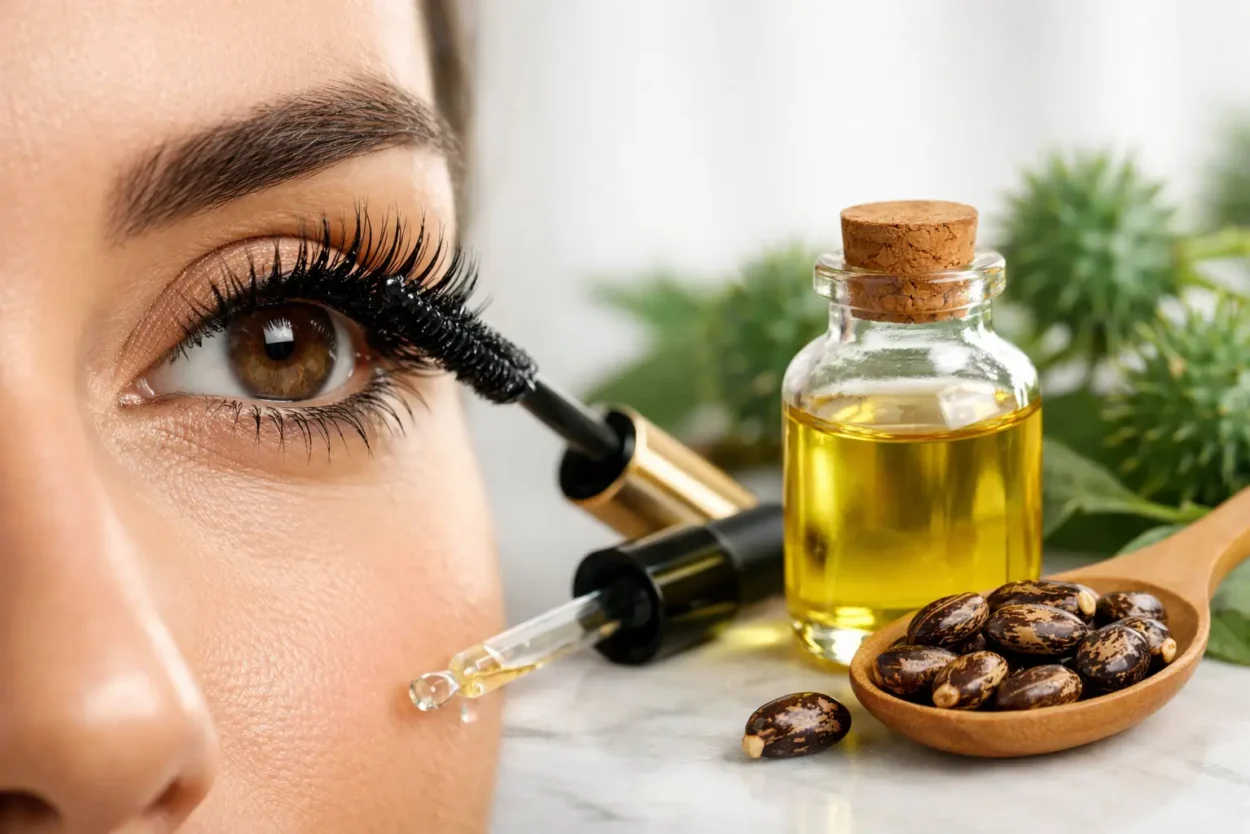
Castor oil is a thick vegetable oil pressed from castor beans. It is rich in fatty acids, especially ricinoleic acid, which is why it feels heavier and more coating than lighter oils. On lashes, that coating effect is the main benefit.
When your lashes are dry or brittle, they are more likely to snap, shed from friction, or look uneven at the ends. Castor oil can help condition the hair shaft, reduce that dry feel, and add a slight glossy look that makes lashes seem darker and a bit more defined. If your lashes are breaking from makeup removal, rubbing, or dryness, a conditioning oil may help them hold on to their length better.
That said, there is no strong evidence that castor oil directly speeds up eyelash growth. If you are hoping for a dramatic before-and-after similar to a lash growth serum, manage expectations. Think of it more like a supportive treatment than a miracle one.
Why castor oil lashes still get so much hype
Part of the appeal is price. Compared with lash serums, castor oil feels low-risk for your wallet. It also fits the beauty habit a lot of people already have – using natural oils for hair, brows, and dry skin.
The other reason is that lashes often respond well to gentler care. If you stop sleeping in mascara, remove eye makeup more carefully, and add a small amount of conditioning oil at night, your lashes may naturally look better within a few weeks. In that situation, castor oil gets the credit, even though the bigger win may be the healthier routine around it.
Castor oil lashes before and after: what results are realistic?
Realistic results usually fall into three categories. First, lashes may look shinier and a little darker because the oil coats them. Second, they may feel less brittle, which can reduce breakage over time. Third, if your lashes were damaged or dried out, they may gradually appear fuller simply because fewer hairs are snapping off.
What you are less likely to see is a sudden jump in length or density. Lash growth follows a natural cycle, and no basic oil can completely override that. Results also depend on why your lashes seem thin in the first place. If they are naturally short, castor oil may not change much. If they are stressed from makeup habits or lash extensions, you may notice more of a difference.
How to apply castor oil to lashes safely
This is the part that matters most. Your eye area is sensitive, and castor oil is thick. Using too much is the quickest way to end up with blurry vision, irritation, or a greasy pillowcase.
Start with a clean face and fully removed eye makeup. Use a clean spoolie or a very fine eyeliner brush, and dip it into a tiny amount of oil. You want the brush barely coated, not wet. Then lightly sweep it across the lashes, focusing more on the mid-lengths and tips than flooding the lash line.
Less is better here. You do not need enough oil to see obvious buildup. If the product is dripping or getting into your eyes, you are using too much.
Best time to use it
Night is easiest because you can leave it on while you sleep and cleanse in the morning. If you use it during the day, it can interfere with mascara and make the eye area feel heavy.
How often to use it
A few nights a week is enough for most people, especially at first. If your skin and eyes tolerate it well, you can try nightly use. More is not always better, though. If the area feels irritated or congested, scale back.
Choosing the right castor oil for lashes
Not every bottle on the shelf is ideal for the eye area. Look for castor oil that is pure, cold-pressed, and free from added fragrance or essential oils. Extra ingredients may sound appealing, but around the eyes, simple is usually smarter.
Packaging matters too. A bottle with a dropper can be convenient, but hygiene matters more than style. Always use a clean applicator, and never share it. If you buy a lash wand or spoolie for application, wash it regularly.
Important safety tips before you try it
Natural does not automatically mean irritation-free. Castor oil can still bother sensitive skin, and anything applied too close to the eye can sting.
Do a patch test on a small area of skin before using it near your lashes. If you have a history of eye irritation, eczema around the eyes, blepharitis, or frequent styes, be extra cautious. Contact lens wearers may also find thick oils annoying if product migrates into the eye overnight.
If you notice redness, itching, swelling, burning, or blurry vision that does not go away quickly, stop using it. And if you ever apply it with an old mascara wand, skip that plan immediately. A used wand can carry bacteria, which is the last thing you want near your eyes.
Castor oil vs lash serums
If your goal is healthier-looking lashes on a budget, castor oil makes sense. It is inexpensive, straightforward, and may help with softness and breakage. If your goal is maximum growth, a dedicated lash serum is more likely to give visible results, though that depends on the formula.
There is a trade-off. Some lash serums are more effective because they are designed to influence the lash cycle, but they can also be more expensive and may cause irritation for some users. Castor oil is simpler and gentler for many people, but the payoff is usually subtler.
That makes the choice pretty practical. If your lashes are damaged and you want a low-cost conditioning step, castor oil is worth trying. If you want a stronger growth-focused result, you may outgrow the DIY route quickly.
What helps lashes more than castor oil
Sometimes the biggest improvement comes from habits, not products. If your lashes have been through a rough patch, take a look at your routine. Rubbing your eyes, peeling off mascara, sleeping in makeup, and using waterproof formulas every day can all make lashes more fragile.
Being gentler with removal often helps more than adding another treatment. Use a soft makeup remover, let it break down mascara before wiping, and avoid tugging. If you use a lash curler, make sure it is clean and that the pad is not old or cracked. Small changes can protect the lashes you already have, which is often the fastest route to a fuller look.
How long does it take to see a difference?
If castor oil is going to help, most people notice the cosmetic benefits first. Within a couple of weeks, lashes may look glossier, softer, or less dry. A fuller appearance from reduced breakage can take longer, often several weeks to a couple of months.
Patience matters because lashes grow slowly. It also helps to be honest about what you are measuring. If you expect dramatic new length, you may think it is not working. If you are looking for less breakage and a healthier overall look, the results are easier to spot.
Is castor oil worth trying for lashes?
For many people, yes – as long as expectations stay realistic. Castor oil is not a proven lash growth miracle, but it can be a useful conditioning step for dry, brittle, or post-extension lashes. It is affordable, simple, and easy to test for a few weeks without overcomplicating your routine.
The best way to think about castor oil lashes is this: it may not create brand-new lashes out of nowhere, but it can help the lashes you already have look a little better and hold up a little longer. Sometimes that is all you need to make your eyes look more awake and your makeup routine feel easier.
If you decide to try it, keep the application light, stay consistent, and pay attention to how your eyes respond. The smartest beauty habits are usually the ones that are easy to stick with.