
Air fryer vs oven: compare speed, energy use, capacity, texture, and cleanup to choose the best appliance for your weeknight cooking routine at home.
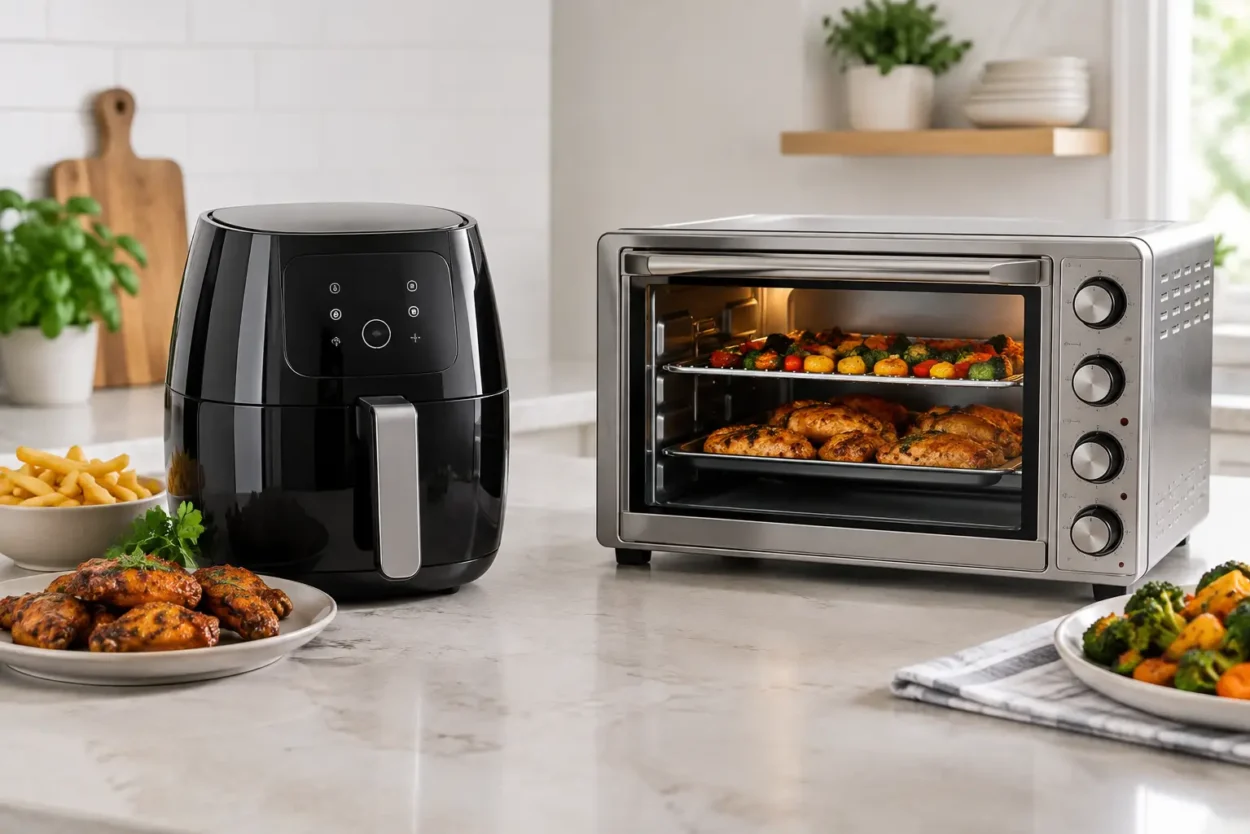
Air Fryer vs Oven: Which One Fits Your Kitchen?
A crispy batch of chicken tenders after work sounds simple – until you are deciding whether to heat the whole oven or reach for the countertop air fryer. In the air fryer vs oven debate, there is no single winner for every meal. The better choice depends on how much you are cooking, how quickly you need dinner, and whether crunch or capacity matters most.
For many kitchens, an air fryer is not a replacement for an oven. It is a handy second cooking zone that makes small, fast meals easier. Understanding where each appliance shines can help you use both with less guesswork and better results.
Air Fryer vs Oven: The Biggest Differences
An air fryer is essentially a compact convection cooker. A powerful fan circulates very hot air around food in a small basket or tray, helping the surface brown and crisp quickly. Because its cooking chamber is small, it usually preheats fast and directs heat closely around the food.
A conventional oven has more space and more flexibility. It can roast a whole chicken, bake a casserole, hold multiple sheet pans, or cook dinner for a crowd. Even convection ovens, which also use a fan, generally take longer to preheat and may not circulate air as intensely around a small batch of food.
That difference in size shapes almost every practical decision. The air fryer favors speed, crisp edges, and meals for one to three people. The oven favors volume, baking projects, and recipes that need steady, even heat over a longer period.
When an Air Fryer Is the Better Choice
If your weeknight meals often involve a few servings of vegetables, salmon fillets, frozen snacks, or reheated leftovers, an air fryer can be a serious time-saver. Most models preheat in just a few minutes, and many foods cook faster than they would in a standard oven.
It is especially good at foods that benefit from a dry, crisp exterior. Think roasted broccoli with browned tips, crispy chickpeas, potato wedges, Brussels sprouts, wings, and breaded chicken. A light coating of oil helps food brown, but you typically need far less than you would for deep-frying.
Air fryers also make reheating more appealing. Pizza, fries, fried chicken, and quesadillas often regain their texture instead of turning soft and steamy, as they can in a microwave. For anyone who meal-preps lunches or regularly has leftover takeout, that alone can make the appliance worthwhile.
Air fryer advantages
The small chamber is an advantage when you are cooking small portions. It heats quickly, uses less time for many everyday meals, and avoids warming up the entire kitchen during hot weather. This can be particularly helpful in apartments, dorms, and smaller homes where a full oven makes the space feel warmer.
Cleanup is often manageable, too. Many baskets and trays are dishwasher-safe, though washing them by hand soon after cooking can prevent baked-on residue. Lining the basket with perforated parchment made for air fryers can reduce mess, but never block the airflow with solid paper or foil.
Where air fryers can disappoint
Capacity is the biggest limitation. Crowding the basket prevents air from circulating, which means limp fries, pale vegetables, and uneven browning. A family-size air fryer holds more food, but it still may require cooking in batches for a household of four or more.
Not every recipe belongs in an air fryer. Wet batters can drip before they set, delicate baked goods may cook unevenly, and large casseroles simply will not fit. Some foods also need turning or shaking halfway through, so it is not always a completely hands-off method.
Air fryers can be noisy, too. The fan sound is usually not disruptive, but it is more noticeable than an oven. And because models vary widely, cooking times from a recipe may need a little adjustment in your own machine.
When an Oven Makes More Sense
The oven earns its place when dinner needs space. A sheet pan of roasted vegetables, a baked pasta dish, several chicken breasts, or a dozen cookies is easier to manage in an oven than in a small basket. You can cook a main dish and side dish at the same time, especially if you have multiple racks.
Baking is another clear win for the oven. Cakes, breads, pies, casseroles, and large trays of cookies rely on stable, roomy heat. While some air fryers include bake settings, their compact interiors can brown the top of baked goods too quickly before the center is fully done.
An oven is also better for entertaining and holiday cooking. You do not want to make five batches of roasted potatoes while guests wait for dinner. Larger cookware, Dutch ovens, roasting pans, and casserole dishes are all built for oven use, giving you far more menu options.
Oven advantages
An oven can handle almost any cooking method: baking, broiling, roasting, braising, warming, and low-and-slow cooking. It offers the flexibility to make one large recipe rather than several small rounds. If you cook for a family, host friends, or enjoy weekend baking, that versatility is hard to beat.
A convection oven narrows the gap with an air fryer. Its fan improves browning and speeds up roasting compared with a standard bake setting. For a medium or large batch of vegetables and fries, convection can deliver crisp results without the need to work in batches.
Where ovens fall short
For a single serving of frozen fries or two pieces of fish, a full oven can feel inefficient. Preheating takes longer, cooking a small quantity may use more energy, and the kitchen can become noticeably warm. The large interior also means less intense circulating heat around smaller foods, so a basket-style air fryer often produces a crisper finish.
Cleanup can be more involved as well. Sheet pans, baking dishes, oven racks, and splatters all add up. Using parchment paper or a silicone baking mat on sheet pans can make a difference, but it does not eliminate the occasional need to clean the oven itself.
How to Choose Based on Your Routine
Think about what you actually cook on an average Tuesday, not just the meals you imagine making. If you usually prepare dinner for one or two people and want fast vegetables, proteins, and crispy convenience foods, an air fryer will likely get frequent use. It is also a smart choice for people who rarely bake but want an easier alternative to microwaving leftovers.
If you cook for four people, make large batches for the week, or rely on casseroles and sheet-pan dinners, your oven should remain the main event. A countertop air fryer can still be useful for sides, snacks, or reheating while the oven handles the larger dish.
There is also a middle ground. Many newer ovens include an air-fry setting, often paired with a perforated tray. It can work well for larger portions, although results may not be quite as fast or intensely crisp as a compact basket air fryer. A toaster oven-style air fryer is another option for people who want more capacity without committing to a second full-size appliance.
Simple Cooking Adjustments for Better Results
When converting oven recipes to an air fryer, start by lowering the temperature by about 25°F and checking food earlier than the recipe suggests. Small pieces may cook much faster, particularly vegetables and breaded foods. Leave space between items, and shake the basket or turn food halfway through for more even browning.
When using an oven for foods you would normally air fry, choose the convection setting if available. Spread food in one layer on a preheated sheet pan, use a little oil, and avoid piling ingredients on top of one another. A crowded pan traps steam, which is the enemy of crispness.
Food safety still matters with either appliance. Use a thermometer for chicken, turkey, pork, and other proteins rather than relying on color alone. Let hot baskets, trays, and pans rest carefully on a heat-safe surface, especially in a busy kitchen.
The Best Answer May Be Both
The air fryer vs oven choice is less about replacing one appliance with another and more about matching the tool to the meal. An air fryer wins on quick, crispy, small-batch cooking. An oven wins on capacity, baking, and flexible family meals.
If you already own both, let your dinner plan decide: use the air fryer when speed and crunch are the goal, and save the oven for the meals meant to fill the table. That small shift can make everyday cooking feel easier, not more complicated.