Use this guide to Egyptian street food to find must-try dishes, smart ordering tips, and the best flavors to look for from Cairo to Alexandria and beyond.
Guide to Egyptian Street Food for First-Timers
The first clue that you have found a great Egyptian street-food stall is usually the crowd. Office workers lined up for a paper-wrapped sandwich, a cook rapidly spooning sauce over steaming bowls, and the scent of toasted cumin are all good signs. This guide to Egyptian street food will help you order confidently, find the flavors worth seeking out, and eat well without turning every meal into a complicated decision.
Egyptian street food is filling, affordable, and built around ingredients that do a lot with a little: beans, lentils, rice, bread, herbs, vegetables, and bright sauces. You will find plenty of meat, too, but some of the country’s most loved everyday dishes are naturally vegetarian. That makes it an especially fun food culture for travelers with different budgets and eating styles.
What Makes Egyptian Street Food So Good?
Street food in Egypt is not limited to snacks between sightseeing stops. For many locals, it is breakfast before work, a quick lunch, or dinner picked up on the walk home. The best dishes feel generous rather than fussy, with warm bread, crunchy toppings, and sauces that bring acidity, heat, or garlic to every bite.
Flavors are often savory and layered instead of intensely spicy. Cumin, coriander, garlic, chili, tomato, lemon, and vinegar show up again and again. If you enjoy chickpeas, lentils, fried foods, and fresh herbs, you will have plenty to love.
Portions can be larger than expected, particularly with dishes like koshari and fiteer. A good approach is to share when you can, or make one substantial street-food meal your main meal of the day. This lets you save room for juice, sweets, or a late-night sandwich.
A Guide to Egyptian Street Food: 10 Dishes to Try
Ful Medames
Ful is Egypt’s classic breakfast, made from slow-cooked fava beans seasoned with oil, lemon, cumin, salt, and sometimes chopped tomato or onion. It is usually served in a bowl with baladi bread, a round, chewy whole-wheat-style flatbread.
The texture ranges from chunky to creamy depending on the stall. Ask for extra lemon if you like a fresher flavor, or chili if you want heat. Since ful is inexpensive, satisfying, and vegetarian, it is one of the easiest first orders for a street-food beginner.
Ta’ameya
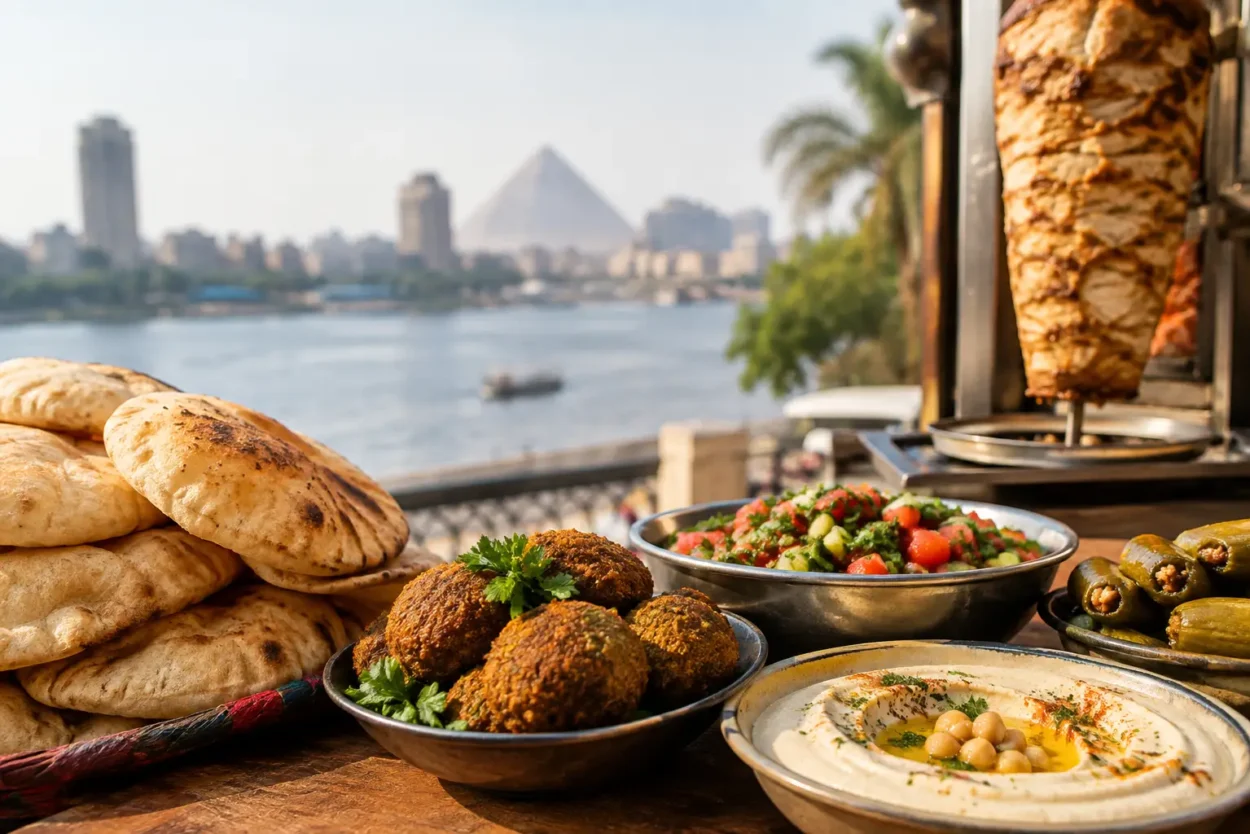
Egyptian ta’ameya is the local version of falafel, but it is typically made with fava beans rather than chickpeas. That gives it a greener interior and a softer, fluffier center beneath the crisp fried shell. Fresh herbs and spices make it taste bright rather than heavy.
Order ta’ameya in a sandwich with salad, pickles, and tahini, or buy a few pieces to eat while walking. It is best hot from the oil, so choose a busy vendor where batches are turning over quickly.
Koshari
Koshari is the dish to order when you want something unmistakably Egyptian and seriously filling. A bowl combines rice, lentils, macaroni, chickpeas, crispy fried onions, and tomato sauce. It is usually finished with a garlicky vinegar sauce and optional chili sauce.
It may sound like a lot of starch in one bowl, and it is. That is also the point. The contrast between soft grains, tangy sauce, and crunchy onions makes it comforting, affordable, and deeply satisfying. Start with a small or regular size if you plan to keep tasting through the day.
Hawawshi
Hawawshi is seasoned ground beef tucked inside bread and baked or pressed until the outside turns crisp. The meat is often mixed with onion, parsley, pepper, and warm spices, making it a bold, savory choice for lunch or dinner.
Quality varies more here than with simple bean dishes. Look for a place preparing it to order or pulling hot rounds from the oven. If you do not eat beef, skip this one and opt for ta’ameya or koshari instead.
Shawerma
You will see shawerma all over Egyptian cities, carved from a rotating stack of seasoned meat and tucked into small rolls or flatbread. Chicken and beef are common, often paired with garlic sauce, tahini, pickles, or fries.
Shawerma is familiar to many American travelers, but the local sauces and pickles make it worth trying. The best version has crisp edges from the spit and bread that is warmed just before serving.
Fiteer Meshaltet
Fiteer meshaltet is Egypt’s answer to a flaky, buttery layered pastry. It can arrive plain, stuffed with cheese or meat, or served sweet with honey, powdered sugar, or molasses. A full fiteer is rich enough for a group, especially when it is served with several fillings and dips.
It is not always a grab-and-go item, but it is widely sold from casual bakeries and food shops. Choose a savory filling at lunch or split a sweet version for dessert after dinner.
Liver Sandwiches
Alexandria is especially known for kebda, or spiced liver sandwiches. Thin slices of liver are cooked quickly with garlic, peppers, and spices, then packed into soft bread with a hit of chili and tangy sauce.
This is a more adventurous pick, but it is beloved for good reason when freshly cooked. If you are trying it for the first time, order from a vendor with a strong local following and a visibly hot grill.
Grilled Corn and Roasted Sweet Potatoes
When you want a lighter street snack, look for grilled corn or roasted sweet potatoes, called batata. Corn is often charred over coals and seasoned simply, while sweet potatoes are roasted until soft and caramelized inside.
Both are easy, inexpensive, and ideal for an evening stroll. They also offer a welcome break from fried food if you have spent the day sampling sandwiches and pastries.
Fresh Sugarcane Juice
A glass of sugarcane juice, or asab, is one of Egypt’s most refreshing street drinks. Vendors feed long canes through a press and serve the pale green juice cold. It is naturally very sweet, with a grassy, clean finish.
Because it is sweet, think of it as a treat rather than hydration for an entire afternoon. Freshly pressed juice from a clean, busy shop is your best bet.
Basbousa and Konafa
Egyptian sweets are often syrupy, rich, and made for sharing. Basbousa is a soft semolina cake soaked in sweet syrup, sometimes topped with almonds or coconut. Konafa uses fine shredded pastry, often layered with cream, nuts, or cheese and finished with syrup.
These are great choices from established bakeries where the pastries are displayed in high turnover. A small square goes a long way, especially after a koshari lunch.
How to Order Street Food With Confidence
The simplest rule is to follow the locals. A busy stall with a steady flow of customers is more likely to have freshly cooked food and ingredients moving quickly. Peak breakfast, lunch, and dinner hours are often the safest and most flavorful times to visit.
Pointing is perfectly acceptable if you do not share a language, and many popular spots have someone who can help in basic English. Learn a few useful words if you can: “shukran” means thank you, while “la shatta” means no chili. If you like heat, ask for shatta, the common chili sauce, but add it slowly. Its intensity can vary dramatically from one counter to the next.
Bring small cash for local stalls, and expect food to be served in paper, foil, or simple plastic containers. Street food is generally casual and fast. Eat nearby, step aside after ordering, and do not worry about making the experience formal.
Smart Food Safety Tips for Travelers
A little common sense goes a long way. Choose food that is cooked hot in front of you or served from a pot that is actively steaming. Fried ta’ameya, fresh shawerma, and hot koshari are usually easier choices than foods that have been sitting out.
Be more selective with raw salads, unpeeled fruit, ice, and sauces that appear to have been standing in warm weather. Your comfort level may depend on your travel experience and digestion, but it is reasonable to begin with cooked dishes and bottled water. If you have a severe food allergy, communicate it clearly and avoid stalls where cross-contact is likely, especially around sesame, nuts, dairy, and fried foods.
Also, pace yourself. Egyptian street food is deliciously rich, and trying ful, ta’ameya, koshari, hawawshi, and syrupy dessert in one afternoon can be a lot. Pick two or three things, eat slowly, and return tomorrow for the rest.
The most memorable street-food meal may be the one you did not plan: a hot ta’ameya sandwich at breakfast, corn by the Nile at sunset, or a bowl of koshari after a long day on your feet. Stay curious, choose busy stalls, and let your appetite guide the next order.