Use decluttering before after photos to plan a realistic reset, with room-by-room steps that clear clutter and help your home stay calm every day, too.
Decluttering Before After Results That Last
That crowded kitchen counter, chair piled with laundry, or bathroom drawer that will not close is rarely just a cleaning problem. It is usually a decision problem. Looking at decluttering before after results can be motivating because they make one thing clear: a calmer home is built through small choices, not a single perfect weekend.
The most satisfying transformations are not always the most dramatic ones. They are the spaces that become easier to use on a regular Tuesday morning, when you are rushing out the door, making dinner, or trying to relax. Here is how to create a realistic before-and-after reset that looks good, feels lighter, and actually lasts.
What Decluttering Before After Photos Can Teach You
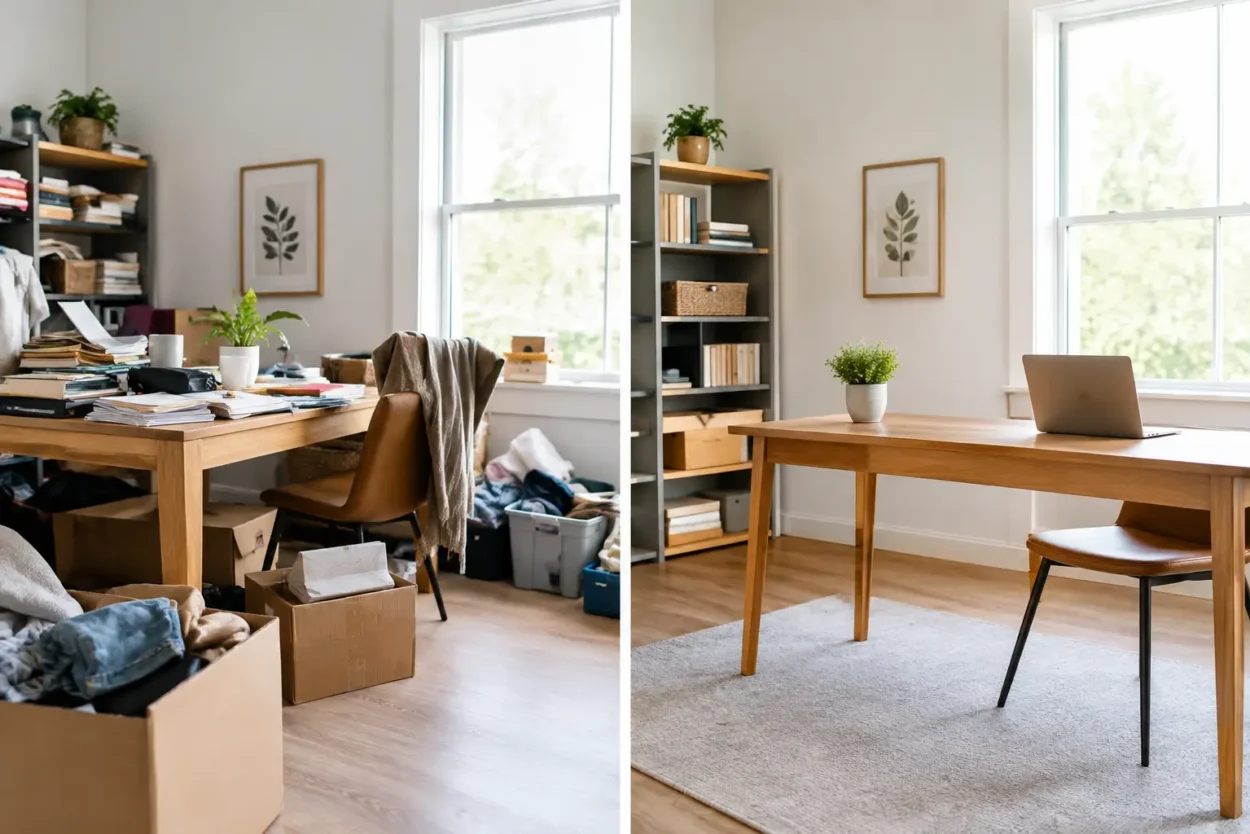
Before-and-after images make decluttering look simple: a messy room becomes a peaceful one. But the useful lesson is not that every surface should look empty. It is that each item needs a clear reason and a clear place.
A successful after photo usually has three things working in its favor. There is less visual noise, everyday items are easy to reach, and storage is not packed beyond capacity. Those details matter more than matching bins or a picture-perfect shelf.
Photos can also help you spot what you stop noticing in daily life. A pile of mail by the door may signal that you need a paper routine. A bathroom cabinet overflowing with skincare may mean you are buying duplicates. A closet that feels impossible to use may be holding clothes for several versions of your life instead of the one you live now.
Use inspiration as a guide, not a standard you have to copy. A home with children, pets, roommates, or a small amount of storage will not look exactly like a staged image online. It can still feel organized, welcoming, and fully yours.
Start With an Honest Before
Taking a quick before photo is optional, but it is surprisingly helpful. It gives you a clear starting point and keeps you from underestimating your progress halfway through. More importantly, it helps you see the room as it is rather than as you hope it will be.
Pick one small, high-impact area
Do not begin by emptying every closet in the house. Choose a space that frustrates you often and can be finished in one session. Your nightstand, entryway drop zone, kitchen junk drawer, or bathroom counter are all good places to start.
Small projects create visible momentum. Once a drawer closes easily or a counter becomes usable again, the next decision feels less intimidating. Large-scale whole-home cleanouts can work, but they are not always practical if you have a busy schedule or get overwhelmed by piles.
Define what the space needs to do
Before you remove anything, name the job of the area. An entryway needs to make leaving and arriving easier. A pantry needs to make meals easier to plan. A bedroom should support rest and getting dressed.
This simple question keeps the process practical: Does this item help this space do its job? If the answer is no, it may belong somewhere else, need to be stored, donated, recycled, or discarded.
Use a Simple Decluttering Method
The fastest way to lose energy is to pick up every item and tell yourself you will decide later. Give yourself a few clear categories from the beginning: keep here, move elsewhere, donate or sell, recycle, and trash.
As you work, avoid organizing items you do not truly want. A beautiful container can hide clutter, but it cannot solve it. First reduce what is unnecessary. Then organize what remains.
When you are unsure about an item, consider these questions:
- Do I use this in my current routine?
- Would I buy this again today?
- Do I already own something that does the same job?
- Is keeping this worth the space it takes up?
Sentimental pieces deserve more care than a quick yes-or-no decision. You do not have to get rid of every meaningful object to have an organized home. Try choosing a limited container, shelf, or memory box for the items that matter most. A thoughtful boundary protects the memories without letting them take over every available surface.
Reset the Rooms That Create Daily Clutter
Some areas collect clutter faster because they support busy routines. Rather than aiming for a magazine-ready home, build simple systems around the places you use most.
Make the entryway easier to maintain
Shoes, bags, receipts, and jackets tend to land near the door because they need a landing spot. Give each category one. A basket for shoes, a hook for bags, and a small tray for keys can make a major difference.
Keep only the outerwear and shoes currently in rotation nearby. Seasonal items can move to a closet or storage bin. This makes the area look clearer, but it also makes finding what you need much faster.
Clear kitchen counters for real life
Kitchen counters are often treated as storage, especially in smaller homes. Start by removing everything, then return only the appliances and tools you use several times a week. The rest can go in a cabinet, pantry, or donation box if it has not earned its space.
Be realistic about convenience. If you make coffee every morning, your coffee maker belongs on the counter. If a stand mixer comes out only for holiday baking, storing it makes more sense. The goal is not an empty kitchen. The goal is a kitchen that is easy to cook in and easy to wipe down.
Edit the bathroom by category
Bathrooms can hold an impressive number of half-used products. Gather skincare, makeup, hair products, medications, and toiletries by category, then check expiration dates and toss anything old, leaking, or no longer useful.
Keep your daily essentials where you can reach them, but avoid storing backups in multiple places. One designated spot for extras helps prevent accidental repeat purchases. Clear containers may be useful here, although labels matter more than aesthetics when several people share the room.
Give the bedroom a calmer finish line
A bedroom does not need to be minimal to feel restful. It does need a place for clothes that are clean, clothes that need washing, and items that belong elsewhere. A hamper, a hook, and a small donation bag can solve many of the piles that build up over time.
If your closet is the problem, start with one clothing category instead of everything at once. Try T-shirts, jeans, or workout clothes. Keep what fits, feels good, and works with your current lifestyle. Holding onto a few aspirational pieces is fine, but an entire closet of guilt is not a useful wardrobe.
Create an After That Can Handle Real Life
The best after is not the one you photograph right after finishing. It is the one that still works two weeks later. That requires leaving a little empty space in drawers, cabinets, and baskets.
Overfilling storage is one of the quickest ways to recreate clutter. When a drawer is packed tightly, putting something away becomes annoying, so it ends up on the counter instead. Aim to leave room for items to move in and out without a struggle.
Give frequently used items the easiest homes. Put everyday dishes near the dishwasher, charging cords near the outlet you use, and pet supplies where you feed your pet. Organization works best when it follows your habits instead of asking you to invent a new personality.
A short reset routine also helps. Spend five or ten minutes each evening returning items to their places, clearing one main surface, and checking the room you will use first tomorrow. This is not about keeping a flawless home. It is about preventing a small buildup from turning into a stressful project.
When Your After Does Not Look Dramatic
Sometimes decluttering creates a subtle result. You may not see a huge visual transformation, especially in a closet, cabinet, or drawer. That does not mean the effort failed.
Notice the functional wins: you can find your favorite sweater, make lunch without moving stacks of papers, or get ready without searching through expired makeup. Those improvements save time and lower everyday friction, which is often more valuable than a striking photo.
Your home should support the life you have, not pressure you to perform a certain style. Keep what is useful, make room for what you enjoy, and let each small before-and-after change remind you that calm can be created one decision at a time.