Winter doesn’t mean giving up fresh vegetables. Explore traditional and modern preservation methods—from pickling and freezing to drying and storage—to enjoy garden-fresh produce all year long.
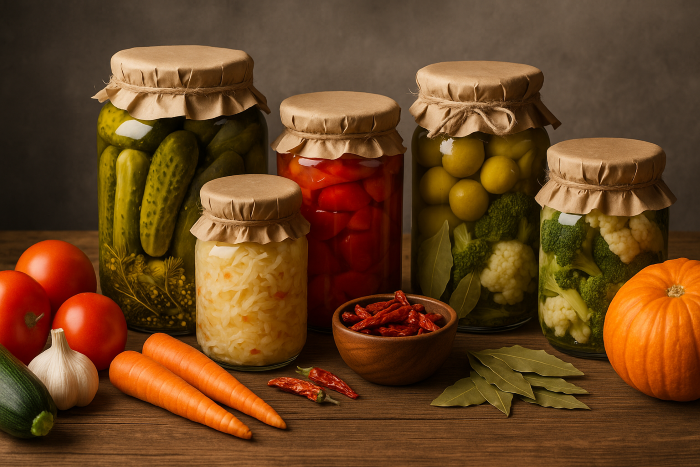
How to Preserve Vegetables for Winter – Traditional and Modern Methods
Winter doesn’t mean you have to give up the taste and nutrients of fresh vegetables. Fortunately, there are numerous methods, both traditional and modern, that help you preserve vegetables for the cold months without losing their flavor or nutritional properties. In this article, we present the most effective preservation techniques so you can enjoy your garden’s bounty all year round.
1. Pickling
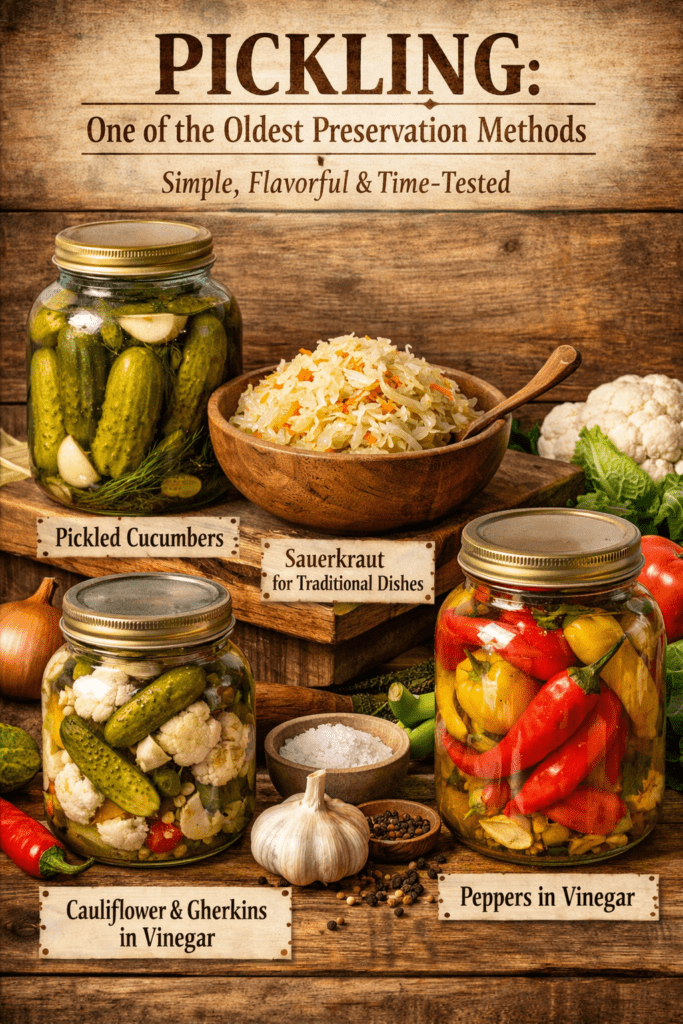
Pickling is one of the oldest preservation methods, appreciated for its simplicity and the distinctive flavor it imparts to vegetables.
Popular examples:
- Pickled cucumbers
- Sauerkraut (for traditional dishes)
- Cauliflower and gherkins in vinegar
- Peppers in vinegar
Pickling – Step by Step
Basic ingredients:
- Fresh vegetables (cucumbers, cabbage, gherkins, cauliflower, carrots, etc.)
- Coarse, non-iodized salt (pickling salt)
- Water (preferably boiled and cooled)
- Vinegar (optional, for vinegar pickles)
- Spices: bay leaves, mustard seeds, horseradish, garlic, black peppercorns, dried dill, celery
Pickling steps:
- Wash vegetables thoroughly and let them drain.
- Prepare the brine: for simple brine, dissolve 30-40 g of salt in 1 liter of water (for sauerkraut or cucumbers in brine).
- If you choose vinegar pickles, use the ratio of 500 ml vinegar to 1.5 liters of water, with 2 tablespoons of salt and sugar to taste.
- Arrange vegetables in jars or barrels, interspersing spices between them.
- Pour the brine or vinegar solution over the vegetables, covering the contents completely.
- Place a weight over the vegetables (a pickling stone or special lid) to keep them submerged.
- Store at room temperature for 5-10 days, then move the jars to cool, dark places.
- Check periodically to ensure no mold forms on the surface. If it appears, remove it immediately and add fresh brine.
Tips:
- Use non-iodized salt (pickling salt).
- Respect the proportions between water, salt, and vinegar to prevent spoilage.
- Add spices to taste: mustard seeds, horseradish, bay leaves, garlic.
2. Freezing
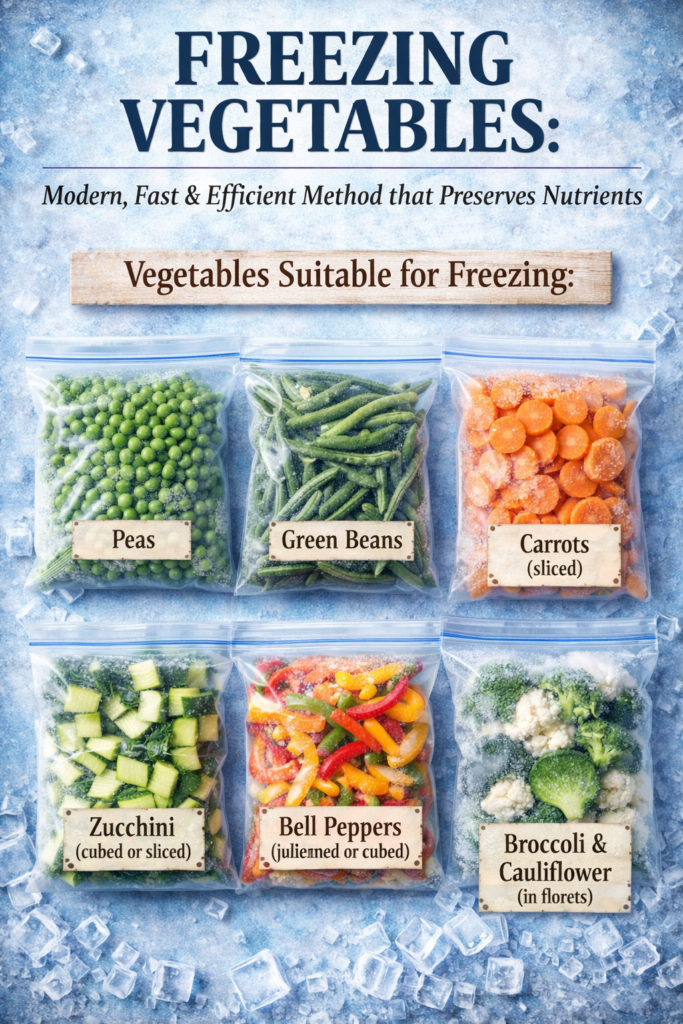
Freezing vegetablesis a modern, fast, and efficient method that preserves most of the nutrients.
Vegetables suitable for freezing:
- Peas
- Green beans
- Carrots (sliced)
- Zucchini (cubed or sliced)
- Bell peppers (julienned or cubed)
- Broccoli and cauliflower (in florets)
Important: Blanch vegetables before freezing (immerse them for a few minutes in boiling water, then in ice water) to preserve texture and color.
Read also: What NOT to Freeze – Foods You Should Keep Away from the Freezer
3. Drying or Dehydrating
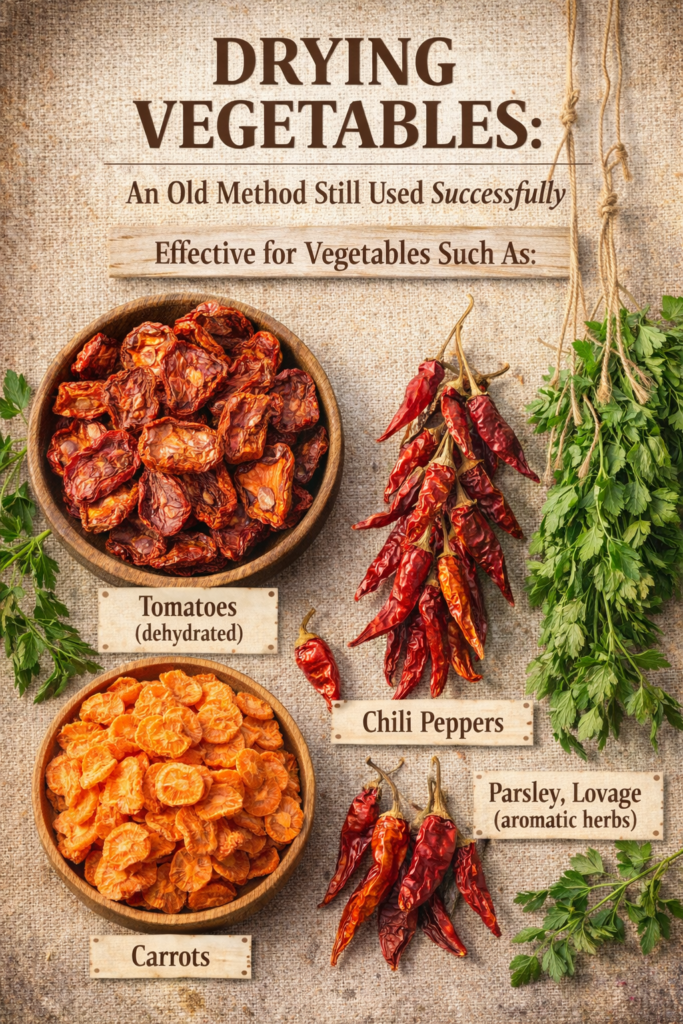
Drying vegetables is a very old method still used successfully, especially for vegetables such as:
- Tomatoes (dehydrated)
- Chili peppers
- Carrots
- Parsley, lovage (aromatic herbs)
You can dry them:
- In the sun (in warm climates)
- In the oven at low temperature
- Using an electric dehydrator
Drying or Dehydrating – Step by Step
What you need:
- Food dehydrator (ideal), oven, or the option to dry in the sun
- Clean vegetables cut uniformly (tomatoes, peppers, carrots, herbs, mushrooms)
Steps for dehydration:
- Wash and slice vegetables into thin slices or equal pieces for uniform dehydration.
- Blanch harder vegetables (carrots, parsnips) for 2-3 minutes to preserve color and texture.
- If using a dehydrator, set the temperature to 50-60°C for vegetables and 35-40°C for herbs.
- In the oven, leave the door slightly ajar for ventilation and set the temperature to the lowest setting.
- For natural sun drying, place vegetables on screens or trays, covered with cheesecloth, in well-ventilated and sunny areas.
- Check daily: vegetables are ready when completely dry but still slightly flexible, with no traces of moisture.
- Store them in airtight jars, zip-lock bags, or vacuum containers.
4. Sterilization (Water Bath Canning)
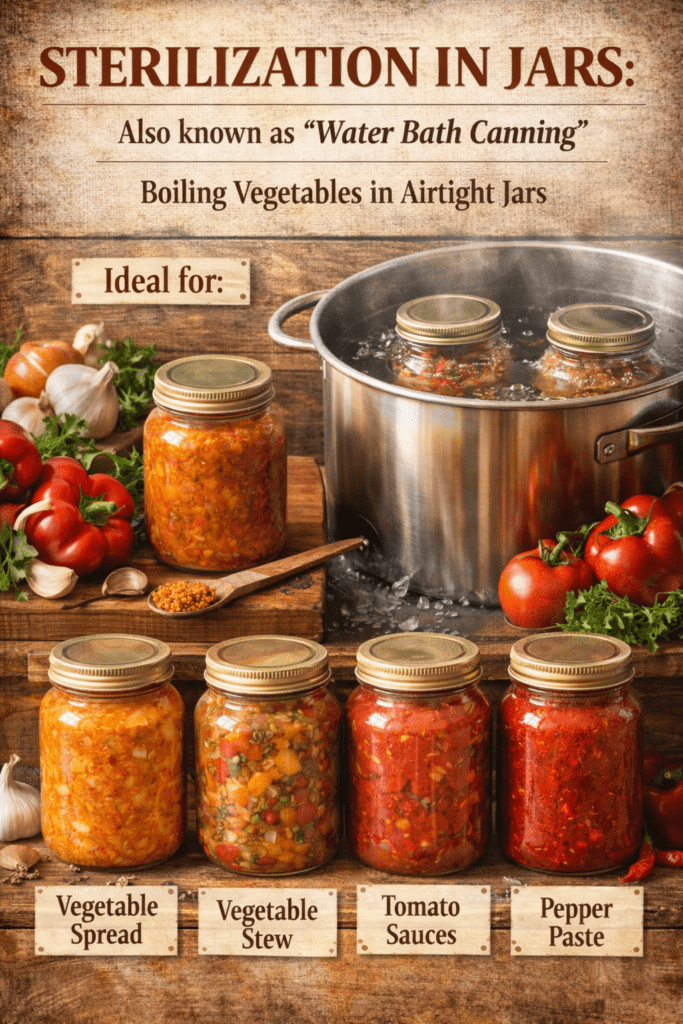
Sterilization in jars, also known as “water bath canning”, involves boiling vegetables in airtight jars. It is ideal for:
- Vegetable spread
- Vegetable stew
- Tomato sauces
- Pepper paste
Tips:
- Jars must be clean and sterilized before filling.
- After closing the lids, jars are boiled in a large pot, covered with water, for a time that varies depending on the contents.
5. Preservation in Salt or Oil
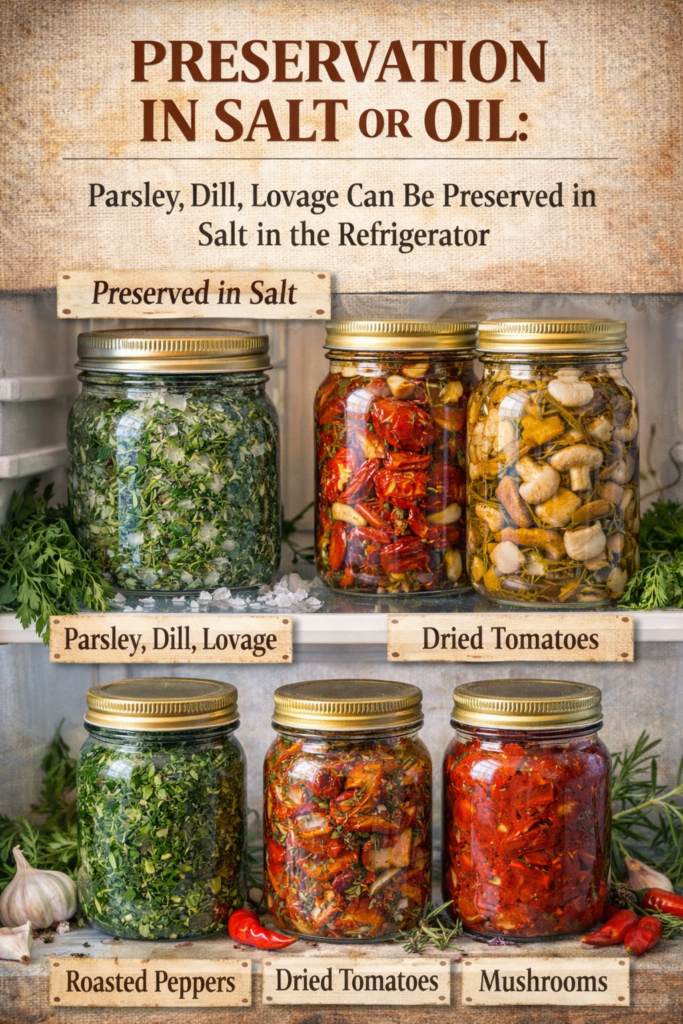
- Parsley, dill, lovage can be preserved in salt, in the refrigerator.
- Roasted peppers, dried tomatoes, or mushrooms can be preserved in olive oil, often with the addition of garlic and aromatic herbs.
This method is suitable for smaller quantities and for quick consumption (1-2 months).
Preservation in Salt – Step by Step
Ideal for: parsley, dill, lovage, celery (leaves)
Ingredients:
- Fresh herbs
- Coarse, non-iodized salt
How to do it:
- Wash the herbs thoroughly and let them drain completely or pat them dry with a clean towel.
- Finely chop the herbs.
- In a clean jar, place a thin layer of salt, then a layer of chopped herbs.
- Continue alternating layers until you fill the jar, with the last layer being salt.
- Close the jar tightly and store it in the refrigerator.
- Herbs preserved this way last several months and retain their intense aroma.
Preservation in Oil – Step by Step
Recommended for: dried tomatoes, roasted peppers, mushrooms, roasted eggplant, garlic
Ingredients:
- Prepared vegetables (dehydrated or roasted)
- Olive oil or other quality vegetable oil
- Optional spices: garlic, rosemary, thyme, oregano
How to do it:
- Prepare the vegetables: roasted, dehydrated, or lightly cooked.
- Arrange vegetables in sterilized jars, in layers, adding desired spices between them.
- Cover completely with oil, ensuring no air pockets remain (you can use a spatula to remove air).
- Close the jars tightly and store them in the refrigerator.
- For added safety, consume these preserves within a maximum of 1-2 months.
6. Vegetable Storage for Winter (Without Processing)
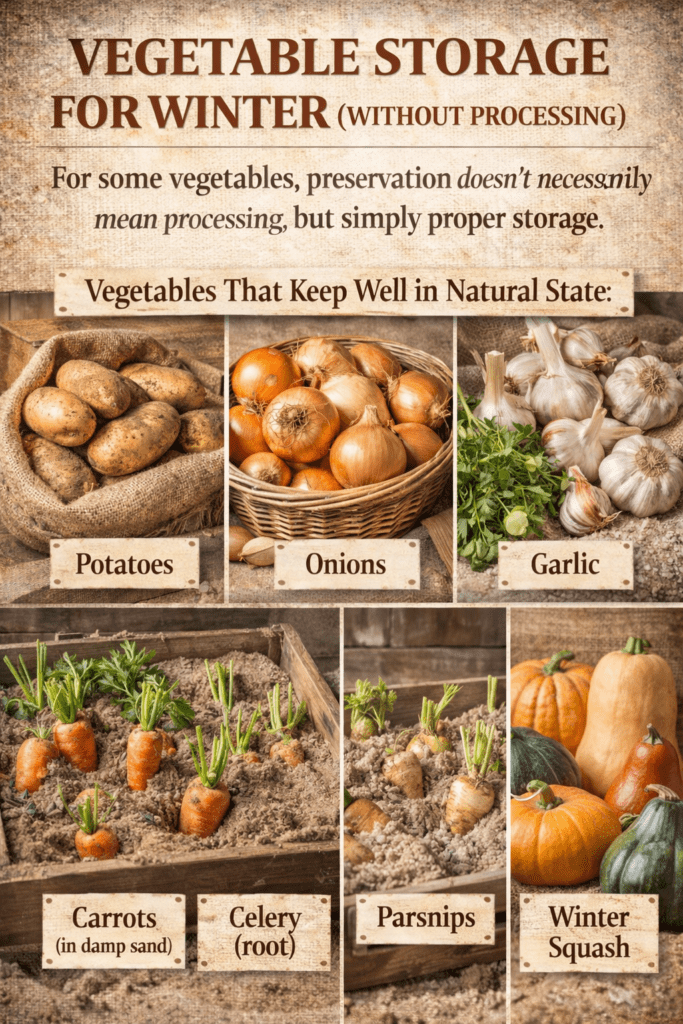
For some vegetables, preservation doesn’t necessarily mean processing, but simply proper storage.
Vegetables that keep well in natural state:
- Potatoes
- Onions
- Garlic
- Carrots (in damp sand)
- Celery (root)
- Parsnips
- Winter squash
Ideal storage conditions:
- Constant temperature between 2-8°C (in a cellar or cool storage room).
- Controlled humidity (to prevent drying or rot).
- Darkness (to prevent sprouting).
- Good ventilation to prevent mold.
General Recommendations for Successful Preservation
- Choose healthy vegetables, without spots, bruises, or signs of spoilage.
- Always respect the proportions and recommended times for each method.
- Label jars or freezer bags correctly with the date of preparation.
- Check periodically the condition of stored foods.
Regardless of the method you choose, preserving vegetables for winter allows you to bring summer flavors to your plate even in the middle of the cold season. You can opt for traditional methods, if you enjoy the flavors of your childhood, or for modern, fast, and efficient ones. What matters is choosing the option that suits your lifestyle and the space you have available.