
Why are my herbs dying? Learn the most common causes, from watering mistakes to poor light, and how to bring basil, mint, and more back.
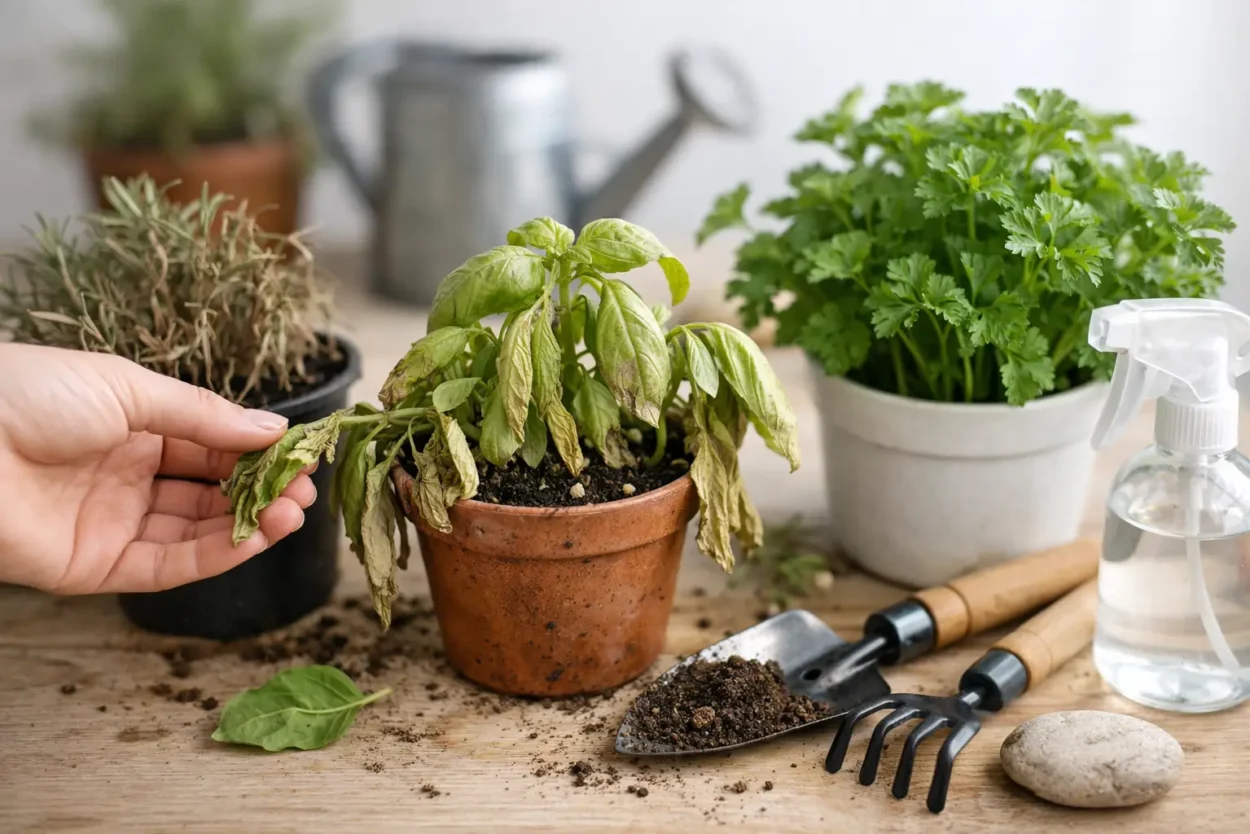
Why Are My Herbs Dying? Common Fixes
You buy a few pretty herb plants, set them on the windowsill, water them with good intentions, and somehow they still start looking tired, crispy, droopy, or weirdly yellow. If you’ve been asking, why are my herbs dying, the answer is usually not bad luck. Herbs are easy only when their basic needs line up with the spot you’ve put them in.
The good news is that most struggling herbs can be turned around quickly once you identify the real issue. In many homes, the problem comes down to one of five things: too much water, not enough light, poor drainage, temperature stress, or harvesting mistakes. A dying herb plant is often less mysterious than it looks.
Why are my herbs dying in the first place?
Most herbs die because they’re being treated like decorative houseplants instead of edible plants with specific growing habits. Basil, rosemary, parsley, cilantro, mint, thyme, and oregano do not all want the exact same routine. Some like evenly moist soil, while others would rather dry out a bit between waterings.
That’s why one herb can look lush while another one beside it collapses. The container, light level, soil texture, and watering schedule may be fine for mint but terrible for rosemary. Before you assume your thumb is not green enough, it helps to look at the plant type and the setup together.
The most common reason herbs die: too much water
Overwatering is probably the biggest herb killer, especially indoors. Many people see drooping leaves and assume the plant is thirsty, then water more, which makes the roots struggle even more. When roots stay wet for too long, they can’t breathe well, and rot starts to set in.
A waterlogged herb often looks soft, limp, yellow, or dark at the base. The soil may feel soggy long after watering, and the pot may seem heavy. If your herbs are in decorative containers without drainage holes, this gets even more likely.
The fix is simple but not instant. Let the top inch of soil dry before watering again for herbs that prefer a drier rhythm, like rosemary, thyme, oregano, and sage. For softer herbs like basil and parsley, keep the soil lightly moist but not drenched. Always use pots with drainage holes, and never let the roots sit in standing water.
Not enough light can make herbs weak fast
Herbs may survive in low light for a little while, but they rarely thrive there. If your kitchen window looks bright to you, it still may not be enough for sun-loving herbs. Basil, rosemary, thyme, oregano, and sage usually want several hours of direct sun each day.
When light is too weak, herbs can get leggy, pale, floppy, and slow-growing. The stems stretch toward the light source, and the leaves become smaller or sparse. This is common in apartments, north-facing windows, or rooms with filtered light.
If possible, move your herbs to a south-facing window or the sunniest spot in your home. Rotate the pots every few days so growth stays more even. If your space just doesn’t get enough sunlight, a grow light can make a huge difference. Sometimes the issue is not care at all – it’s simply that the plant is in the wrong room.
Poor drainage quietly ruins healthy roots
Even if your watering routine is reasonable, dense soil and bad drainage can still keep roots too wet. Grocery store herbs are especially prone to this because they’re often packed tightly into small plastic pots with fast-growing soil mixes that don’t stay balanced for long.
If water pools on top of the soil, drains slowly, or leaves the pot muddy for days, your herb may need a better home. Repotting into a container with drainage holes and a lighter potting mix can help almost immediately. For Mediterranean herbs like rosemary, thyme, and oregano, a soil mix that drains well is especially important.
This is one of those places where it depends on the herb. Mint and parsley can handle more moisture than rosemary can. Treating them all the same is often where things go off track.
Your herbs may be crowded from the start
A grocery store herb plant can look full and healthy, but it’s often several seedlings crammed into one small pot. That makes the plant look lush on day one and exhausted by day ten. The roots compete for water, nutrients, airflow, and space.
If your basil or cilantro looked amazing when you bought it and then declined quickly, crowding may be the reason. Gently dividing the plant into a few smaller sections and repotting them can help each group establish better roots. It feels a little dramatic the first time, but it often saves the plant.
Temperature stress is more common than people think
Herbs hate sudden swings. A hot afternoon window, a cold draft, blasting AC, or dry heat from a vent can all create stress. Some herbs are especially sensitive, with basil being a classic example. Basil dislikes cold temperatures and can sulk fast if the room gets chilly.
If leaves are blackening, curling, dropping, or getting scorched edges, look beyond watering. Check whether the pot is right next to a drafty window, radiator, or vent. Keeping herbs in a stable environment with moderate warmth usually works better than putting them in the brightest but harshest spot.
Why are my herbs dying after I repotted them?
Repotting can help, but it can also shock a plant for a few days if the roots were disturbed too much. A recently repotted herb might droop, stop growing, or look generally offended. That doesn’t always mean you did anything wrong.
The key is to avoid compacting the new soil too tightly and not overwatering to compensate. Give the plant a few days in bright, indirect to direct light depending on the herb, and resist the urge to keep fussing with it. Constant changes usually make recovery slower.
You may be harvesting the wrong way
A lot of herbs decline because they’re either never harvested or harvested too aggressively. Pinching and trimming can encourage fuller growth, but stripping too many leaves at once leaves the plant stressed and unable to recover quickly.
For basil, pinch just above a leaf node so it branches out. For parsley and cilantro, cut outer stems first rather than taking everything from the center. For woody herbs like rosemary and thyme, avoid cutting deep into old, bare stems unless you know the plant can bounce back.
And if you never harvest at all, some herbs become leggy and flower early. Flowering is not always a disaster, but it can shift the plant’s energy away from leaf production and flavor.
Pests and disease can be part of the problem
Indoor herbs are not immune to pests. Aphids, spider mites, and fungus gnats can all show up, especially if plants are stressed or overwatered. If leaves are sticky, speckled, curling oddly, or covered in tiny webs, inspect them closely.
Fungal issues can also appear when airflow is poor and moisture lingers on leaves or in soil. Yellowing, mushy stems, spots, or mold are signs to act quickly. Remove badly damaged growth, isolate the plant if needed, and adjust the growing conditions first. A healthier environment often matters just as much as treatment.
A quick herb-by-herb reality check
Not all herbs fail for the same reason. Basil usually suffers from cold, weak light, or erratic watering. Rosemary often dies from overwatering and poor drainage. Mint can handle moisture better, but it gets root-bound fast and likes more room than people expect. Parsley wants consistent moisture and decent light, while cilantro tends to bolt or decline quickly in heat.
That’s why the best fix starts with identifying the herb, then matching the care to its personality. If you’ve been giving every plant the same amount of water on the same schedule, that’s probably the habit to change first.
How to tell if your herb can still be saved
If the stems are still partly green and the roots are not completely mushy or dry as straw, there’s a good chance the plant can recover. Trim off dead leaves, correct the light and watering issue, and give it a week or two. Herbs often respond surprisingly well once conditions improve.
If the entire base is black, the roots smell rotten, or the stems snap with no green inside, replacement may be the more realistic option. Not every plant comes back, and that’s normal. Even experienced gardeners lose herbs sometimes.
The easiest way to keep herbs alive going forward
Start by observing before reacting. Stick your finger into the soil before watering. Notice how many hours of direct sun the plant actually gets, not how bright the room feels. Check whether the pot drains freely and whether the herb is suited to indoor life in that exact spot.
If you want the simplest path, group herbs by similar needs instead of mixing them randomly. Keep Mediterranean herbs like rosemary, thyme, oregano, and sage together. Keep thirstier, softer herbs like basil and parsley on a different routine. That small shift can make herb care feel much less chaotic.
A struggling herb does not mean you’re bad at plants. Usually, it means the plant is giving you a clue, and once you read it correctly, everything gets easier.